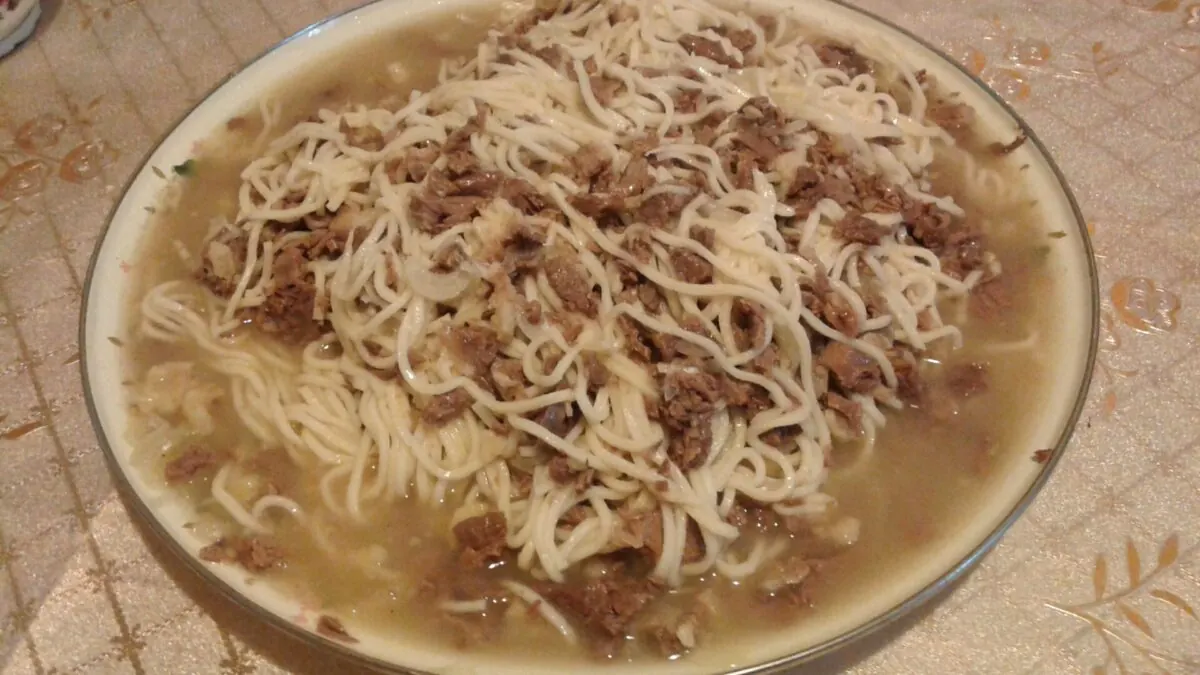
The most important food in Kyrgyzstan rarely turns up at a stall or a bazaar counter. Beshbarmak, the national dish, is boiled meat (horse for the biggest occasions, more often mutton or beef), torn by hand and piled on wide, flat squares of noodle, moistened with an onion-heavy broth called chyk, and eaten with the hand from a shared platter. The name means “five fingers,” and it describes the eating method literally: fingers, a cloth on the floor, and a room full of relatives reaching for the same plate.
You can order a decent plate in a Bishkek restaurant, and this guide will tell you where. The dish only makes full sense, though, at a nomadic-culture celebration, a wedding, a memorial, or the arrival of a guest worth honoring, where the meat is distributed by rank, the sheep’s head is set in front of someone on purpose, and refusing a second helping becomes a small act of diplomacy. What follows covers what beshbarmak actually is, how it is served and eaten, why the head matters, where to try it, and how to keep your composure when the platter lands in front of you.
What is actually on the plate
Strip away the ceremony and beshbarmak comes down to four things: meat, noodles, broth, and onions. A whole sheep (or a cut of horse, or beef) simmers slowly for hours until the meat falls off the bone. While the lifted meat rests, the cook rolls dough thin and cuts it into wide squares or diamonds, kesme, which then boil briefly in the same fat-rich stock so they carry the flavor of the meat. Sliced onions softened in ladlefuls of the hot broth become chyk, the oniony sauce that ties the plate together.
Assembly is simple and communal. The noodles go down first, covering a large round platter. The meat gets torn by hand rather than sliced and piled on top, the onion chyk is spooned over everything, and the platter is carried out to the center of the group. Alongside it comes a bowl of the plain broth, called shorpo, drunk on its own between mouthfuls, and in wealthier households you may also see chuchuk, a horse-meat sausage, laid around the edge. There are no vegetables to speak of and no spice. This is deliberately mild, rich, filling steppe food, and the flavor lives in the meat and the fat rather than in seasoning.
Horse is the prestige meat, and kazy and chuchuk from a well-fattened horse mark a serious occasion. Still, it would be a mistake to assume every beshbarmak is horse. On an ordinary weekend, in an ordinary home or restaurant, mutton or beef is far more likely. If eating horse matters to you either way, asking before the platter is served is fair and completely normal.
How it is served, and how you're meant to eat it
Beshbarmak is a shared-platter dish. It arrives in the middle of the dastorkon, the cloth spread on the floor or on a low table, and everyone eats from the same plate, reaching in with the right hand. That is where the “five fingers” comes in: you pinch up a folded noodle with some meat and onion and eat it directly, no cutlery involved. In a restaurant catering to tourists you will usually get a fork, and using it is fine. At a family table, watch the host and follow; if others are eating by hand, a visitor who tries is treated warmly, even when the technique is clumsy.
The seating and the order of eating follow rules. Elders and honored guests sit in the tor, the place of honor farthest from the door, and they are served first. Rather than everyone grabbing at will, the host or a senior family member portions the meat out and hands specific cuts to specific people according to status and age. Your job as a guest is to accept what you're given, eat with your right hand, and drink the shorpo broth that's poured for you. Bread stays on the cloth throughout; tear it, keep it whole-side up, and never stab or discard a piece.
Pace yourself, because the quantities are enormous and the generosity is relentless. In Kyrgyz hospitality, an empty plate summons more. The graceful move is to leave a little food, place your hand briefly over your heart or your bowl, and thank the host warmly; a small, sincere gesture of fullness does more than any words of refusal.
The sheep’s head, and why it's an honor
At a real beshbarmak feast, a boiled sheep’s head, the bash, is presented to the most honored guest at the table. Nobody is playing a prank on the foreigner here. This is one of the highest marks of respect Kyrgyz hospitality can pay you, and it comes with a small ritual. The recipient carves pieces from the head and redistributes them around the table, each part carrying meaning: an ear to a younger person so they'll “listen” and learn, a piece of the palate or tongue to encourage eloquence, meat from around the eyes to a respected guest. You take a symbolic bite yourself first, then share the rest out.
If the head lands in front of you, stay calm and avoid an outright refusal, which can read as an insult to the household. If you genuinely can't manage it, the graceful path is to accept the honor, take a token taste, and ask the host or a neighbor to help distribute the rest, thanking the family for the gesture. Treating the moment with good humor and respect matters far more than eating any particular part.
Where to try beshbarmak
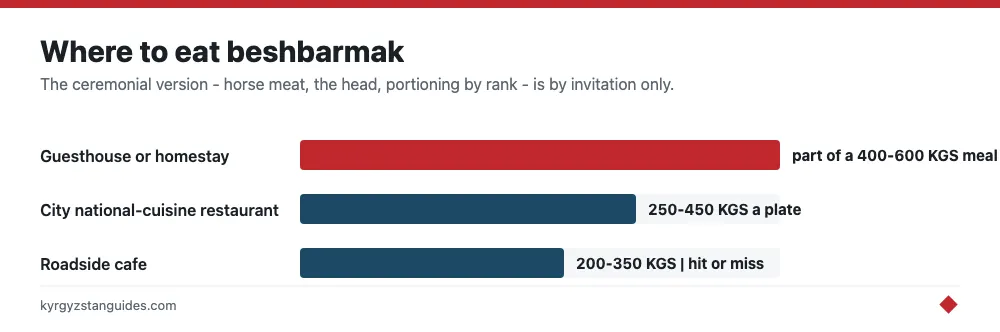
For most travelers, the first taste comes in a restaurant, and that's a fine place to start, a controlled introduction before any feast catches you off guard. The table below sorts the realistic options, from an easy city plate to the real thing at a family table.
| Where | What to expect | Rough cost |
|---|---|---|
| City national-cuisine restaurant (e.g. Faiza, Bishkek) | Reliable mutton or beef version, fork provided, no ceremony | 250-450 KGS a plate |
| Roadside cafe or canteen | Simpler and cheaper, hit or miss on the noodles | 200-350 KGS |
| Guesthouse or homestay dinner | Home-cooked, often the best version you will eat | Part of a 400-600 KGS meal |
| A wedding, memorial, or guest feast | The full ceremonial dish: horse meat, the head, portioning by rank | By invitation only |
Faiza in Bishkek is the standard recommendation for a first plate, and a fair one, though it helps to treat the restaurant version as a rehearsal. The best beshbarmak of your trip is far more likely to appear at a yurt stay or guesthouse, cooked by the family that hosts you, especially out on the summer pastures. As for the ceremony, it tends to find you: spend time with Kyrgyz families, accept invitations, and eventually a platter will come out in your honor. For the wider menu around it, plov, laghman, manty and the rest, our full Kyrgyz food guide covers the country dish by dish.
A few points of etiquette, gathered
- Sit where you're directed. The seat of honor is assigned by the host, and drifting toward or away from it can confuse the order.
- Eat and pass everything with your right hand; the left is considered unclean for food.
- Never step over the dastorkon cloth or point the soles of your feet toward the food.
- Treat bread as near-sacred: tear it, keep it right-side up, and never throw a piece away.
- Accept the shorpo broth and at least taste whatever is handed to you, the head included.
- Leave a little food on the plate once you have had enough, so the host knows to stop refilling.
- If you cannot eat something, decline gently and with thanks; a warm manner smooths over almost anything.
None of this needs to be perfect. Kyrgyz hosts are famously forgiving of visitors who try, and the effort to eat by hand, drink the broth, and thank the eldest reads as respect no matter how the technique lands. Arrive hungry, ask questions about what you are eating, and budget plenty of time, because a proper feast runs for hours and the tea keeps coming long after the platter is cleared.
Frequently Asked Questions
Is beshbarmak made from horse meat?
Sometimes, but not always. Horse is the prestige meat for major celebrations and often appears as kazy or chuchuk sausage, but on an ordinary day beshbarmak is more commonly made with mutton or beef. If it matters to you, it is normal to ask before the platter is served.
How do you eat beshbarmak?
From a shared platter, with the right hand. You pinch up a folded square of noodle with some meat and onion chyk and eat it directly, drinking the plain shorpo broth on the side. In tourist restaurants a fork is provided and fine to use; at a family table, follow the host.
What do you do if you're served the sheep’s head?
Being handed the boiled sheep’s head is a high honor, not a joke. Take a symbolic bite, then carve and distribute pieces to others at the table. If you can't manage it, accept graciously, taste a little, and ask the host to help share the rest, but never refuse outright.
Is beshbarmak spicy?
No. It's deliberately mild, just meat, noodles, onion, and broth with almost no seasoning or heat. The richness comes from the meat and fat rather than spice, so travelers who dislike chili can eat it comfortably.
Where can I try beshbarmak as a tourist?
Start at a city national-cuisine restaurant such as Faiza in Bishkek for a reliable, fork-friendly plate around 250-450 KGS. The best versions come from guesthouse and yurt-stay dinners cooked by host families, and the full ceremonial dish appears at weddings and feasts by invitation.
A beshbarmak meal runs on etiquette that is stricter than it first appears: who sits where, and which portion of meat each guest receives, are both ranked. See Kyrgyz hospitality rules for the full seating order.
What is chyk in beshbarmak?
Chyk is the onion sauce that ties the dish together: sliced onions softened in ladlefuls of the hot, fat-rich broth the meat simmered in, then spooned over the noodles and hand-torn meat on the platter. The plain broth itself, shorpo, is served separately in a bowl and drunk between mouthfuls.