Eight in the morning at Osh Bazaar, and there's already a line at the manty window before the cook lifts the first steamer lid. Kyrgyz food is nomad food, meat, dough, dairy, and onions, headlined by beshbarmak, plov, laghman, and manty, and a filling meal rarely costs more than 300-450 KGS ($3.50-5). The cuisine was built for cold winters and long days on horseback, then layered with Uzbek, Dungan, and Uyghur cooking that arrived along the old trade routes and never left. That mix is the secret: the Kyrgyz core is mild and meaty, and the borrowed dishes bring the noodles, the vegetables, and the chili.
Two things that are not on most lists: chuchuk, the horse sausage that appears at every feast, and ganfan, the Dungan rice dish. What follows is the menu worth knowing before you land: what each dish actually contains, what it costs, where the best version lives, and how to manage if you don’t eat meat. Prices assume 1 USD ≈ 87-89 KGS.
The mains
A note on venues before the dishes: you'll eat this food in four places. National-cuisine restaurants in the cities do the celebration dishes properly. Roadside cafes and Soviet-style canteens do the everyday ones cheaply, and the busiest room on the street is nearly always the right choice. Chaikhanas — tea houses with raised platform seating — dominate in the south around Osh. And guesthouse dinners, cooked by the family, are frequently the best meals of a whole trip.
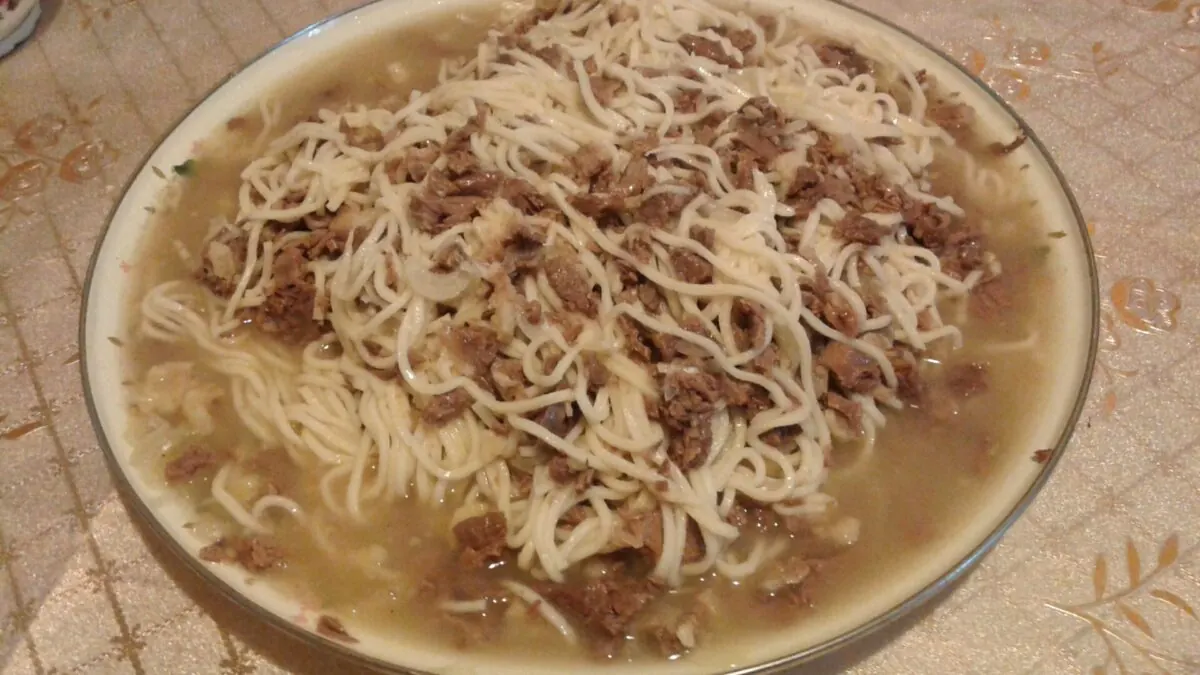
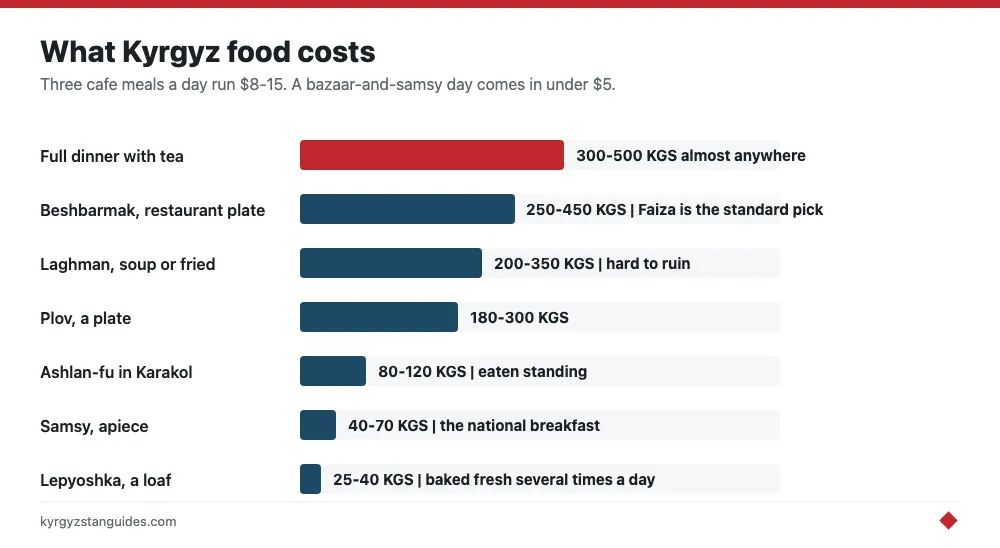
Beshbarmak (literally “five fingers,” because it was traditionally eaten by hand) is the national dish: boiled meat (horse for special occasions, more often mutton or beef) laid over wide flat noodles, with onion-rich broth poured on top. It is shared across the Kyrgyz and Kazakh steppe, and every family defends its own version. IFAD published a Kyrgyz version of the recipe: lamb simmered two to three hours, the broth kept back as shorpo, dough rolled to a millimetre and cut into sheets, the noodles cooked in that broth, onion boiled in it, everything piled on one platter for the table. Restaurant plates run 250-450 KGS — Faiza in Bishkek is the standard recommendation, and a fair one. But treat that as a rehearsal. The real thing appears at family feasts, often with rounds of chuchuk (horse sausage) beside it, where the meat is distributed by rank and refusing seconds takes actual diplomacy.
Plov is the Uzbek import that became a Sunday ritual: rice fried in a kazan with mutton, carrots, cumin, and whole heads of garlic, 180-300 KGS a plate. Timing matters more than the venue — plov ladled fresh from a giant market-day kazan is a different dish from the same plov reheated at 4 pm. If you see a crowd around a steaming cauldron, join it.
Laghman, hand-pulled Uyghur noodles with peppers, tomatoes, and beef, is the single most reliable order in any roadside cafe in the country. It comes as soup or fried as boso laghman, costs 200-350 KGS, and is genuinely hard to ruin, the noodles are pulled to order in any place that respects itself.
Manty are palm-sized steamed dumplings of chopped (never minced, and locals will tell you why at length) mutton and onion, sometimes pumpkin in autumn, which is the quiet vegetarian win of the season. 40-70 KGS apiece; four or five make a meal, eaten by hand with a bite taken first to let the broth out.
Kuurdak is the shepherd’s fry-up: meat, offal, potatoes, and a great deal of onion cooked in mutton fat. Honest, heavy, on every menu at 250-400 KGS — and one order per trip is plenty. You don't need it twice.
Dimlama, a summer stew of meat, cabbage, potatoes, peppers, and whatever the garden produced, layered and steamed in its own juices, is the closest Kyrgyz cooking gets to vegetable-forward. 250-350 KGS, best in August when the produce peaks.
Oromo rounds out the dough family: a rolled, steamed spiral filled with meat and onion: or potato and pumpkin — cut into rounds like a savory Swiss roll. Bazaar canteens sell it for 200-300 KGS, and it travels well as a marshrutka lunch.
Street food, and the bread underneath everything
Shashlik, skewered meat grilled over coals, served with vinegared onions and flatbread, is the after-5-pm ritual at every bazaar in the country. Follow the smoke. Mutton rib is the connoisseur’s order at 150-300 KGS per skewer; chicken exists for the cautious, but the grill men know where their pride lives.
Samsy, tandyr-baked pastries of lamb, fat, and onion, are the national breakfast at 40-70 KGS. The trick is buying them pulled hot from the clay oven wall, not lukewarm from a display case — the stalls at Osh Bazaar do it right, and our Bishkek guide points you to them.
Boorsok. Puffed cubes of fried dough. You will never order; it simply appears, scattered across every celebration table, eaten with butter, honey, or kaymak cream. Kurut, rock-hard balls of dried salted yogurt at 10-20 KGS each, is the original trail snack: salty, sour, and useful on treks. Buy a bag at any bazaar and ration them like the shepherds do.
And underneath it all sits lepyoshka, the round tandyr bread stamped with a pattern in the center — 25-40 KGS a loaf, baked fresh several times a day. Everything above is eaten with it, and a warm loaf straight off the oven wall is one of the country’s best cheap pleasures.
Bread has a second act at breakfast: kattama, a layered, buttery flatbread fried in a skillet, served at guesthouses with kaymak: thick clotted cream. And homemade jam. If your host puts kattama, kaymak, and honey on the table in the same morning, cancel whatever you had planned before ten.
Ashlan-fu is worth the drive to Karakol
Ashlan-fu is a cold Dungan soup of wheat noodles and wobbly starch jelly in a chili-vinegar broth — spicy, sour, and strangely perfect after a mountain day. The canonical version costs 80-120 KGS at “Ashlan-fu Alley” in Karakol, eaten standing shoulder to shoulder with locals, with a fried piroshki on the side. Versions served in Bishkek never quite match it. Full details in our Karakol travel guide.
Ashlan-fu also answers the spice question. Kyrgyz food is mostly mild: the heat in this cuisine comes almost entirely from Dungan and Uyghur dishes, and even then a jar of laza chili paste usually sits on the table so you control the burn yourself. If you fear spice, you can eat for a month here without meeting any.
What do people actually drink?
Kymyz, fermented mare’s milk, is the national drink, made each summer on the high jailoo pastures. An honest description: lightly fizzy, sour, and slightly smoky from the smoked-hide vessel it ferments in, with 1-2% alcohol. Think sharp drinking yogurt crossed with dry cider. A bowl costs 50-100 KGS from roadside yurts, freshest near Song-Kul in July and August. It's safe for visitors — fermentation acidifies the milk, and millions drink it daily every summer. But start with half a bowl anyway. Your stomach gets a vote.
Maksym and its cousins jarma and chalap are fermented grain drinks, tangy, bready, faintly sour — sold for 30-60 KGS a cup from the yellow Shoro-brand barrels that appear on summer street corners in every town. Locals swear by them in the heat, and a cup costs less than bottled water. Tea remains the true constant: green in the south, black with milk in the north, poured in endless half-bowl refills that keep it hot and the conversation going.
Two more for completeness. Bozo, a thicker fermented millet drink, fills the kymyz role in winter when the mares are dry. And while Kyrgyzstan is a Muslim-majority country, alcohol flows freely at celebrations — if you are invited to a family table, expect vodka toasts, and know that raising the glass and taking a symbolic sip satisfies honor without wrecking your evening.
Sweets, honey, and what it all costs
Chak-chak. Fried dough bound with hot honey into a sticky golden slab, Tatar in origin rather than Kyrgyz, is the default festive dessert, 100-200 KGS at bazaars. Pair it with white Toktogul or At-Bashy mountain honey, dried apricots, and walnuts from the Arslanbob groves; a jar of good honey (300-500 KGS) is the best edible souvenir in the country.
As for the overall bill: three cafe meals a day cost $8-15, a bazaar-and-samsy day comes in under $5, and even the best national-cuisine restaurants in Bishkek rarely pass 1,500 KGS ($17) per person with drinks. A full dinner with tea runs 300-500 KGS almost anywhere in the country. Our Kyrgyzstan travel budget guide has the complete daily numbers.
Two ordering habits save money and disappointment. Eat your big meal at lunch, when the kazans are fresh and many cafes run business-lunch sets for 250-350 KGS. And order what the place is known for, a laghman house makes bad plov, and vice versa. Portions are large; two dishes plus bread comfortably feeds two people.
Eating vegetarian here
It takes planning, but it works better than the meat-heavy menus suggest, especially from July through October, when the bazaars drown in tomatoes, melons, apricots, and raspberries that cost almost nothing.
- Learn “etsiz” (without meat), but assume soup broth is meat-based unless promised otherwise
- Reliable orders: pumpkin manty (autumn), potato oromo, egg dishes, salads, fresh bread with honey and kaymak
- Dungan and Uyghur cafes have the most vegetable-heavy menus; Bishkek has vegetarian-friendly restaurants
- Bazaars are your ally: fruit, nuts, dried apricots, bread, and dairy make solid trekking rations
- For yurt stays, tell hosts in advance through CBT, families will happily cook meat-free dimlama or fried potatoes if warned
Manners at the dastorkon
Meals happen around the dastorkon, the cloth spread on the floor: never step over it or point your feet at it. Bread is near-sacred. Never place it upside down or throw it away, and tear rather than cut when a loaf is passed to you. Accept tea when offered (the half-filled bowl is respect, not stinginess), eat with your right hand, and taste at least a little of everything, kymyz included. If a sheep is slaughtered in your honor, the distribution of portions is ceremonial: take what you're given and thank the eldest. In private homes, a small gift (fruit, sweets, something from your country) lands better than money.
Your first 48 hours: what to order
Day one, keep it simple: a hot samsy and tea for breakfast, laghman at whichever cafe is fullest at lunch, then shashlik at a bazaar grill once the evening smoke starts. Day two, go deeper. Manty or oromo in the morning, ashlan-fu if you have reached Karakol (fresh kazan plov if you haven’t), and beshbarmak for dinner at a national-cuisine restaurant, so the feast version doesn’t catch you unprepared if an invitation comes later. Save the kymyz for the mountains, where it is fresh, cold, and drunk within sight of the mares that made it. Everything else (the kurut, the kattama mornings, the honey) will find you on its own schedule.
The table has its own rules, and they are stricter than they look: see Kyrgyz hospitality rules for the seating order and the ranked meat portions.
FAQ
What is the national dish of Kyrgyzstan?
Beshbarmak, which means “five fingers” because it was traditionally eaten by hand. It is boiled meat, horse for special occasions, served over wide flat noodles. It sits alongside plov, laghman and manty as the four dishes worth knowing before you arrive.
How much does a meal cost in Kyrgyzstan?
A filling meal rarely costs more than 300 to 450 som, roughly $3.50 to $5 at about 87 to 89 som to the dollar. Cheap canteens and roadside cafes sit at the bottom of that range and national-cuisine restaurants in the cities at the top.
Where should I eat in Kyrgyzstan?
Four kinds of place. National-cuisine restaurants in the cities do the celebration dishes properly; roadside cafes and Soviet-style canteens do everyday food cheaply; chaikhanas, tea houses with raised platform seating, dominate in the south around Osh; and guesthouse dinners cooked by the family are frequently the best meals of a whole trip.
Is Kyrgyz food all meat?
Largely, yes — it is nomad food built on meat, dough, dairy and onions, designed for cold winters and long days on horseback. The borrowed Uzbek, Dungan and Uyghur dishes bring the noodles, vegetables and chilli, so they are usually where a non-meat-eater finds more options.
How do I pick a good place to eat?
Use the room as the guide. In roadside cafes and canteens the busiest room on the street is nearly always the right choice, because turnover is what keeps the food fresh and the stockpot moving.
Why is Kyrgyz food so mixed?
Because the Kyrgyz core — mild, meaty, dairy-heavy — was layered with Uzbek, Dungan and Uyghur cooking that arrived along the old trade routes and stayed. The result is that the national dishes and the everyday menu come from different traditions sitting side by side.