Most travelers get souvenir shopping in Kyrgyzstan backwards. They leave it for the last afternoon, panic-buy on the top floor of TSUM or at the airport, and pay a hefty markup for machine-stitched felt, when a village cooperative halfway through their trip would have sold them the hand-made original for less.
The souvenirs genuinely worth buying in Kyrgyzstan are hand-stitched shyrdak felt carpets (from about 3,500–4,000 KGS / $40–45 for a small piece), a white ak-kalpak hat (400–1,500 KGS), Toktogul white honey (600–900 KGS/kg) and walnuts and dried fruit from the bazaars. At roughly 87–89 KGS to the dollar, even top-end handwork here costs a fraction of what comparable pieces fetch in Europe. The rule that fixes everything: buy as you travel, from the people who made it.
Felt first: shyrdak and ala-kiyiz
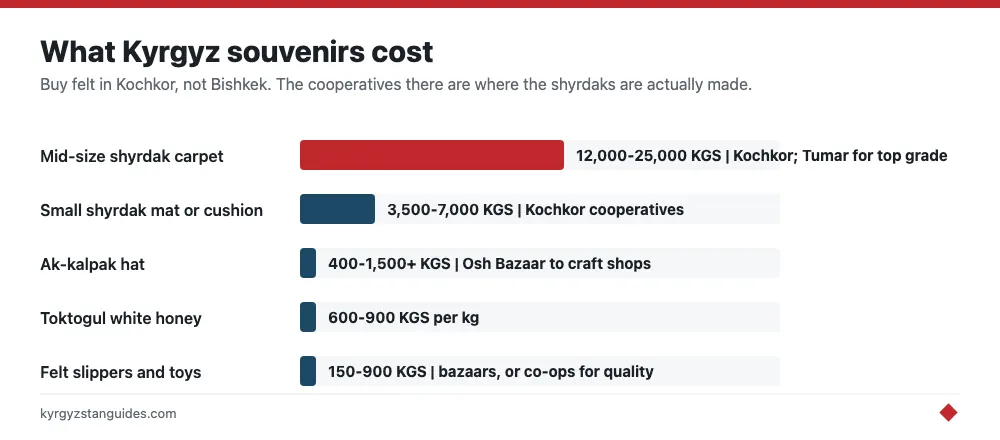
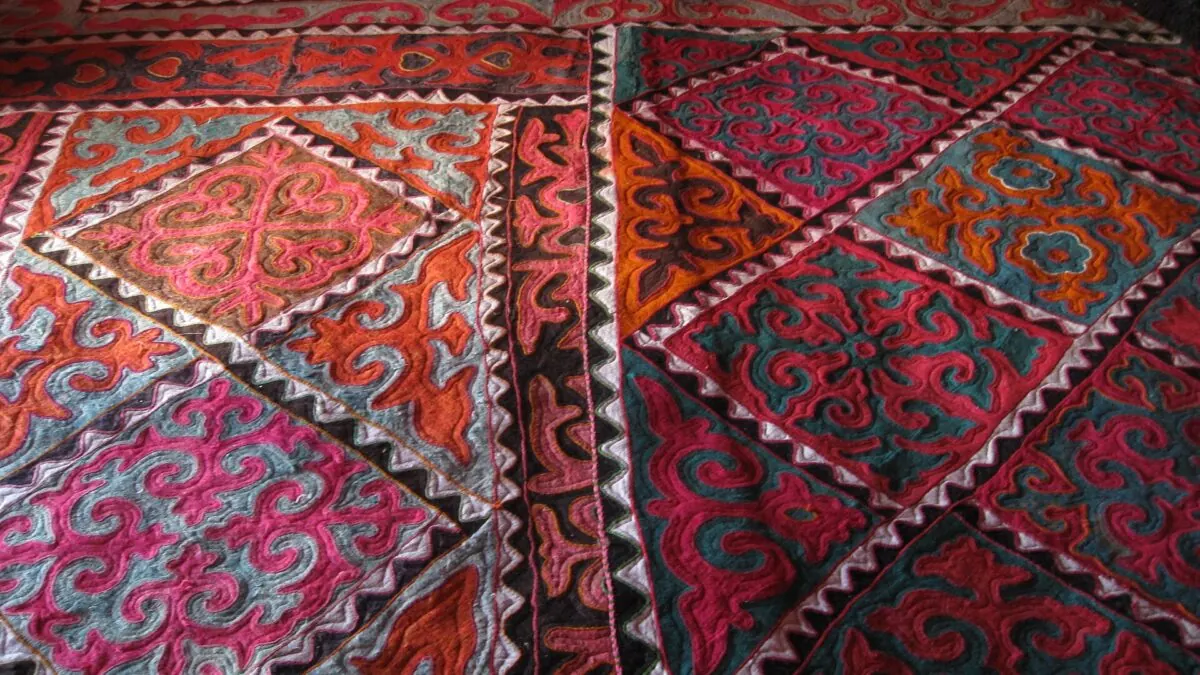
The single best purchase in the country. A shyrdak is a quilted mosaic carpet — two contrasting felt layers cut into mirror-image ornaments and stitched together by hand. Traditionally part of a bride’s dowry, a good one survives 40-plus years of floor use. Ala-kiyiz is its softer, blurrier cousin, with dyed wool rolled directly into the felt. Both techniques are UNESCO-listed. Expect roughly 3,500–7,000 KGS ($40–80) for a small shyrdak mat or cushion cover, 12,000–25,000 KGS ($135–285) for a mid-size carpet, and 30,000–60,000+ KGS for large room pieces from the top makers. A folded mid-size shyrdak packs down surprisingly well. Felt compresses, and it shrugs off a rough baggage handler.
Hand-made or machine-made? Five checks
- Flip it over: hand stitching shows slightly irregular, visible stitches on the reverse; machine pieces are uniform and often glued to a backing.
- Hand-cut ornaments carry tiny asymmetries between mirrored panels, perfection is a machine tell.
- Real felt smells faintly of wool and lanolin; synthetic blends smell of nothing.
- Natural-dye pieces cost more and show softer, slightly uneven color.
- Ask who made it — cooperative pieces come with the maker’s name and village.
For guaranteed quality, buy from Tumar Art Group in Bishkek (the country’s flagship felt studio, fixed prices), the Saima craft shops, or the women’s cooperatives in Kochkor, where you can watch a piece take shape before you pay. Many cooperatives also take commissions. If you want specific colors or a specific size, ask early in your trip and collect the finished piece on your way back through. The story behind the craft (and why the patterns mean what they mean) is in our nomadic culture guide.
The kalpak: buy one, wear it right
The tall white felt ak-kalpak is the national hat, so central to identity that Kyrgyzstan celebrates Kalpak Day every March 5 and UNESCO listed kalpak craftsmanship in 2019. Simple machine-stitched versions cost 400–700 KGS at Osh Bazaar; fine hand-embroidered ones run 1,000–1,500+ KGS. Foreigners wearing one are met with delight far more often than offense: but treat it properly. Don’t toss it on the ground, don’t sit on it, and know that the patterns and trim colors traditionally signaled the wearer’s age and status. It packs terribly, so carry it onto the plane.
Things you can eat
Toktogul white honey. Kyrgyzstan’s high-altitude sainfoin honey — especially the famous white honey from around Toktogul and At-Bashy, crystallizes into a pale, creamy paste and has won international apiculture medals. Pay 600–900 KGS/kg at bazaars; sealed jars from the honey shops in Bishkek travel best, and most countries allow sealed honey in checked luggage (check your own rules).
Walnuts and walnut jam from Arslanbob. The village sits in the world’s largest natural walnut forest. Buy shelled nuts (350–500 KGS/kg), walnut jam and walnut oil at the source, our Arslanbob guide has the details, or from the Osh sellers who truck it north.
Dried fruit and nuts. Bishkek’s Osh Bazaar and the great bazaars of Osh city pile up apricots, melon strips, raisins, almonds and pistachios at 200–600 KGS/kg. Taste before buying, sellers expect it, and have your haul vacuum-sealed for a small fee so it survives the flight.
Kurut, for the brave. Rock-hard balls of dried salted yogurt, 10–20 KGS each: the most authentically nomadic snack in existence and a guaranteed conversation piece at home. Start with the small, less salty ones. More on what you’re getting into in our Kyrgyz food guide.
Silver, komuz and the small-gift tier
Traditional Kyrgyz silverwork — chunky rings, cuff bracelets (bilerik) and earrings set with coral or turquoise-style stones. Sells for 1,500–8,000 KGS depending on weight and workmanship. The antique-looking pieces at TSUM and the craft galleries are almost all modern reproductions, which is fine: they cost less and, unlike genuine antiques, they’re legal to export. The komuz, the three-stringed national lute, works as a wall piece or a real instrument, souvenir-grade from 2,500 KGS, playable maker-built instruments 5,000–10,000+ KGS from the music shops on Bishkek’s Toktogul and Kiev streets. Ask the seller to play. They always will.
Under 1,000 KGS, felt is where gifts shine: slippers (500–900 KGS), Christmas ornaments and camel or yurt toys (150–400 KGS), coasters, phone cases and hand puppets, plus patterned wool jurab socks (250–500 KGS) and embroidered tush kiyiz wall-hanging fragments. Cooperative-made pieces cost 20–30% more than bazaar stock and are worth every som. What to skip: the fridge magnets, the mass-produced “Soviet” badges and anything sold airside at Manas airport. Same factory goods, double the price.
What it all costs
| Item | Typical price (KGS) | Where it’s cheapest / best |
|---|---|---|
| Small shyrdak mat or cushion cover | 3,500–7,000 | Kochkor cooperatives |
| Mid-size shyrdak carpet | 12,000–25,000 | Kochkor; Tumar for top grade |
| Ak-kalpak hat | 400–1,500+ | Osh Bazaar (simple); craft shops (embroidered) |
| Felt slippers & toys | 150–900 | Bazaars; cooperatives for quality |
| Toktogul white honey | 600–900 per kg | Bazaars; sealed jars in Bishkek shops |
| Arslanbob walnuts (shelled) | 350–500 per kg | Arslanbob village |
| Dried fruit & nuts | 200–600 per kg | Osh Bazaar, Bishkek |
| Kurut | 10–20 each | Any bazaar |
| Silver jewelry | 1,500–8,000 | TSUM, craft galleries |
| Komuz | 2,500–10,000+ | Music shops, Toktogul/Kiev streets |
Where to shop — and how hard to haggle
Osh Bazaar in Bishkek has the lowest prices and the full range: kalpaks, kurut, dried fruit, cheap felt. Haggling there is normal but mild by Asian standards, counter at 60–70% of the first price and settle around 75–85%. TSUM’s fourth floor is the efficient stop before a flight: dozens of stalls, fixed prices roughly 20–40% above bazaar level, open daily, no negotiating. Tumar Art Group is fixed-price and premium; the Kochkor cooperatives price fairly and will bend a little, gently.
Out east, Karakol’s craft shops and One Village One Product stores stock excellent Issyk-Kul-made felt and local honey — the famous Sunday animal market won’t sell you souvenirs, but it’s worth the dawn visit anyway; see our Karakol guide. In the south, Osh’s sprawling Jayma Bazaar, one of the oldest markets in Central Asia, strung along the Ak-Buura river, undercuts Bishkek on dried fruit, spices and kalpaks, and the Fergana Valley produce there is the best in the country.
One rule everywhere: don’t grind a craftswoman down over a dollar. A shyrdak that took three weeks of hand stitching is already underpriced at any figure you’ll be quoted, and the two dollars you save mean far more to her than to you.
Customs: what leaves the country and what doesn’t
Modern handicrafts, felt, food and reproduction jewelry leave Kyrgyzstan freely. Genuine antiques and items of “cultural value”, pre-1950s carpets, old manuscripts, archaeological objects, require a Ministry of Culture permit, and airport customs can confiscate undocumented pieces. If a dealer insists something is antique, ask for the export certificate or buy the reproduction instead; the rules are administered by the state and summarized on the government portal gov.kg. Cash counts too: amounts over $10,000 must be declared on exit.
If you only buy three things
A small shyrdak from a Kochkor cooperative, a kalpak from Osh Bazaar, and a sealed jar of white honey. Roughly 5,000–6,000 KGS all-in, under $70, and every som of it goes to people keeping these crafts alive. The cooperatives are the reason shyrdak-making still has apprentices, so favor them over anonymous stalls when you can. And if you’re working out how souvenir money fits the bigger picture, our Kyrgyzstan travel budget guide breaks down what the whole trip costs.
FAQ
What should I buy as a souvenir in Kyrgyzstan?
Hand-stitched shyrdak felt carpets, from about 3,500 to 4,000 som for a small piece; a white ak-kalpak hat at 400 to 1,500 som; Toktogul white honey at 600 to 900 som a kilo; and walnuts and dried fruit from the bazaars.
Where is the best place to buy souvenirs in Kyrgyzstan?
A village cooperative partway through your trip, not the top floor of TSUM or the airport on the last afternoon. Buying late means paying a markup for machine-stitched felt instead of the handmade original for less.
How much does a shyrdak cost?
From about 3,500 to 4,000 som for a small hand-stitched piece, roughly $40 to $45 at 87 to 89 som to the dollar. Even top-end handwork here costs a fraction of what comparable pieces fetch in Europe.
What is an ak-kalpak?
The white felt hat worn by Kyrgyz men, and the country's most recognisable item of dress. Prices run 400 to 1,500 som depending on quality of the felt and the stitching.
How do I avoid buying machine-made felt?
Buy from a cooperative or a workshop rather than a souvenir counter, and buy while you are still travelling rather than at the end. Hand-stitched work has visible, slightly irregular stitching; the machine version is uniform and cheaper to make but not always cheaper to buy.
Is Kyrgyz honey worth taking home?
Toktogul white honey at 600 to 900 som a kilo is one of the few genuinely distinctive edible souvenirs from the country. Check your own customs rules on bringing honey home before buying a large jar.