Where should you stay in Bishkek on a backpacker budget? Honestly, almost anywhere central works — the city is small, flat, and cheap, and you'll spend most of your Bishkek time either arranging onward travel or recovering from it.
Expect to pay roughly $8–15 for a hostel dorm bed and $20–40 for a private room in a guesthouse, with the better trekker-focused places sitting at the top of that range. The real decision is not which street you pick but which kind of place matches your trip: a social hostel for meeting people, or a quieter guesthouse run by owners who know the mountains. This guide explains the scene, the areas, and how to choose — without naming specific businesses, because ownership and quality turn over fast and a name we vouch for today can change hands by the time you read this.
What a bed actually costs
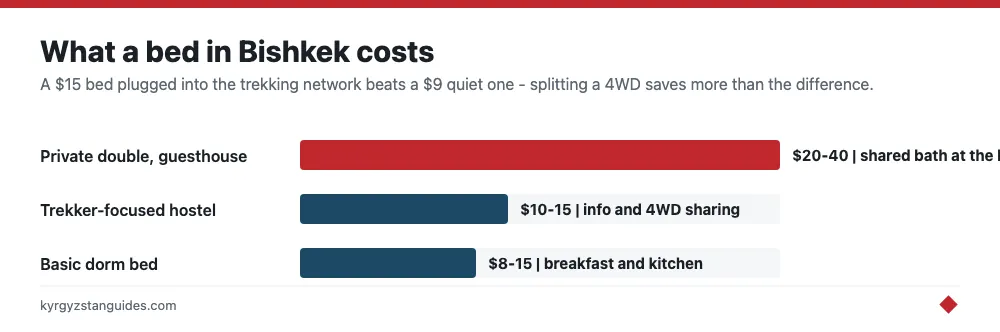
Bishkek is one of the cheapest capitals in the region. Prices firm up in the July–August trekking peak and soften in the shoulder months. As a rough guide:
- Dorm bed: around $8–15 a night, usually including basic breakfast and a kitchen you can use.
- Private double in a guesthouse: around $20–40, sometimes with a shared bathroom at the lower end.
- What the price does not always include: reliable hot water, heating in the shoulder season, and fast Wi-Fi — check these before anything else.
At these rates the gap between a bad night and a good one is a few dollars, so there's little reason to bottom-fish on price alone.
Where to base yourself
Bishkek is laid out on a Soviet grid and it's walkable, so ‘area’ matters less than in most capitals. Three broad zones cover almost all traveler accommodation:
The city centre
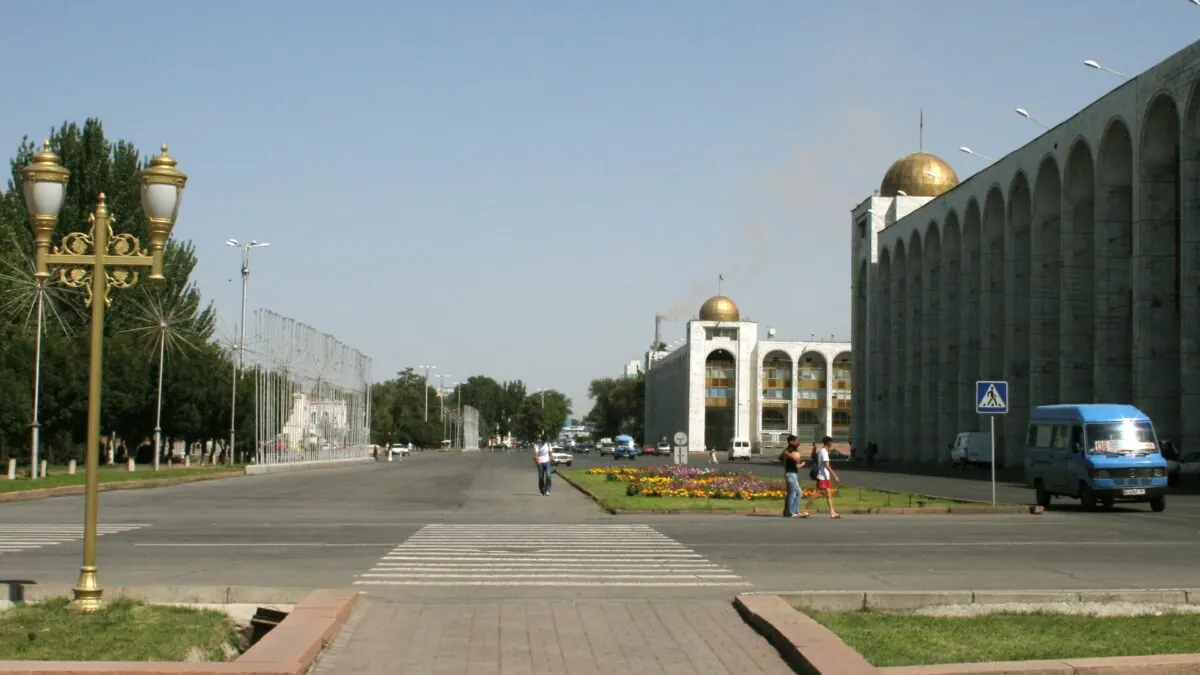
The blocks around Ala-Too Square and Chuy Avenue put you within walking distance of the main sights, cafes, and travel agencies. This is the most convenient base for a short stay and where many of the sociable hostels cluster. See things to do in Bishkek to judge what you actually want to be near.
Near Osh Bazaar and the west
Handy if you're catching early western or southern marshrutkas, and generally a touch cheaper, but louder and less polished. Fine for a night on either side of a long bus, less appealing for a relaxed few days.
Quieter residential streets
Many of the best guesthouses sit in leafy residential blocks a 10–15 minute walk from the centre — calmer, often family-run, and better for sleep. In a city this compact, that small distance costs you nothing you will miss.
On safety, Bishkek is an easy city to base in, including for solo and women travelers; the usual capital-city sense applies at night, but none of these zones is one to avoid. Pick your area for convenience to your onward transport and the vibe you want, not out of caution.
Two kinds of place
The choice that actually shapes your stay is between two archetypes, and knowing which you want saves you a bad match:
- The social hostel: mixed dorms, a busy common room, a bar or shared kitchen, and a rotating cast of travelers. Great for finding people to split a Song-Kul jeep or a trek with; less great if you want early nights before a big hike.
- The trekker guesthouse: quieter, often family-run, with private rooms, home-cooked breakfasts, and owners who arrange drivers, permits, and trek logistics. Worth the small premium if the mountains are your reason for coming.
Plenty of places blend the two. The tell is who's behind the desk: a young receptionist working shifts, or an owner who has personally driven the road to Song-Kul.
What to expect inside
Set your expectations to ‘clean and functional’ rather than boutique. Bishkek doesn't really have design hostels; what it has is a spread of converted apartments and family houses run with varying degrees of polish. A good one gives you a firm bed, a working shared kitchen, decent Wi-Fi, hot showers, and a common area where travelers actually talk to each other. Standards that genuinely vary night to night are heating in the shoulder months, water pressure, and how soundproof the dorm is — ear plugs aren't optional in a social place. Breakfast, where included, is usually bread, eggs, jam, and tea rather than a spread. None of this should surprise you at $10 a bed; the country’s appeal is in the mountains, and Bishkek accommodation is a comfortable base camp, not a destination.
The noticeboard factor
Here is the thing budget listings miss. In Bishkek, the value of a good guesthouse is often not the bed — it is the information. The better trekker-focused places keep noticeboards and WhatsApp groups full of shared-jeep sign-ups, trekking partners, recent trail conditions, and current driver rates. A $15 bed at a place plugged into that network can save you far more than a $9 bed at a quiet one, because splitting a 4×4 to a trailhead is where the real money moves. If you're heading for the high routes, weigh this alongside our trekking guide when you choose.
How to pick, and how to book
A short, honest checklist beats any single recommendation:
- Read the most recent reviews only — anything older than a season may describe different owners.
- Confirm hot water and heating by message before booking in shoulder season; both are common weak points.
- Match the vibe to your plan: social hostel for company, quiet guesthouse for pre-trek sleep.
- Prioritise places that help with onward logistics if you are trekking.
- Check the actual walking distance to where your marshrutka leaves, not just ‘central’ in the listing.
Booking platforms cover most Bishkek places and are worth using in July and August, when the good beds fill. Outside peak season you can often turn up and negotiate, especially for multi-night stays. Manas airport is about 30 km out and most flights land in the small hours, so message your place ahead if you arrive at night — many family guesthouses lock the gate, and you want someone expecting you rather than a dark doorway at 3 a.m. Once you have a base, our transport guide covers getting in from the airport and onward to the mountains.
Frequently Asked Questions
How much is a hostel in Bishkek?
A dorm bed runs about $8–15 a night, usually with basic breakfast and kitchen access. Private rooms in guesthouses cost roughly $20–40. Prices rise in the July–August trekking peak and drop in the shoulder months.
Which area of Bishkek should I stay in?
The centre around Ala-Too Square and Chuy Avenue is most convenient and where the social hostels cluster. Quieter guesthouses on residential streets a short walk out are better for sleep. The city is compact, so area matters less than the type of place.
Do I need to book Bishkek hostels in advance?
In July and August, yes — the best trekker guesthouses fill early. In the shoulder season you can often arrive and negotiate a rate, especially for several nights. Either way, message ahead if you land late, as many family-run places lock up at night.
How much is a private room in Bishkek?
$20 to $40 in a guesthouse, against $8 to $15 for a hostel dorm bed. The better trekker-focused places sit at the top of both ranges.
Social hostel or quiet guesthouse in Bishkek?
That is the real decision, more than the street. A social hostel is for meeting people and finding trek partners; a quieter guesthouse run by owners who know the mountains is better if you want information and sleep.
How long do people stay in Bishkek?
Usually not long. Most travellers spend their Bishkek time either arranging onward travel or recovering from it, which is why proximity to transport and to the outdoor shops matters more than the neighbourhood itself.