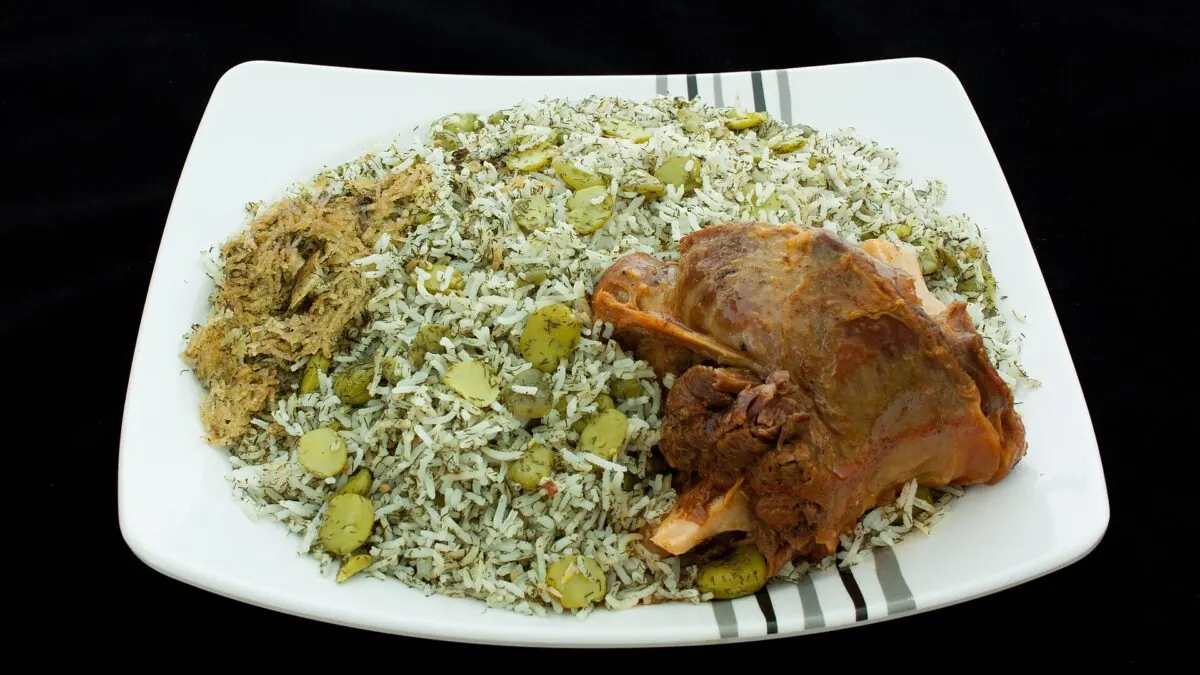
Plov is Kyrgyzstan’s Sunday dish: rice fried and steamed in a heavy cast-iron cauldron with mutton, carrots, cumin, and whole heads of garlic, served in a heaping mound that a table shares. The single most important thing to know is that timing beats venue — plov ladled fresh from a market-day kazan at midday is a different, better dish than the same recipe reheated at 4 pm, and a plate runs about 180-300 KGS ($2-3.50). It is an Uzbek import that the whole region adopted, and in Kyrgyzstan it carries the flavor of the Fergana Valley traditions that crossed the border with the cooks who make it best.
Here is what plov actually is, why the giant cauldron matters, where to catch it fresh, and the honest answer for travelers who don’t eat meat. Prices assume 1 USD around 87-89 KGS.
What plov is, and why the kazan matters
The method is the whole dish. A cook heats oil or rendered fat in a kazan, a thick, round-bottomed cauldron, then browns mutton, layers in carrots cut into matchsticks, and builds a base called the zirvak with onion, cumin, and sometimes barberries or chickpeas. Rice goes on top, water is added to the exact level, whole garlic heads are pushed in, and the pot is covered and left so the rice steams up through the flavored fat rather than boiling in plain water. Done right, each grain stays separate and glossy and tastes of the meat below it.
That is why the cauldron and its timing decide everything. A kazan holds heat and cooks unevenly on purpose — the crust at the bottom, the fluffy rice up top — and it's built to be cooked once and served down, not held warm for hours. A giant kazan on market day gets emptied by a lunchtime crowd and refilled, so the plov you eat was finished minutes ago. The same recipe scooped from a pot that has sat since noon goes heavy and oily. Follow the steam and the queue, not the restaurant sign.
The Uzbek influence
Plov isn't originally a nomad dish. Kyrgyz cooking at its core is meat, dough, and dairy — food built for horseback and cold winters — while plov belongs to the settled, rice-growing culture of the Fergana Valley and the wider Uzbek world. It arrived along the same trade and settlement routes that brought laghman and samsy, and it never left. In southern Kyrgyzstan around Osh, where Uzbek communities are large and the Fergana influence is strongest, the plov is closest to the Uzbek gold standard: richer, sometimes sweeter with extra carrot, often with a whole quail egg or horse-meat sausage laid on top for a feast.
The result is that plov is both a Kyrgyz staple and a marker of the country’s mixed table. Every region and every cook claims a slightly different version, more garlic, darker rice, a particular cut of carrot, and arguing about whose is correct is part of the fun. For the full spread of what the borrowed and the native dishes look like side by side, our Kyrgyz food guide walks through the whole menu.
The big-cauldron tradition
Plov is also a communal event, not just a lunch. At weddings, funerals, and major celebrations, an enormous kazan, sometimes wide enough to feed hundreds, is set over a fire and cooked by a designated plovmaster, often a man with a local reputation for it. Cooking at that scale is a skill of its own: judging the fat, the water level, and the fire for a pot that size is why the job goes to a specialist rather than whoever is free.
You don’t need a wedding invitation to see it. On weekends and market days, bazaars fire up big communal kazans and sell plov by the plate to whoever shows up, and that street-cauldron version — cooked in volume, served the moment it’s ready — is often the best plov you’ll eat in the country. If you spot a crowd gathered around a steaming cauldron with a man working a long-handled skimmer, that's the line to join.
Where to eat it
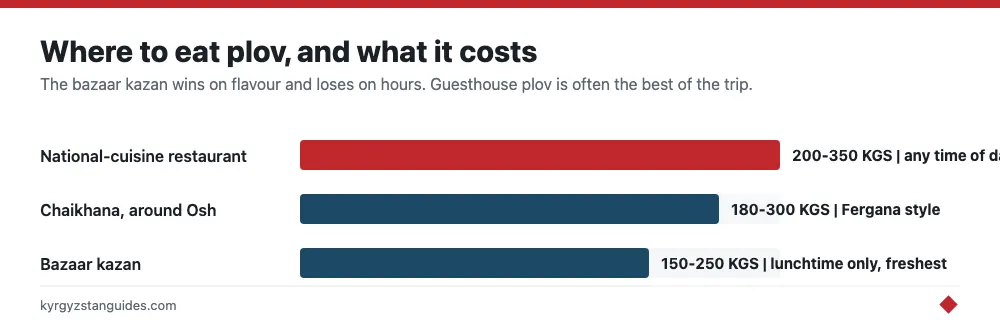
The table below sums up the trade-offs. In short: for the freshest plov, go to a bazaar around lunchtime on a market day; for a reliable seated plate any day, a national-cuisine restaurant will do; and the south generally out-cooks the north on this particular dish.
| Where | Typical price | Best for |
|---|---|---|
| Bazaar / market-day kazan | 150–250 KGS | Freshest plov, best flavor, lunchtime only |
| National-cuisine restaurant | 200–350 KGS | Reliable seated meal any time of day |
| Chaikhana (south, around Osh) | 180–300 KGS | Fergana-style richness, platform seating |
| Guesthouse / family table | included with stay | Home version, often the best of the trip |
Two habits pay off. Eat plov at lunch, when the kazans are fresh and many cafes run cheaper business-lunch sets; by evening the good pots are scraped and the reheats begin. And order plov at a place that's known for it — a laghman house makes indifferent plov and vice versa. If you're pacing meals across a trip, our travel budget guide has the daily food numbers to plan around.
The vegetarian reality
Here is the honest part: traditional plov isn't vegetarian, and not just because of the meat on top. The rice is cooked in the fat rendered from mutton, so even a plate picked clean of meat still tastes of it and, strictly speaking, isn’t meat-free. Vegetarian plov exists, some Bishkek restaurants and Dungan or Uyghur kitchens make versions with oil instead of animal fat and extra carrot, chickpea, or dried fruit — but it's the exception, and you should ask directly rather than assume. “Etsiz” means without meat, but the fat question is worth a second sentence.
If plov doesn’t work for you, the dumpling family is friendlier: pumpkin manty in autumn, potato oromo, and the vegetable-heavier menus at Dungan cafes are more dependable meat-free options. For yurt stays booked through community tourism networks, tell the host in advance and families will usually cook something meat-free: but a market-day kazan is not the place to negotiate.
The verdict: plov is worth going out of your way for, but only the fresh version delivers. Find a bazaar cauldron at midday, order a plate, eat it while the steam is still rising, and skip the 4 pm reheat no matter how tempting the smell.
Frequently Asked Questions
Is Kyrgyz plov the same as Uzbek plov?
It is the same dish with regional variation. Plov came to Kyrgyzstan from the Uzbek Fergana Valley, and southern Kyrgyz plov around Osh stays closest to the Uzbek style. Richer and sometimes sweeter. Northern versions can be a touch plainer. Every cook claims their own recipe, so expect small differences from town to town.
How much does a plate of plov cost?
Around 200-350 KGS at a national-cuisine restaurant, 180-300 KGS at a chaikhana in the south, and often less (150-250 KGS) from a bazaar kazan at lunch. Portions are large and usually feed you comfortably, so you rarely need more than one plate plus bread and tea.
When is the best time to eat plov?
Lunch, ideally on a market day, when the cauldrons are cooked fresh and emptied by the crowd. By late afternoon the best pots are gone and what remains has often been reheated, which goes oily and heavy. Timing matters more than which restaurant you choose.
Can vegetarians eat plov in Kyrgyzstan?
Traditional plov isn't vegetarian even without the meat, because the rice is cooked in mutton fat. Meat-free versions made with oil do exist at some Bishkek and Dungan restaurants, but you must ask directly. Pumpkin manty and potato oromo are more reliable meat-free choices.
What is a plovmaster?
The cook in charge of the enormous kazan at weddings, funerals and major celebrations, often a man with a local reputation for plov. A pot that size, sometimes wide enough to feed hundreds, means judging the fat, the water level and the fire on a scale that is a skill of its own, which is why the job goes to a specialist rather than whoever is free.
Is plov actually a Kyrgyz dish?
It is an Uzbek import from the settled, rice-growing Fergana Valley — core Kyrgyz cooking is meat, dough, and dairy built for horseback life. But plov arrived with the same routes that brought laghman and samsy and never left; in southern Kyrgyzstan around Osh, where Uzbek communities are large, it is closest to the Uzbek gold standard.