Is Jalal-Abad worth stopping for, or just a place to change transport? Honestly, a bit of both: and knowing which is which will save you a wasted afternoon.
Jalal-Abad is Kyrgyzstan’s third-largest city and the main transport hub of the country’s southwest, best known for its hillside sanatorium springs and its role as the gateway to Arslanbob’s walnut forests and the Sary-Chelek lakes. Most travelers use it as a one-night waypoint: change marshrutkas, eat well, maybe take the waters, then move on to the mountains.
It isn't a sightseeing city, and we wouldn't send anyone here for the monuments. But it's comfortable, cheap, warm, and perfectly placed — and the springs give it a genuine local identity that the guidebooks tend to undersell.
The Springs and Sanatorium
Jalal-Abad has been a spa destination for a very long time, legend ties the springs to pilgrims and even to the prophet Job (Ayyub), and the mineral and mud waters on the hill above town have drawn people seeking cures for generations. The Soviet era formalized this into the sizeable Jalal-Abad sanatorium complex up on the ridge, a few kilometers from the center, where the healing-waters tradition still runs.
You do not need to be a sanatorium guest to sample it. Day visitors can usually access the baths and drink from the mineral springs for a modest fee, and the hilltop position gives long views over the city and the Fergana fringe. It's a distinctly Central Asian wellness experience, utilitarian rather than luxurious, and that's exactly the point. If faded Soviet spa culture interests you at all, an afternoon up here is the most characterful thing to do in town.
A word on expectations, because this trips up first-time visitors. A Kyrgyz sanatorium is not a Western spa. The model is medical rather than pampering: guests traditionally check in for a course of treatment measured in days or weeks, following a regimen of mineral baths, mud wraps, mineral-water drinking cures, and rest. As a passing traveler you're sampling the fringe of that world, and the atmosphere — tiled corridors, brisk staff, an air of purposeful convalescence, is part of what makes it interesting. Bring flip-flops and a towel, do not expect fluffy robes, and treat it as ethnography with a health benefit attached.
Gateway North: Arslanbob and Sary-Chelek
The real reason most travelers pass through is what lies in the mountains north of the city. Jalal-Abad is the pivot point for two of southern Kyrgyzstan’s headline destinations.
The first is Arslanbob, an Uzbek mountain village wrapped in the largest natural walnut forest on earth, roughly two to three hours north by road. The second is Sary-Chelek, a deep biosphere-reserve lake ringed by forest and peaks, reached via Tash-Kumyr or through the Kara-Alma road and best done with your own transport or a hired driver. For both, Jalal-Abad is where you assemble the trip: fill up on cash, provisions, and a shared taxi. Sary-Chelek is also one of three Kyrgyz components of the Western Tien-Shan UNESCO World Heritage property; another, Padysha-Ata, lies in Jalal-Abad oblast’s Aksy district and has a pilgrimage shrine inside it.
The practical lesson is to do your logistics here. Neither Arslanbob nor Sary-Chelek has a reliable ATM or a wide choice of supplies, and onward transport from the mountain villages thins out sharply after mid-morning. Draw the cash you'll need for the next few days from a Jalal-Abad bank, buy any trekking snacks and bottled water you want, and confirm your onward taxi before leaving the city. Travelers who breeze through without stocking up regularly find themselves stuck or overpaying once they are up in the hills.
A common mistake is to underestimate how much the two destinations differ in access. Arslanbob is served by regular public minibuses and is easy to reach independently on a backpacker budget. Sary-Chelek, by contrast, sits at the end of a rough approach with no scheduled public transport to the lake itself, so reaching it almost always means hiring a driver for a long day or overnight: a cost worth splitting with other travelers if you can find them in Jalal-Abad or Arslanbob first.
The Transport Hub
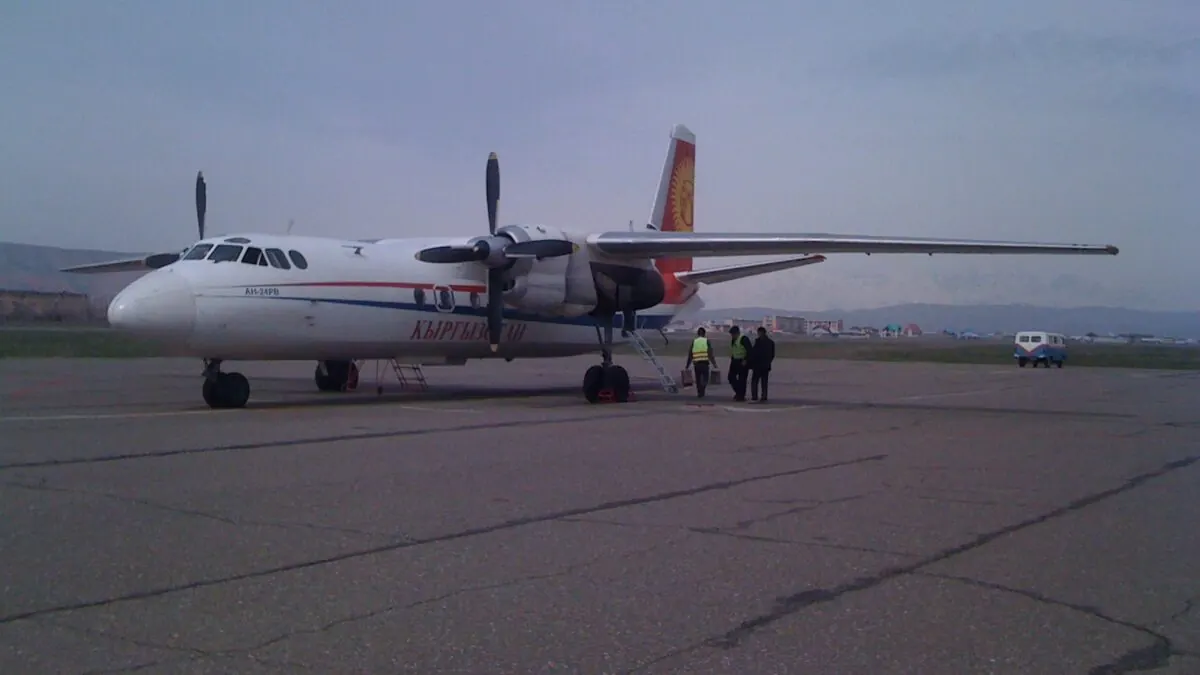
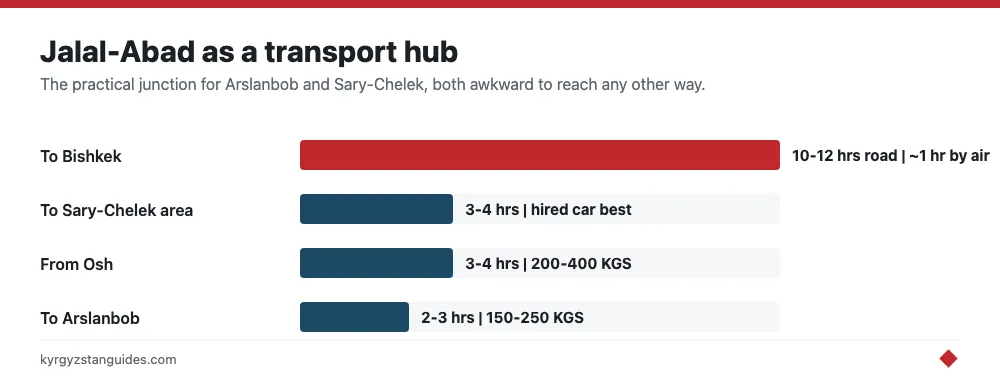
Jalal-Abad’s practical value is its bus and shared-taxi network. It links Osh (the southern capital, about 3-4 hours southeast), the Uzbek-border towns, and the northbound mountain roads, and it has an airport with occasional flights to Bishkek, though the Osh airport is the more reliable air option for the south.
| Route | Mode | Rough time / cost |
|---|---|---|
| Osh ↔ Jalal-Abad | Marshrutka or shared taxi | 3-4 h; 200-400 KGS |
| Jalal-Abad → Arslanbob | Marshrutka via Bazar-Korgon | 2-3 h; 150-250 KGS |
| Jalal-Abad → Sary-Chelek area | Shared taxi via Tash-Kumyr | 3-4 h; hired car best |
| Jalal-Abad → Bishkek | Long-haul bus or flight | 10-12 h road; ~1 h air |
Shared taxis leave from the town’s stands when full and are the standard way to move; agree the fare before you get in. If you are routing up from the southern capital first, our Osh travel guide covers that leg and the wider southern loop.
Where to Stay
Accommodation is functional and cheap. Expect simple guesthouses and small hotels in the $15-35 range, with a few mid-range business hotels near the center running higher. Book a room in town for convenience to the bus stands, or stay up at the sanatorium if you specifically want the spa experience and quieter nights. Standards are modest across the board, this is a working city, not a resort, but rooms are clean, hosts are hospitable, and you'll rarely struggle to find a bed even without a reservation.
Given the low cost, Jalal-Abad barely registers on a Kyrgyzstan travel budget; the money you save here is better spent on a driver up to Sary-Chelek.
Where to Eat
This is one area where the south quietly outperforms the north. Jalal-Abad sits in the Fergana cultural sphere, so the food leans Uzbek. Excellent plov, fresh samsa baked in tandoor ovens, laghman, and grilled shashlik, all cheaper than in Bishkek. The central bazaar and the chaikhanas around it are where to eat: point at what looks good, sit under the vine trellis, and drink green tea. Fruit in season, especially apricots and melons, is superb. Vegetarians will find the plov-and-shashlik default limiting but can lean on samsa variants, bread, salads, and dairy.
How Long to Stay
One night is plenty for most people: arrive, eat, take the waters if the springs appeal, sleep, and push on to the mountains the next morning. Only linger a second night if you want a full sanatorium afternoon or you are waiting out transport connections. Treat it as a comfortable, well-fed hinge between Osh and the walnut forests — not a destination in itself.
Frequently Asked Questions
Is Jalal-Abad worth visiting?
As a destination on its own, only mildly, the main draw is the hillside sanatorium springs. Its real value is as a comfortable, well-connected base for reaching Arslanbob and Sary-Chelek. Treat it as a one-night waypoint rather than a sightseeing stop.
How do you get from Jalal-Abad to Arslanbob?
Take a marshrutka or shared taxi via Bazar-Korgon; the trip is about two to three hours and costs roughly 150-250 KGS by minibus. Departures thin out in the afternoon, so travel in the morning to be safe.
Can you use the sanatorium springs as a day visitor?
Usually yes. Non-guests can typically access the baths and mineral springs on the hill above town for a small fee, without staying at the sanatorium. Facilities are basic and Soviet in style rather than luxurious.
Is Jalal-Abad safe for travelers?
It is a normal working city and generally safe for visitors, with the usual sensible precautions in markets and at night. It sits away from the border zones, and travelers pass through routinely on the way to the mountains.
When is the best time to visit?
Spring and autumn are most pleasant, as the low-lying south gets very hot in July and August. If Jalal-Abad is just a jumping-off point for Arslanbob’s walnut harvest, aim for September, when the forest and the weather are both at their best.
What is a Kyrgyz sanatorium actually like?
Medical rather than pampering: guests traditionally check in for a course of mineral baths, mud wraps, drinking cures, and rest measured in days or weeks. As a day visitor at Jalal-Abad you sample the fringe of that world for a modest fee — tiled corridors, brisk staff, an air of purposeful convalescence. Bring flip-flops and a towel, and do not expect fluffy robes.