Should you drink the fermented horse milk? Almost certainly yes, at least a mouthful, and it helps to know in advance what you're getting into. Kymyz is fermented mare’s milk, the Kyrgyz national drink: lightly fizzy, sharply sour, faintly smoky, and mildly alcoholic (around 1-2%), made fresh each summer on the high jailoo pastures and offered to guests as a mark of hospitality. It tastes like sour drinking yogurt crossed with a dry, funky cider, and your reaction to the first sip is genuinely hard to predict.
Kymyz belongs to summer and to the mountains rather than to supermarket shelves, and refusing it outright at a herder’s yurt can land badly. So the useful thing is to know what it actually tastes like, where and when to find the real stuff, what the health lore is worth, and exactly how to accept it politely even if you would rather not finish the bowl. That is what this guide covers, from an India-based desk that researches Kyrgyzstan rather than pretending to sip kymyz on a pasture.
What it actually tastes like
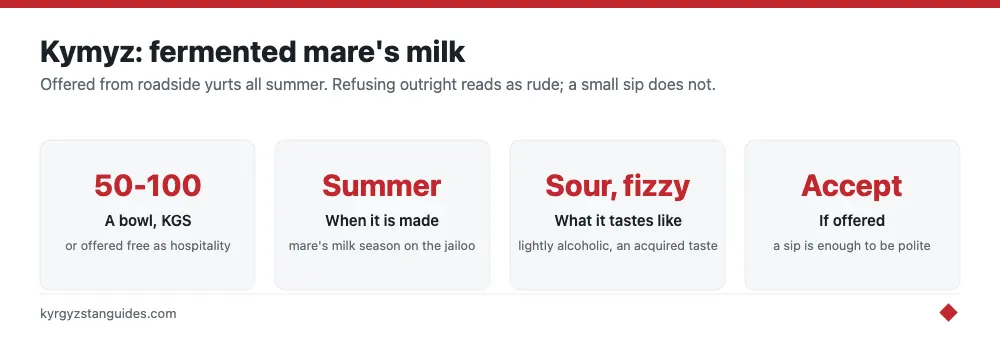
Set your expectations away from milk. Kymyz is fermented, so it is sour first, tangy and yogurt-like, with a light natural fizz from the fermentation and a faint alcoholic edge, usually 1-2% but stronger when it has been left to work longer. There is often a smoky note too, because it traditionally ferments and is served from vessels of smoked hide or wood. Fresh, cold, well-made kymyz is refreshing in the way a dry cider is; poorly kept or over-fermented kymyz can be aggressively sour and gassy.
The texture is thin and drinkable, nothing like the thickness of a lassi. First-timers tend to split into two camps immediately, delighted or grimacing, and both reactions are normal. The single best move is to start with half a bowl, drink it cold, and give your palate a moment; many people who recoil at the first sip come around by the third. And if you already enjoy sharp, funky, fermented flavors, there is a decent chance you'll end up liking it a lot.
Where and when to find the real thing
Kymyz is seasonal because it depends on lactating mares, which means it is a late-spring-to-early-autumn drink, at its best and freshest from roughly June through August. It's also a highland drink, made where the horses graze, so the good stuff lives out on the jailoo, the summer pastures, well away from city shops.
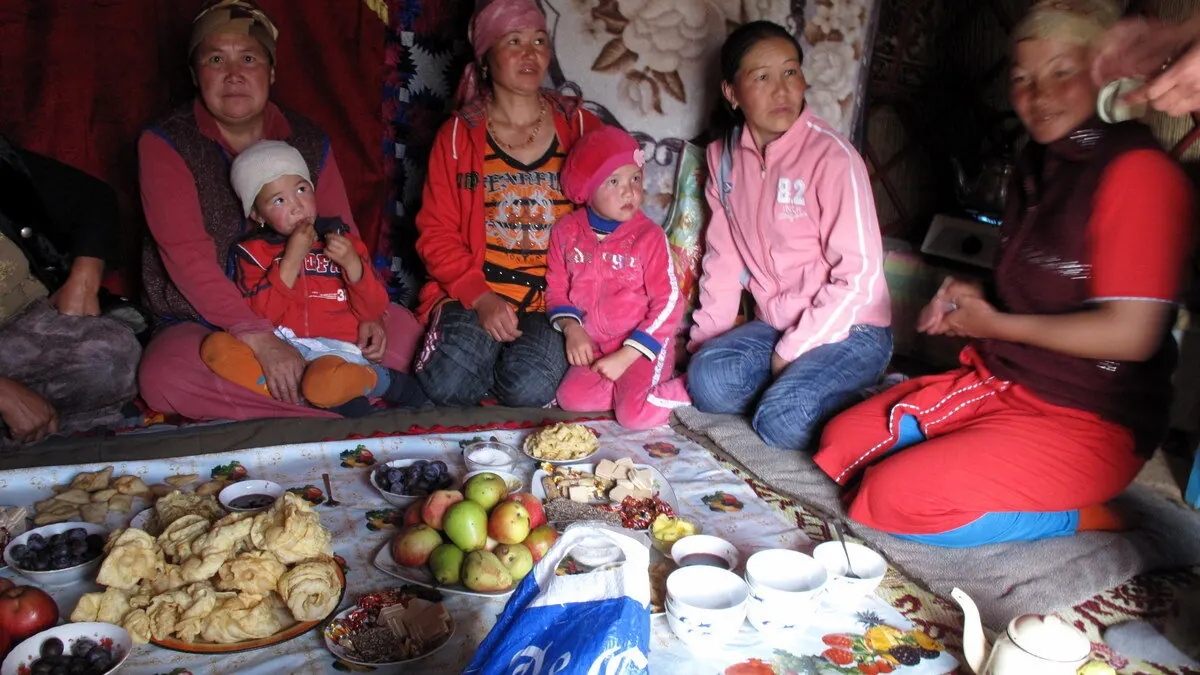
The classic encounter is a roadside yurt selling bowls to passing cars, or a herding family at a yurt stay pouring you a welcome bowl. The high pastures around Song-Kul in July and August are about as good as it gets, kymyz drunk within sight of the mares that made it. A bowl from a roadside yurt runs 50-100 KGS, and it's often simply offered to guests for free, in which case it is hospitality, not a transaction. City-bottled kymyz exists but is a pale, sometimes over-soured shadow of the pasture version; if you can, wait for the mountains.
The health lore, honestly
Kymyz carries a heavy load of traditional health claims, and it is worth separating the reasonable from the folklore. Across Central Asia it has long been treated as a tonic, and there were once whole Soviet-era “kymyz sanatoria” where patients drank it as a cure, especially for tuberculosis and digestive complaints.
What holds up: kymyz is a live fermented dairy drink, so like other fermented dairy it delivers probiotics, is easier on the stomach than fresh milk for the lactose-sensitive (fermentation breaks down much of the lactose), and carries vitamins and beneficial bacteria. What doesn't hold up: any claim that it cures serious disease, since the more sweeping promises rest on tradition rather than proven medicine. Treat it as a nutritious, cultural, mildly alcoholic drink to enjoy on its own terms rather than as a course of treatment, and if you are pregnant, avoiding alcohol, or have a compromised immune system, it is reasonable to skip it.
Is it safe for travelers?
For most visitors, yes. Fermentation acidifies the milk, which suppresses many harmful bacteria, and millions of people drink kymyz through every Kyrgyz summer without trouble. The sensible caution is the same as for any fresh, unpasteurized product: your gut has never met it before, so a large first serving is a gamble you do not need to take.
- Start with half a bowl rather than a full one, and see how you feel before committing.
- Choose kymyz from a working herding family or a busy roadside yurt with fresh turnover over dubious bottled stock.
- Drink it cold and reasonably fresh; over-fermented, warm kymyz is both less pleasant and rougher on the stomach.
- If your stomach is already unsettled from travel, this is not the day to test it.
- If you avoid alcohol entirely, remember it does contain a little, and give it a miss.
How to accept it politely
Being handed a bowl of kymyz is an act of hospitality, and how you receive it matters more than how much you drink. The graceful sequence is simple: take the bowl with your right hand (or both hands), give a small nod or word of thanks, and take at least a sip. The first taste is what counts, and nobody is measuring how much stays in the bowl afterward.
If you like it, wonderful, drink up and a refill will appear. If you do not, you are under no obligation to force down the whole thing. Take your sip, smile, thank the host warmly, and set the bowl down; a sincere “rakhmat” (thank you) and evident goodwill smooth over a half-finished bowl completely. What reads badly is a flat, visible refusal to even accept it, or wrinkling your face in disgust in front of the family who made it. Meet the gesture with the same warmth it was offered, and the etiquette takes care of itself. The same principle runs through the whole table in Kyrgyzstan, as our Kyrgyz food guide lays out.
The tourist reality
The practical picture comes down to a few points. Great kymyz won't turn up in a Bishkek supermarket in April; it waits on a summer pasture, poured by someone who made it, and that is exactly the moment to try it. Go in expecting sour, fizzy, funky, and faintly boozy rather than creamy and sweet. Take half a bowl, drink it cold, and let your palate decide. Accept it with your right hand and a warm thank-you whether or not you finish it. Do it right and you get a real taste of nomadic Kyrgyzstan for the price of a smile; the worst case is a face you make once and a story you tell later.
Frequently Asked Questions
What does kymyz taste like?
Sour, tangy and yogurt-like, with a light natural fizz and a faint alcoholic edge, often with a smoky note from the vessel it ferments in. Think sharp drinking yogurt crossed with a dry, funky cider rather than anything creamy or sweet. Fresh and cold it is refreshing; over-fermented it turns aggressively sour.
Is kymyz alcoholic?
Mildly, yes. Fermentation of the mare’s milk produces roughly 1-2% alcohol, sometimes a little more when it has fermented longer. It's far weaker than beer, but if you avoid alcohol entirely it's reasonable to skip it.
Is kymyz safe for tourists to drink?
For most people, yes. Fermentation acidifies the milk and suppresses many harmful bacteria, and millions drink it every summer without trouble. Still, start with half a bowl rather than a full one, choose fresh kymyz from a working herding family, drink it cold, and skip it if your stomach is already unsettled.
Where and when can I try kymyz in Kyrgyzstan?
On the summer jailoo (high pastures) from roughly June through August, when the mares are lactating. Roadside yurts and yurt-stay families pour it fresh, and the pastures around Song-Kul in July and August are among the best places. A bowl runs 50-100 KGS, or is often simply offered to guests as hospitality.
How alcoholic is kymyz?
Mildly - usually around 1-2 per cent, though it gets stronger the longer it ferments. If you are pregnant, avoiding alcohol, or immunocompromised, skipping it is entirely reasonable, and the polite-refusal moves in this guide cover you.
How much does kymyz cost?
A bowl from a roadside yurt runs 50-100 som, and at a herder's yurt it is often simply offered free as hospitality rather than a transaction. City-bottled kymyz exists but is a pale shadow of the pasture version - if you can, wait for the mountains.