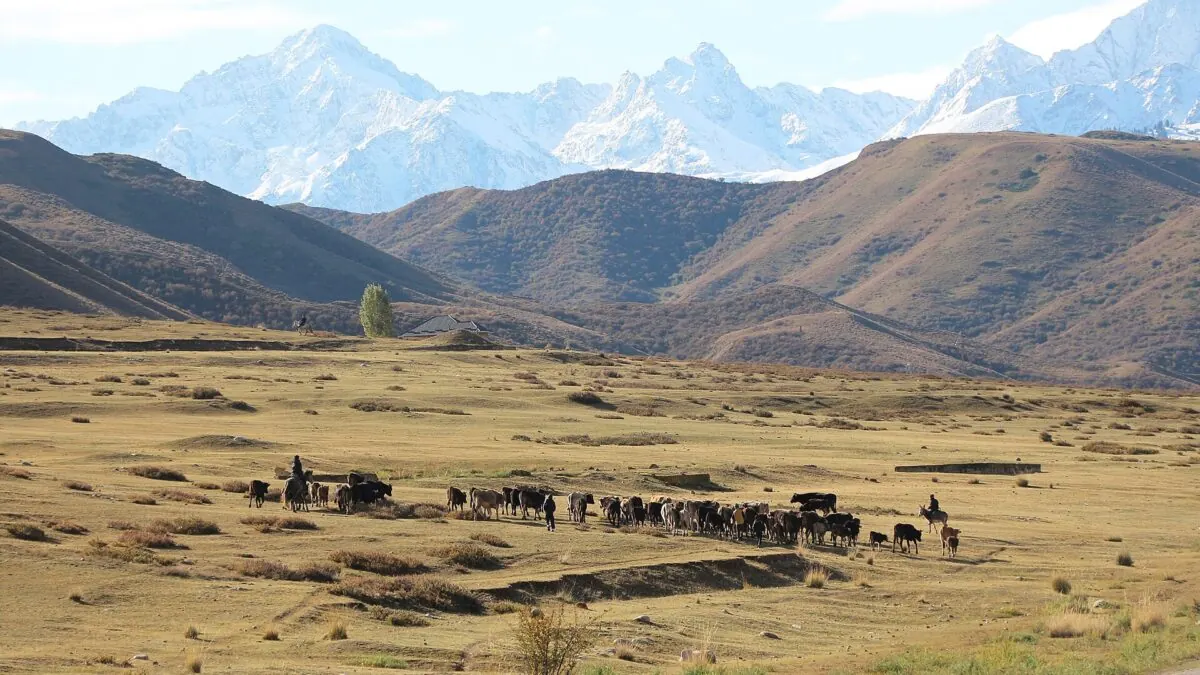
Here is our verdict up front: for an Indian passport holder chasing mountains, Kyrgyzstan is one of the best-value trips within reach right now, and it deserves far more Indian visitors than it gets.
The reasons are practical. Indians need an e-Visa, applied for online at evisa.e-gov.kg for around $60–80 with 2–3 working days of processing; return flights from Delhi or Mumbai typically run ₹25,000–45,000 via Almaty or Tashkent; and once you land, a backpacker can live on roughly ₹2,000–3,000 a day. There is no direct flight, and the country has no beach, no shopping malls worth the airfare, and patchy English — plenty of travelers will rightly pass. But if the Alps feel priced out and Himachal feels crowded, this is Central Asia’s high country at a fraction of the cost, and Indian food habits are easier to manage here than most travelers expect. We researched this for the Indian traveler specifically; we have not been on the ground ourselves, so every figure below is a realistic range, not a receipt.
The e-Visa: what Indians actually need
Indian citizens are not on Kyrgyzstan’s visa-free list, so you apply for an electronic visa before you fly. The only official portal is evisa.e-gov.kg — ignore the agent sites that charge a markup for the same form. A single-entry tourist e-Visa costs somewhere in the region of $60–80 all-in, and the standard processing window is about 2–3 working days, though we would apply at least two weeks ahead to leave room for corrections.
You will need a passport valid for six months beyond travel, a clear scan of the photo page, a passport-style photo, and a card for the fee. The visa is usually valid for a stay of up to 30 days. Print the PDF approval and carry it — immigration at Manas Airport in Bishkek will want to see it. Our full Kyrgyzstan visa guide walks through the form field by field, but the short version is that this is one of the easier e-Visas an Indian passport can get.
The payment step catches more Indian applicants than anything else on the form: the fee is card-only, so use a card enabled for international transactions or the step fails silently. The other classic stumble is a typo — upload dates and passport numbers must match your document exactly, and a single wrong digit means a rejection you then have to re-file and pay for. Take five minutes to check the entered details against your passport before you submit, and you will almost certainly sail through on the first try.
Flights from India: routes and honest pricing
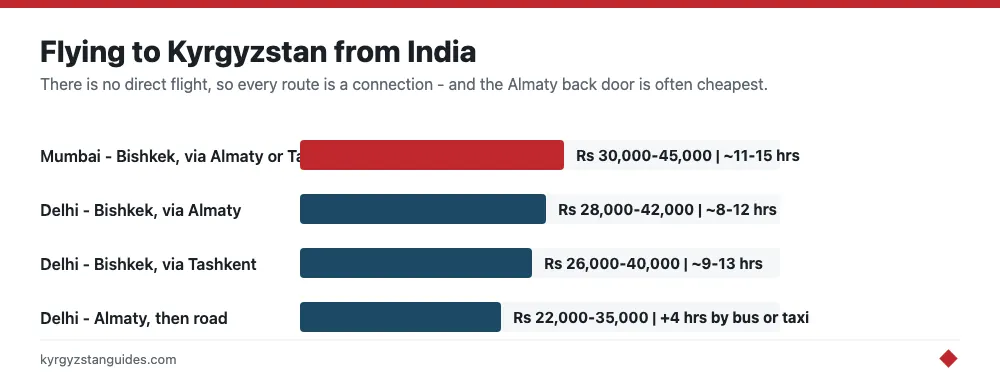
There is no non-stop flight between India and Kyrgyzstan, so every route connects once. The two sensible hubs are Almaty (Kazakhstan) and Tashkent (Uzbekistan), both a short onward hop to Bishkek. Delhi has the widest choice; Mumbai travelers usually route through the same hubs with a slightly longer total journey.
Treat the fares below as typical rather than guaranteed. Prices swing hard with season — summer (June–August) is peak for both weather and Indian school holidays, so book two to three months out for the better end of the range.
| Route | Via | Typical return fare | Total travel time |
|---|---|---|---|
| Delhi → Bishkek | Almaty | ₹28,000–42,000 | ~8–12 hrs |
| Delhi → Bishkek | Tashkent | ₹26,000–40,000 | ~9–13 hrs |
| Mumbai → Bishkek | Almaty / Tashkent | ₹30,000–45,000 | ~11–15 hrs |
| Delhi → Almaty (then bus/taxi) | Direct to Almaty | ₹22,000–35,000 | +4 hr road to Bishkek |
One money-saving trick worth knowing: flying into Almaty and taking a shared taxi or bus across the border to Bishkek (about four hours) is sometimes cheaper than flying the final leg, and the land crossing is straightforward for Indian passports on a Kyrgyz e-Visa. If you want to spread the mountains over more days, our 10-day Kyrgyzstan itinerary is built around a Bishkek arrival.
A word on the connections themselves. Layovers through Almaty and Tashkent can be short and tidy or an overnight slog depending on the fare class, so read the full itinerary before you book the cheapest ticket — a ₹3,000 saving that costs you a night in an airport is rarely worth it. Where the routing forces a long stop, both Almaty and Tashkent are pleasant cities to break the journey in for a day, which some travelers deliberately build in. Keep your Kyrgyz e-Visa printout and onward ticket handy at every transit point; airline staff in the region sometimes ask to see proof of onward travel before boarding.
What it costs per day, in rupees
This is where Kyrgyzstan wins. The som trades at roughly 87–89 to the US dollar, and about 1 rupee to 1 KGS — so ₹100 is close to 100–103 som. That makes on-the-ground costs feel gentle to an Indian wallet: a dorm bed, a bowl of noodles, and a marshrutka ride together cost less than a single mid-range meal in a European capital.
| Daily item | Backpacker | Mid-range |
|---|---|---|
| Bed | Dorm ₹700–1,050 | Guesthouse ₹2,100–3,500 |
| Food (3 meals) | ₹500–800 | ₹900–1,600 |
| Local transport | Marshrutka ₹100–500 | Shared taxi ₹500–1,200 |
| Activity / entry | ₹0–500 | ₹800–2,000 |
| Rough daily total | ₹2,000–3,000 | ₹5,000–7,500 |
A two-week trip on the backpacker end, flights included, can come in under ₹80,000 per person — competitive with a good domestic Himalayan holiday and a great deal more remote. For a fuller breakdown, our Kyrgyzstan travel budget guide has the numbers in dollars and som.
Eating vegetarian, Jain, and halal
Be honest with yourself before you go: Kyrgyz cuisine is built on meat, dairy, and bread. Mutton, horse, and beef anchor the national dishes, and a strict vegetarian — let alone a Jain traveler avoiding roots — will have to plan. With some forethought it stays firmly in the manageable column.
- Vegetarians: lean on Dungan and Uyghur restaurants, which do vegetable laghman (hand-pulled noodles) and fried vegetable dishes. Bishkek and Osh have Indian restaurants and pizza places for a reliable fallback. Bread (nan), fresh tomato-cucumber salads, dairy, and eggs are everywhere.
- Jain travelers: the strictest will find self-catering the safest bet — guesthouses often have kitchens, and bazaars sell fruit, nuts, rice, and vegetables cheaply. Carry ready mixes and dry snacks from India; specialty Indian ingredients are scarce outside Bishkek.
- Halal food: Kyrgyzstan is a majority-Muslim country, so most meat sold and served is halal by default, and you will see the word on many eateries. If it matters to you, it's one of the easier boxes to tick here.
Our Kyrgyz food guide covers the dishes dish by dish, including which ones happen to be vegetarian-friendly. The blunt takeaway: pack a stash of familiar food for the road, and treat homestay kitchens as your friend.
Best months, SIM, money, and safety
For Indian travelers the timing is almost decided for you: June to early September is when the high passes are open, the yurt camps are up, and the weather cooperates — and it lines up neatly with summer school holidays. May and late September are quieter and cheaper but colder in the mountains. Winter is for skiers and specialists only. Our best time to visit Kyrgyzstan guide has the month-by-month detail.
On arrival, buy a local SIM — O!, Beeline, or MegaCom — at a bazaar or phone shop in Bishkek for a few hundred rupees, with generous data. Bring your passport; registration is required to activate a SIM. Coverage is good in towns and along main roads, patchy in the mountains, so download offline maps before you head out. On money, bring US dollars in clean, newer notes to change — torn or pre-2013 bills get refused or a poor rate — use bank ATMs in cities, and carry plenty of som in cash for rural areas and yurt camps, which are cash-only. Indian debit and credit cards work at city ATMs and larger hotels but nowhere in the mountains, so top up before you leave Bishkek or the lakeshore towns.
On safety, Kyrgyzstan is generally calm and welcoming, and Indian travelers rarely report trouble; petty scams and altitude are bigger concerns than crime. The one thing worth respecting is the elevation — many highlights sit above 3,000 m, so ascend gradually, and if you have young children or elderly relatives along, plan easy first days. Take normal precautions with valuables in bazaars and agree taxi fares before you get in, and the trip is as low-stress as any Indian mountain holiday.
Why it beats the crowded alternatives
Set Kyrgyzstan against the usual Indian mountain choices and the case makes itself. Manali and Leh in July are heaving; Switzerland is a rupee bloodbath; and Nepal’s classic trails are busy year after year. Kyrgyzstan gives you glacial lakes, nomad yurt camps, and horse treks over empty passes for a mid-range daily spend that undercuts almost all of them, with a visa that lands in your inbox in a few days.
So, a checklist before you commit: apply on the official e-Visa portal early; price the Almaty and Tashkent routings side by side; budget in the ranges above and carry dollar cash; plan your vegetarian or Jain food with a homestay kitchen and a snack stash; and aim for the June–September window. Do those five things and you have one of the most under-visited, best-value mountain trips an Indian passport can reach.
Frequently Asked Questions
Do Indian citizens need a visa for Kyrgyzstan?
Yes. Indian passport holders need an e-Visa, applied for online at evisa.e-gov.kg before travel. It costs roughly $60–80, processes in about 2–3 working days, and usually allows a stay of up to 30 days. Apply at least two weeks ahead and print the approval to show at Manas Airport.
How much does a Kyrgyzstan trip cost from India?
Return flights from Delhi or Mumbai typically run ₹25,000–45,000. On the ground, a backpacker spends around ₹2,000–3,000 a day and a mid-range traveler ₹5,000–7,500. A frugal two-week trip with flights can total under ₹80,000 per person.
Is there vegetarian food in Kyrgyzstan?
Yes, but you must plan. Kyrgyz cuisine is meat-heavy, so vegetarians rely on Dungan and Uyghur restaurants for vegetable laghman, plus Indian and pizza places in Bishkek and Osh. Bread, salads, dairy, and eggs are widely available, and guesthouse kitchens make self-catering easy. Jain travelers should carry dry food from India.
When is the best time for Indians to visit Kyrgyzstan?
June to early September, which lines up with Indian summer school holidays. That is when high passes are open, yurt camps operate, and the weather is warmest. May and late September are quieter and cheaper but colder in the mountains; winter suits only skiers and specialists.
Is Kyrgyzstan safe for Indian travelers?
Generally, yes. Kyrgyzstan is calm and welcoming, and violent crime against tourists is rare. Bigger practical risks are altitude sickness in the mountains, rough roads, and occasional petty scams. Buy a local SIM for connectivity, carry cash for rural areas, and take normal precautions as you would anywhere.
What goes wrong with Kyrgyzstan e-Visa applications from India?
Two things catch most applicants: the fee is card-only, so a card not enabled for international transactions fails silently, and a single typo — upload dates or passport numbers not matching the document exactly — means a rejection you must re-file and pay for again. Apply only through the official portal evisa.e-gov.kg, at least two weeks ahead, and check every entered detail against your passport before submitting.