The best frames in Kyrgyzstan tend to happen in the hour after the yurt fires are lit and the hour before they die down.
Kyrgyzstan rewards photographers who organise their days around light and altitude rather than around sights. The country is mostly high pasture, jagged ranges, and vast lakes, which means the difference between a flat snapshot and a strong image is almost always the time of day and the season you show up. Plan for early mornings, build in weather buffers, and treat the low light at each location as the real subject.
This guide runs through the signature shots — jailoo mornings, high-mountain lakes, red-rock golden hour, eagle hunters — then covers gear for trekking, the drone situation, and how to photograph people without turning them into props.
Song-Kul at sunrise
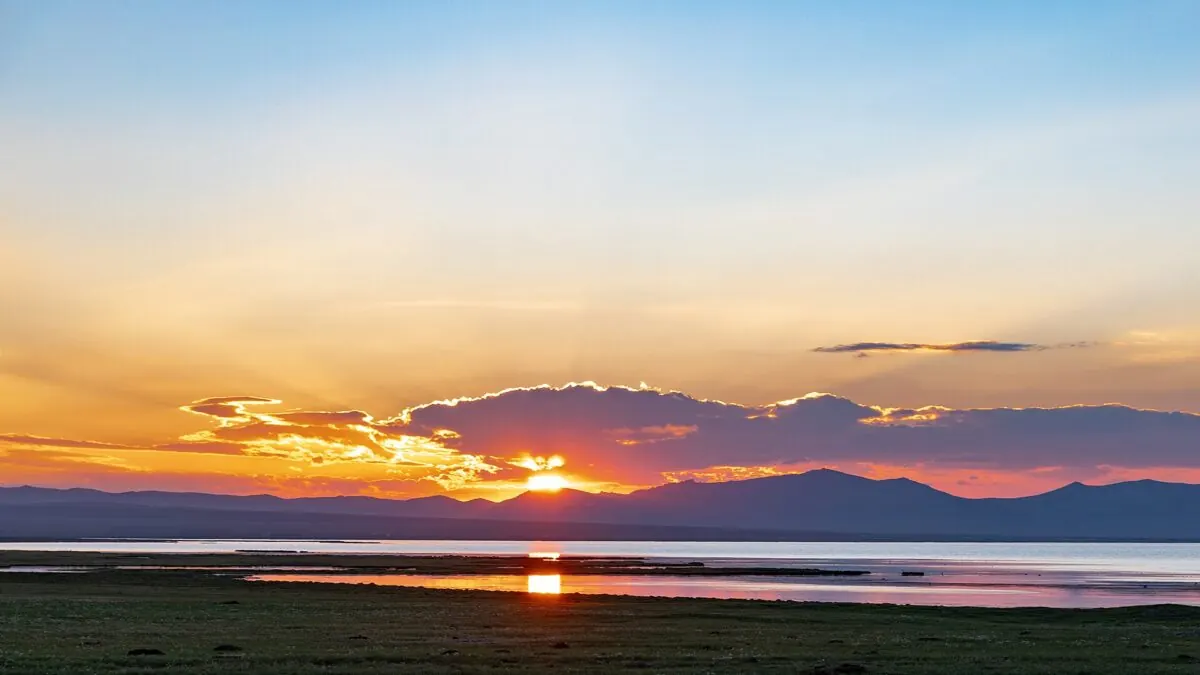
The classic Kyrgyzstan image — horses grazing on open pasture with a mirror lake and mountains behind — is a Song-Kul sunrise shot. At 3,000 m the nights are cold even in July, and that cold is what gives you ground mist and still water at first light. Sleep in a yurt camp on the lake so you're already there when the herders move their horses out before the sun clears the ridge.
Shoot from just above the shoreline so the water reflects the sky, and wait for a herder to ride into the frame for scale. The light is usable for maybe 40 minutes, then it flattens. Our Song-Kul guide explains which shore catches the morning sun.
Ala-Kul and the high-mountain look
Ala-Kul’s startling turquoise comes from glacial rock flour suspended in the water, and it photographs best under direct midday sun — the one place in this guide where harsh light helps, because it lifts the colour. Overcast skies turn the lake grey and dull. The catch is that reaching it means a multi-day trek and a 3,860 m pass, so your camera has to earn its place in the pack.
From the pass, a wide lens captures the whole basin; a person in a bright jacket on the ridgeline gives the scale that makes the drop read. Plan the timing with our Ala-Kul trek guide.
Skazka Canyon at golden hour
Skazka (‘Fairytale’) Canyon on Issyk-Kul’s south shore is a golden-hour location and almost nothing else. Its ridges of red and ochre sandstone look muddy in flat midday light and catch fire in the last hour before sunset, when the low sun rakes across the ridges and throws long shadows. Come in the late afternoon, climb the spines while the light builds, and stay until it goes. See our Skazka Canyon guide for access.
Eagle hunters and the World Nomad Games
Berkutchi (eagle hunters) with golden eagles on the fist are among the most striking portraits you can make here, but they take arrangement and respect — these are working relationships between hunter and bird, not a petting zoo. Photograph them through a CBT-arranged visit or at a festival, agree a tip, and never crowd the bird. The single best opportunity is the World Nomad Games, where hunting demonstrations, kok-boru (the horseback goat-carcass game), and traditional dress all happen in one place. A short telephoto keeps you at a respectful distance and compresses the action nicely.
Jailoo life
Beyond the marquee shots, the quiet material is the strongest: felt being pressed for a shyrdak rug, mares being milked for kymyz, a family packing a yurt onto a truck. This is documentary work, and it only comes from spending unhurried time in one camp rather than chasing a checklist. Our nomadic culture guide gives the context that turns a pretty picture into a meaningful one.
Issyk-Kul and the water
Kyrgyzstan’s lakes are half the portfolio, and each wants a different approach. Issyk-Kul is so large it behaves like a sea, best shot at either end of the day from its quieter southern shore where the snow peaks of the Terskey Ala-Too rise straight out of the water. The high alpine tarns — Ala-Kul, the Boz-Uchuk lakes, Kel-Suu — are about stillness and scale; go early before the wind picks up and kills the reflections. Kel-Suu’s sheer canyon walls are the most cinematic of the lot, but remember they sit in a controlled border zone: the same rules that require a permit to visit also make it a bad place to reach for a drone.
Where and when to shoot
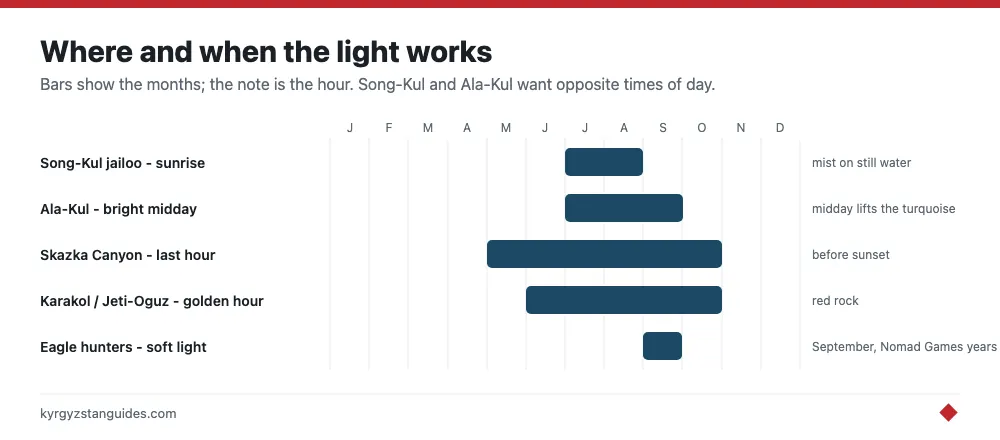
A quick planning reference for the headline locations and the light that suits them:
| Location | Best light | Best months |
|---|---|---|
| Song-Kul jailoo | Sunrise (mist, still water) | Jul–Aug |
| Ala-Kul lake | Bright midday (lifts the turquoise) | Jul–Sep |
| Skazka Canyon | Last hour before sunset | May–Oct |
| Karakol / Jeti-Oguz | Golden hour on red rock | Jun–Oct |
| Eagle hunters | Soft overcast or early/late sun | Sep (Nomad Games years) |
Gear for trekking
Every gram matters when your camera is riding on your back over a high pass. The honest advice is to carry less reach than you think you need and more weather protection than you expect:
- One body, two lenses: a wide-to-standard zoom for landscapes and a light 70–200-equivalent for portraits and wildlife covers almost everything.
- Power: mountain cold drains batteries fast. Carry two or three spares warm in an inside pocket, plus a power bank — yurt camps rarely have reliable electricity.
- Weather: a rain cover and a couple of microfibre cloths. Afternoon storms roll in quickly at altitude.
- Support: a lightweight travel tripod earns its weight only if you are serious about sunrise and star work; otherwise leave it.
Fold these into your broader packing plan so the camera kit does not blow your baggage weight before the trek even starts.
Filters and the harsh mountain light
At altitude the light is intense and contrasty, and two filters earn their place. A circular polariser cuts glare off the lakes and deepens those thin blue skies — the single most useful thing you can screw onto a lens here. A three-to-six-stop neutral-density filter lets you smooth the streams and waterfalls around Jeti-Oguz and Arslanbob into silk even in bright afternoon. Skip the graduated filters; the ridgelines are too irregular for them to sit cleanly. Shoot RAW throughout: the dynamic range between a snow-lit peak and a shadowed valley floor is brutal, and only a RAW file gives you room to pull both back in editing.
Drone rules
Treat drones with caution. Kyrgyzstan restricts drone use, and flying near borders, military sites, and government buildings is prohibited outright — which rules out much of the dramatic frontier scenery, including the Kel-Suu area near the Chinese border, where a border-zone permit is already required just to be present. Rules on registration and permissions change, so check the current civil-aviation position before you travel and assume a ‘no’ wherever there's any security presence. When in doubt, keep it grounded; a confiscated drone and a fine are not worth a single clip.
Photographing people, respectfully
Rural Kyrgyz hospitality is real, and most herders are relaxed about cameras — but that's a reason to be more careful, not less. Ask before you shoot a portrait, learn to say a simple thank-you in Kyrgyz or Russian, and show people the frame afterward; it turns a transaction into an exchange. If you promise to send a photo, actually send it. Skip pictures of anyone who looks uncomfortable, and never photograph inside a home or a mosque without a clear invitation. The best portraits here come after conversation, not before it.
The mistake most visitors make
The commonest error is shooting on the sightseeing schedule instead of the light schedule — rolling into a location at 1 p.m. because that is when the marshrutka arrived, firing off frames in flat overhead sun, and moving on. The country punishes that rhythm. The fix is structural: build your days so you're stationary at the good locations for sunrise and sunset, and use the harsh middle of the day for travel, meals, and scouting compositions you will return to. The second mistake is impatience with people and animals. The strongest jailoo images come from staying long enough that the herders forget the camera is there, which almost never happens on a two-hour stop. Give the shots you care about a full evening and morning, not a passing hour.
Season and light through the year
Summer (July–August) opens the jailoos and the high lakes but brings hazy midday skies and crowds at the easy spots; shoot early and late. September is the connoisseur’s month — clearer air, the first gold in the walnut and poplar, cooler light, and, in Games years, the eagle hunters. Winter turns the whole country monochrome and dramatic if you can handle the cold and the short days. Whenever you come, the pattern holds: get up before the light and stay out past it.
The one-line plan: base yourself where the light is best at each stop, sleep on location for sunrise shots, and give every marquee frame a spare day for the weather to cooperate. Pair this with our trekking and culture guides above and you will come home with a set, not just a folder.
FAQ
When is the best light for photography in Kyrgyzstan?
The hour after the yurt fires are lit and the hour before they die down. The country is mostly high pasture, jagged ranges and vast lakes, so the difference between a flat snapshot and a strong image is almost always the time of day and the season rather than the location.
How should I plan a photography trip to Kyrgyzstan?
Organise your days around light and altitude rather than around sights. Plan for early mornings, build in weather buffers, and treat the low light at each location as the real subject rather than something that happens to the subject.
What are the signature shots in Kyrgyzstan?
Jailoo mornings, high-mountain lakes, red-rock golden hour and eagle hunters. Those four cover most of what people come here to photograph and each rewards a different time of day.
Do I need weather buffers?
Yes, and they are the most commonly skipped part of a photography itinerary here. Mountain weather can remove a location for a day at a time, and a schedule with no slack simply loses the shot.
Is it acceptable to photograph people in Kyrgyzstan?
Ask first, as anywhere. The specific issue here is staged eagle-hunting set-ups by the roadside, which are a commercial photo opportunity rather than a cultural encounter — worth knowing which one you are photographing.
What gear matters most?
Less than the timing does. Altitude, cold mornings and long days between charging points make power and protection the practical priorities, and the guide covers gear for trekking conditions rather than for a studio.