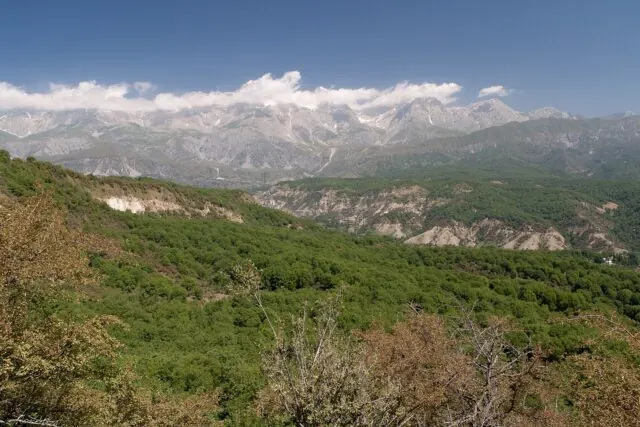
You have five days, a flight in and a flight out, and you do not want to spend three of them in a minibus. That is the trap most short Kyrgyzstan plans fall into, chasing Song-Kul or Osh and burning the whole trip on transit. The route that actually works in five days stays in the north: one day in Bishkek, a mountain day at Ala-Archa, then east to the Issyk-Kul south shore and Karakol, looping back on day five. No camping gear, no internal flights, and every drive kept sane.
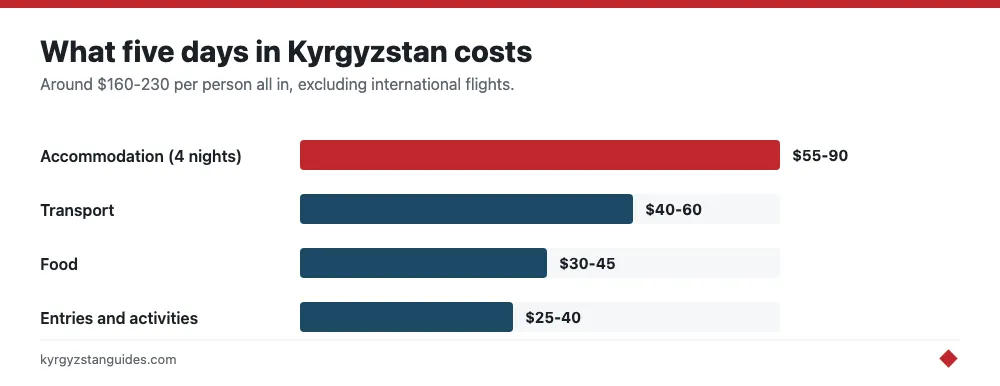
Done on a budget with marshrutkas and guesthouses, this runs roughly $160–230 per person all in. It works June through September, when the mountains are green and the lake is warm. Prices below are 2026 figures in Kyrgyz som (KGS, about 87–89 to the US dollar) — treat them as “around,” not fixed.
Day 1: Bishkek
Land, drop your bag, and give the capital one relaxed day. From Manas Airport, express bus 153 reaches the centre for 122 KGS cashless (140 in cash), with night departures at 00:00, 03:00 and 05:00, or a Yandex Go taxi runs 1,200–1,500 KGS. The essentials fit an afternoon: Ala-Too Square, Oak Park, and Osh Bazaar for dried apricots and a first taste of the place. Eat lagman and tea at a chaikhana for 350–450 KGS. Dorms cost $8–12, mid-range hotels $40–60. Our things to do in Bishkek guide has more if you land early with energy to burn.
Day 2: Ala-Archa National Park
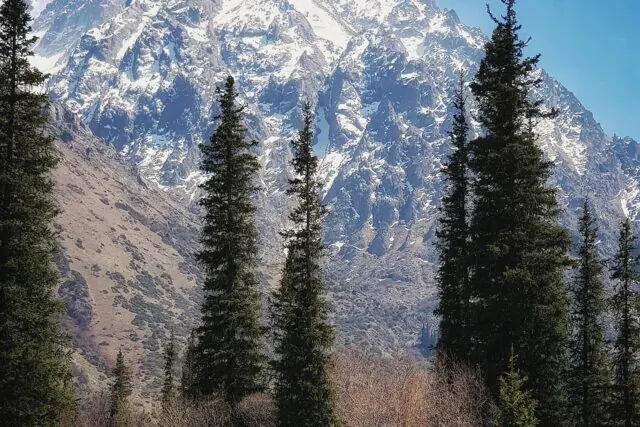
Get real mountains into the trip on day two without leaving the capital’s orbit. Ala-Archa is 40 km south of Bishkek, a glacier-carved gorge you can reach by taxi in under an hour (2,500–3,000 KGS round trip with the driver waiting, or split a day-hire). From the trailhead at 2,150 m, walk as far as your legs and lungs allow, the waterfall route is a solid half-day, the Ratsek hut a serious full one. Back in Bishkek by evening. Our Ala-Archa National Park guide covers the trail options and entry fees.
Sleep in Bishkek again, or, if you want a head start, take an afternoon marshrutka toward the lake and overnight in Balykchy. The first option is simpler; the second shaves an hour off day three.
Day 3: East to the South Shore
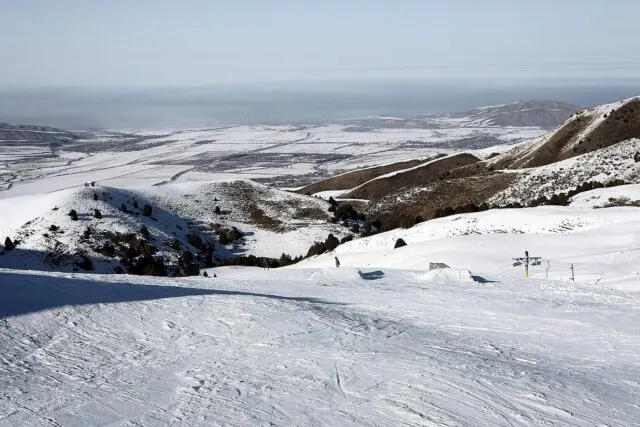
This is the long travel day, so start it early. From Bishkek’s main bus station on Alma-Atinskaya 1/1, a direct Karakol marshrutka takes 6–7 hours (500–600 KGS); a shared taxi does it faster for 1,000–1,500 KGS a seat. But the more rewarding move is to take the south-shore road and break the drive at Skazka (Fairy Tale) Canyon, a compact badlands of orange and red rock 15 minutes off the highway, entry 50–100 KGS, an hour well spent. Continuing to Karakol by evening makes a full but satisfying day. Background on the lake is in our Issyk-Kul lake travel guide.
Arrive in Karakol, check into a family guesthouse ($25–40 double with breakfast), and order ashlan-fu, the town’s cold spicy noodles, for about 100 KGS a bowl.
Day 4: Karakol and the Red Rocks
Karakol is the trip’s payoff. Spend the morning in town — the wooden Orthodox cathedral, the Dungan mosque built without a single nail, and the Sunday animal market if your dates line up. In the afternoon, drive out to Jeti-Oguz, where the Seven Bulls of red sandstone rise above the valley, with a short walk to the Broken Heart viewpoint. If you would rather trade sightseeing for a soak, arrange a truck up to the Altyn Arashan hot springs instead. Our Karakol travel guide lays out both.
This is also the day to decide your finale. Fit travelers with a spare afternoon can start planning the Ala-Kul trek from here. But that needs more than five days, so most people keep today gentle and save the big trek for a return trip.
A word on the Altyn Arashan option, because it tempts a lot of people. The hot-spring valley sits at 2,435 m, reached from Ak-Suu village by a rough jeep track, and an overnight up there is genuinely wonderful, but it eats most of day four and a chunk of day five, and it clashes with getting back to Bishkek in time for a flight. On a five-day trip, treat it as an either/or: springs or the red rocks and an unhurried return, not both. If soaking under the peaks is the dream, do Altyn Arashan on day four and take the direct fast marshrutka back on day five, skipping Jeti-Oguz entirely.
Day 5: Back to Bishkek
The return is the mirror of day three. Karakol’s bus station sends marshrutkas and shared taxis to Bishkek through the morning at the same rates; the direct north-shore run is faster than the scenic south road you took out. Leave by 9 a.m. and you are back in the capital by mid-afternoon — time for TsUM’s souvenir floor or a last proper dinner before a late flight. Book a room near the airport only if you fly out before 8 a.m.
What It Costs
| Category | Budget (5 days) |
|---|---|
| Accommodation (4 nights) | $55–90 |
| Food | $30–45 |
| Transport | $40–60 |
| Entries and activities | $25–40 |
| Total per person | ~$160–230 |
Add 300–500 KGS for a tourist SIM with plenty of data (O!, Beeline, or MegaCom), and carry cash outside the cities: nothing rural takes cards. Withdraw som in Bishkek before you leave; Karakol has ATMs, but the south shore between them mostly doesn't.
What to Cut If You Are Tighter Still
- Drop Ala-Archa and go straight to the lake on day two if beaches and red rock excite you more than an alpine gorge. It buys a slower, calmer Issyk-Kul.
- Skip the south-shore detour on day three and take the direct north-shore marshrutka if a long transit day worries you — you lose Skazka Canyon but gain two hours.
- Never cut Karakol. It is the reason the route points east; without it you have a Bishkek city break with a long drive attached.
The Honest Verdict
Five days is enough to feel Kyrgyzstan properly if you resist the urge to cover the whole map. This route gives you a capital, a mountain day, a great lake, and a characterful town, with drives that never wreck a day. If you find yourself wishing for Song-Kul or a real multi-day trek, that's your signal to come back with seven to ten days and run our one-week Kyrgyzstan itinerary instead. Five days done calmly beats seven days crammed into five.
What five days cannot buy you
Worth being blunt about, because the temptation runs the other way.
Song-Kul. The jeep transfer over the Kalmak-Ashuu pass, a night at 3,016 metres and the drive back consume two full days and most of a third. Fitting them into five turns every other day into transit.
Osh and the south. The flight is only 55 minutes, but the south is a different trip rather than an extension of this one, and arriving for a day and leaving again is the least rewarding way to see it.
A multi-day trek. Ala-Kul needs three days on its own plus a rest day in Karakol first, which is a whole different itinerary.
What five days does buy, done this way: a capital, a glacier-carved gorge, the south shore of a mountain lake the size of a small sea, and a town with 4,000-metre peaks behind it. That is not a compromise version of Kyrgyzstan. It is a coherent piece of it.
FAQ
Is five days enough for Kyrgyzstan?
Enough for the north, yes. The route that works stays there: a day in Bishkek, a mountain day at Ala-Archa, then east to the Issyk-Kul south shore and Karakol, looping back on day five. What does not work is chasing Song-Kul or Osh and burning the trip on transit.
How much does five days in Kyrgyzstan cost?
Roughly $160 to $230 per person all in, done on a budget with marshrutkas and guesthouses. Prices are 2026 figures in som at about 87 to 89 to the dollar.
Do I need camping gear or internal flights?
Neither. The five-day route uses guesthouses throughout and no internal flights, and every drive is kept to a sane length.
When does the five-day route work?
June through September, when the mountains are green and the lake is warm enough to swim in.
How do I get from the airport into Bishkek?
Express bus 153 reaches the centre for 122 som cashless or 140 in cash, with night departures at 00:00, 03:00 and 05:00. A Yandex Go taxi runs 1,200 to 1,500 som.
Can I fit Song-Kul into five days?
Not sensibly. The jeep transfer over the Kalmak-Ashuu pass, a night at 3,016 metres and the return drive take two days and most of a third, which turns the rest of the trip into transit. Song-Kul belongs in a ten-day itinerary.