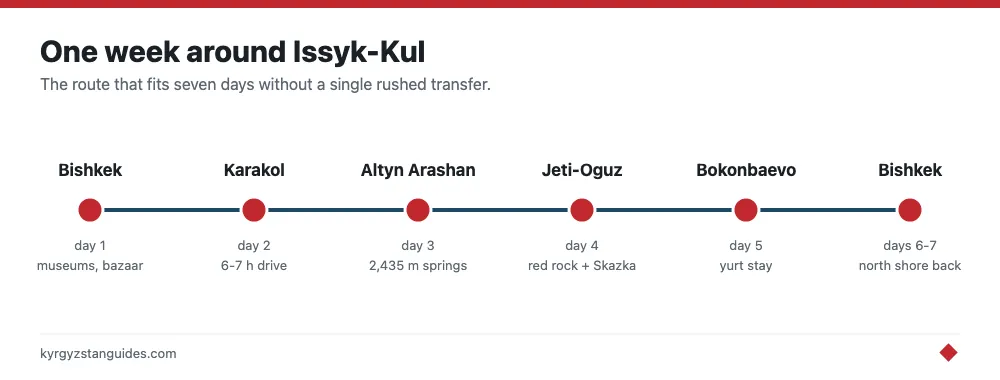
Can you actually see Kyrgyzstan in a week? Yes, honestly, yes, as long as you commit to one loop and stop trying to fit Song-Kul in. The 7-day route that works circles Issyk-Kul: Bishkek → Karakol → Altyn Arashan hot springs → Jeti-Oguz and Skazka Canyon → a Bokonbaevo yurt stay → back to Bishkek, for about $220–$300 per person on a budget.
Every daily drive stays under five hours, you get one night in the mountains and one in a yurt, and you need no camping gear. The loop runs reliably from June to September. Prices are 2026 figures in Kyrgyz som (KGS, roughly 87–89 to the US dollar); most Western nationalities enter visa-free for 30 days within any 60-day period, and the rest can apply at evisa.e-gov.kg.
The rhythm, day by day: Bishkek (1), the north shore drive to Karakol (2), up to the Altyn Arashan hot springs for a night at 2,435 m (3), red-rock day (Jeti-Oguz and Skazka) ending on the south shore (4), eagle hunters and a yurt night in Bokonbaevo (5), Kochkor and the felt workshop (6), an easy run back to the capital (7).
Day 1: Bishkek
From Manas Airport, express bus 153 reaches the centre for 122 KGS cashless (140 in cash), with night departures at 00:00, 03:00 and 05:00; a Yandex Go taxi costs 1,200–1,500 KGS ($14–17). One full day covers the essentials: Ala-Too Square, the State History Museum (400 KGS), Oak Park’s sculptures, and Osh Bazaar for dried apricots, kurut, and horse-milk chocolate. Eat at a chaikhana — lagman and tea for 350–450 KGS. Dorms cost $8–12, mid-range hotels $40–60; more ideas in our things to do in Bishkek guide. Landed in the morning with energy to spare? A half-day taxi run to Ala-Archa National Park (2,500–3,000 KGS round trip) puts real mountains into day one.
Day 2: the north shore to Karakol
The direct marshrutka from Bishkek’s main bus station on Alma-Atinskaya 1/1 takes 6–7 hours (500–600 KGS); a shared taxi does it in about 5.5 for 900–1,000 KGS. Better: hire a car with driver for the day ($60–70 split between passengers) and break the drive in Cholpon-Ata at the open-air petroglyph museum (200 KGS), where 2,000-year-old ibex carvings cover a glacial boulder field above the lake. Arrive in Karakol by evening, check into a family guesthouse ($25–40 double with breakfast), and order ashlan-fu — the town’s signature cold spicy noodles, about 100 KGS a bowl. Our Karakol travel guide covers guesthouses, the Dungan mosque, and the wooden Orthodox cathedral.
Day 3: up to Altyn Arashan
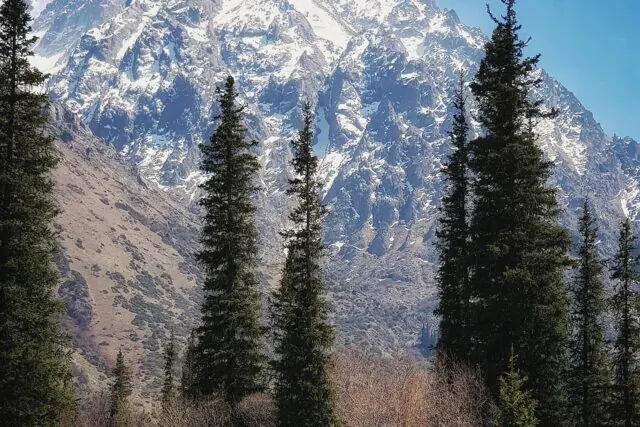
Altyn Arashan is a hot-springs valley at 2,435 m in the Terskey Ala-Too, reached from Ak-Suu village by a jeep track that eats ordinary cars. Either hike up in 4–5 hours (14 km of steady climbing through spruce forest) or ride a Soviet 6×6 truck or UAZ arranged through your guesthouse (1,000–1,500 KGS per person return). Lodges at the top charge 1,500–2,000 KGS per person with dinner and breakfast, plus 200–400 KGS for a private hot-spring pool under the peaks.
Stay the night. The valley empties of day-trippers by late afternoon, and the morning light on Palatka peak is the best photograph of your week.
A note on the choice: hiking up and trucking down is the best combination if you only want to walk one direction. The trail follows the river through forest the whole way and is far pleasanter on fresh legs going up than on tired knees coming down. Whichever way you travel, pack a swimsuit, a headlamp, and cash in small notes. The valley has no ATM and no shop.
Day 4: Jeti-Oguz, Skazka Canyon, south shore
Descend from Altyn Arashan in the morning, then head west with a taxi or pre-arranged driver. Jeti-Oguz’s Seven Bulls, a wall of red sandstone fins above the village: deserves an hour, ideally with the short walk up to the Broken Heart viewpoint. Continue along the quieter south shore to Skazka (Fairy Tale) Canyon, a compact badlands of orange and red towers 15 minutes off the highway: entry 50–100 KGS, an hour to wander, no more needed. Go late afternoon if you can — the low sun turns the ridges a deeper red, and the tour groups have gone by then. Sleep near Tosor or Tamga in a guesthouse (1,500–2,000 KGS per person with meals). A driver for the whole day costs $50–70; marshrutkas plus short taxi hops work too, just slowly. Background on the lake itself is in our Issyk-Kul travel guide.
Day 5: eagle hunters and a yurt night in Bokonbaevo
Bokonbaevo is the center of Kyrgyzstan’s salburun (traditional hunting) culture. Book an eagle-hunter demonstration through the local CBT office or your yurt camp — about 2,000–2,500 KGS per group, and worth every som to watch a golden eagle stoop to a lure at full speed. Spend the afternoon at the lakeside, then sleep in a shore yurt camp ($15–22 per person with meals). The evening here's the slow highlight of the whole week: apricot jam, fresh borsook, and a horizon of 4,000 m peaks across the water.
If the demonstration feels like a splurge, split it: the per-group price means four travelers pay about 500–600 KGS each, and camps are used to pooling guests together. Ask your camp the evening before rather than on the morning itself, the hunters live in surrounding villages and need notice.
Day 6: Kochkor — and the truth about Song-Kul
Here is the part most 7-day plans get wrong: squeezing in a Song-Kul overnight. The lake sits at 3,016 m, 2–2.5 hours of rough road beyond Kochkor, and an overnight means two long jeep days back-to-back right before your flight. It is doable. It's not enjoyable.
The saner plan: travel Bokonbaevo → Kochkor (shared taxi, 300–400 KGS, 1.5 hours), visit the felt-carpet cooperative, and either relax or take a long day trip toward Song-Kul by private jeep (5,000–6,000 KGS per car) for a few midday hours at the shore without the altitude night. Be honest with yourself about whether those hours justify five hours of jeep track: for most people they don't, and the felt workshop plus an easy afternoon is the better day six. Kochkor guesthouses cost 1,500–2,000 KGS with dinner.
Day 7: back to Bishkek
Kochkor to Bishkek is the easiest transfer of the week: marshrutkas (350–400 KGS) and shared taxis (600–700 KGS) run all morning and take 3–3.5 hours. You'll be in the capital by early afternoon for TsUM’s souvenir floor or a proper dinner before a late flight. Book a room near the airport only if your flight leaves before 8 a.m.
One habit makes the whole week smoother: start every travel day by 9 a.m. Marshrutkas leave when full rather than on a timetable, drivers do their best work before the afternoon heat, and an early start turns each transfer into a half day instead of a whole one.
What the week costs
Budget travelers using marshrutkas, guesthouses, and yurt camps spend $210–285 per person for the week: roughly $75–100 on six nights of accommodation, $50–65 on food, $45–60 on transport, and $40–60 on activities and entries. With private drivers and mid-range rooms the same loop runs $480–650. Accommodation climbs to $180–240 and transport to $150–200, while food stays cheap everywhere (a filling cafe meal is 250–450 KGS, or $3–5).
Add 300–500 KGS for a tourist SIM with 20–50 GB (O!, Beeline, or MegaCom) and carry cash outside the cities — nothing rural takes cards. Full line-by-line numbers are in our Kyrgyzstan travel budget guide. Withdraw som in Bishkek before leaving — Karakol has ATMs, but the south shore between them mostly does not, and the yurt camp won't be moved by your explanation of contactless payment.
Trimming for slow travelers
- Cut the Song-Kul question entirely — end the loop with two nights in Bokonbaevo and go straight to Bishkek on day 7.
- Drop the Cholpon-Ata stop on day 2 and take the direct marshrutka; the petroglyphs are missable if red-rock canyons excite you more.
- Trade Jeti-Oguz for a second Altyn Arashan night if hot springs and hiking beat sightseeing-by-car for you.
- Keep the yurt night no matter what. It is the single most memorable sleep of the week.
When the loop works. And when to want more
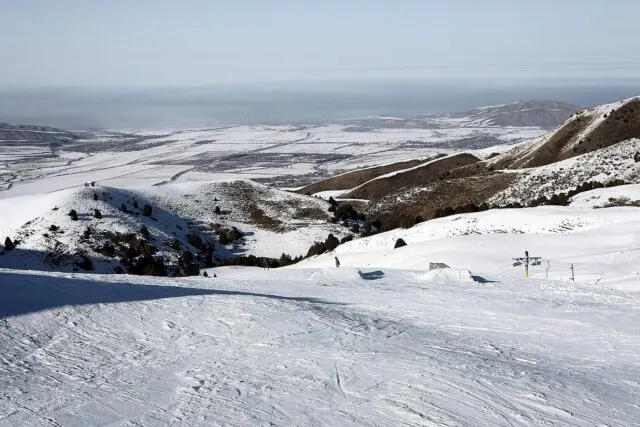
June through September. July and August are peak: warm swimming, every yurt camp open, the Altyn Arashan track reliably passable. June brings green hills and chilly yurt nights; September brings golden light and thin crowds, with camps packing up after mid-month. From October to May the loop stops making sense — Altyn Arashan needs winter logistics and Karakol becomes a ski trip instead.
One parting warning: if reading this you kept thinking “but I want Song-Kul,” do not force it into seven days. Add three more and run our 10-day Kyrgyzstan itinerary instead, it gives the lake the two nights it deserves and folds in the Ala-Kul trek besides. Seven days done calmly beats ten days crammed into seven.
FAQ
Can you see Kyrgyzstan in a week?
Yes, provided you commit to one loop and stop trying to fit Song-Kul in. The seven-day route that works circles Issyk-Kul: Bishkek, Karakol, Altyn Arashan, Jeti-Oguz and Skazka Canyon, a Bokonbaevo yurt stay, then back to Bishkek.
How much does a week in Kyrgyzstan cost?
About $220 to $300 per person on a budget, using marshrutkas and guesthouses. Prices in this itinerary are 2026 figures in som at roughly 87 to 89 to the US dollar.
Do I need camping gear for a one-week trip?
No. This loop gets you one night in the mountains at Altyn Arashan and one in a yurt at Bokonbaevo, both with beds provided, so no tent or sleeping bag is required.
When does the one-week Issyk-Kul loop work?
Reliably from June to September. Outside that window the mountain sections become unpredictable and the yurt camps come down.
How long are the daily drives?
Every daily drive stays under five hours, which is the point of the route. Kyrgyz distances are deceptive — a 300 kilometre day here is a six-hour day — so a loop that keeps each leg short is what makes a week workable.
Why not include Song-Kul in a one-week trip?
Because fitting it in is what breaks most seven-day plans. Song-Kul needs a jeep transfer over a high pass and a night at 3,016 metres, and adding it to an Issyk-Kul loop turns short drives into long ones. It belongs in a ten-day trip instead.