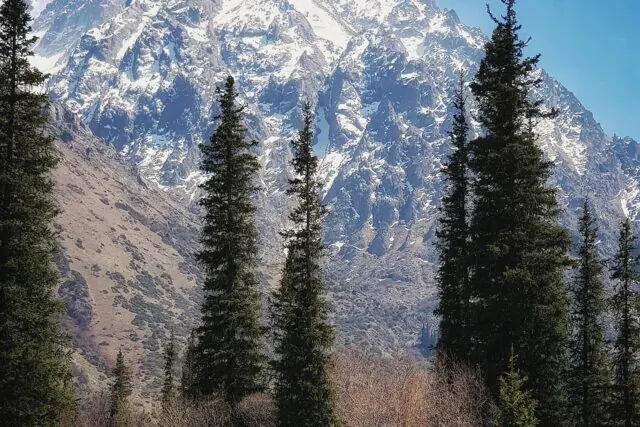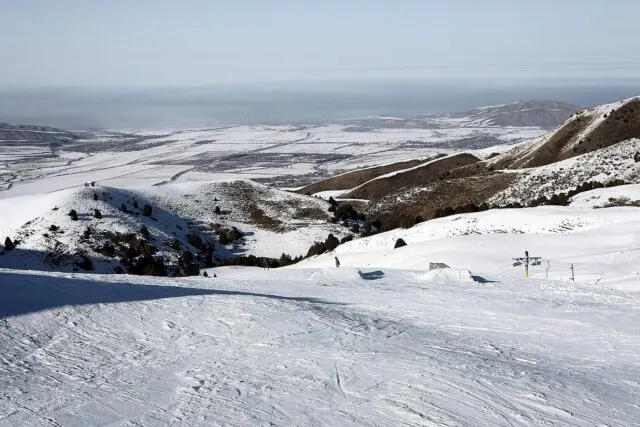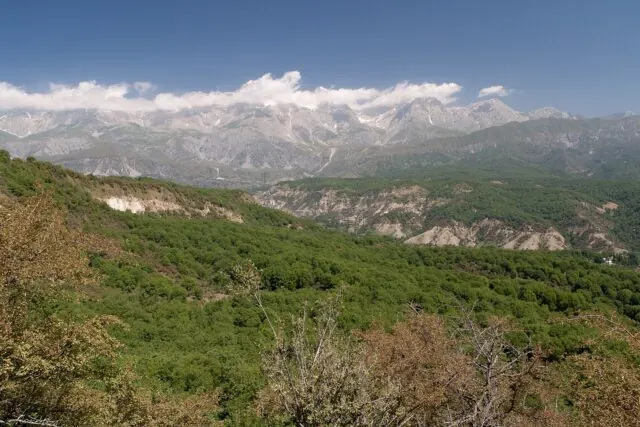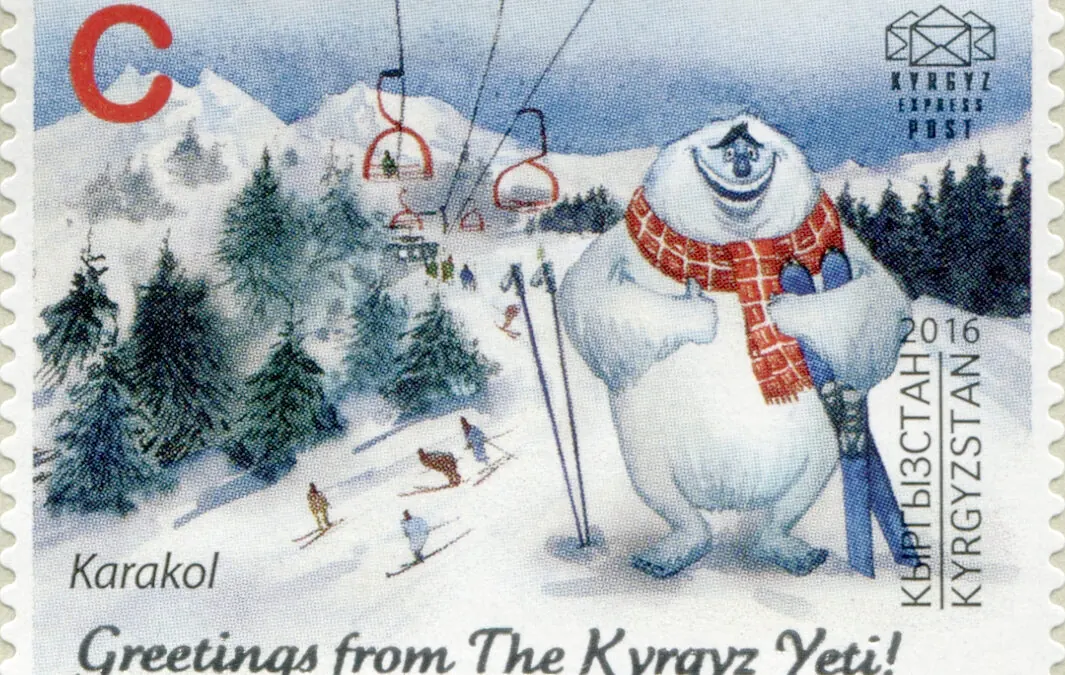
Mist lifts off Issyk-Kul at dawn in January, and the beach is completely empty. Kyrgyzstan in winter is one of the cheapest serious snow destinations anywhere: a full-day lift pass at Karakol Ski Base costs 2,000–2,500 KGS ($23–29), guided freeride days in Jyrgalan run a fraction of Alps prices, and the lake (which never freezes) fills the gaps between ski days. The trade-off is equally real: Song-Kul and the high trekking routes shut completely from October to May, and mountain valleys regularly hit -20°C.
The season runs late November to late March, with the most reliable snow in January and February. Visa rules do not change with the calendar — 30 days within any 60-day period visa-free for most Western nationalities, e-visa for the rest via evisa.e-gov.kg. Here is what works, what's closed, and who should actually come.
Karakol Ski Base, the main event
Kyrgyzstan’s biggest resort sits 7 km above Karakol town in the Terskey Ala-Too, top station at about 3,040 m, with roughly 20 km of pistes dropping through tall pine forest. The snow is cold, dry continental powder, and midweek the slopes are close to empty. A full-day adult pass costs 2,000–2,500 KGS ($23–29); a complete ski or snowboard rental set runs 800–1,500 KGS per day at the base, cheaper in town. Taxis from Karakol cost 300–400 KGS each way.
Stay in town rather than at the base: guesthouses charge $20–35 with heating and enormous breakfasts, and what apres scene exists happens around Karakol’s cafes anyway — steaming ashlan-fu at the bazaar for 80–100 KGS, Dungan family dinners, skiers comparing lines over coffee. Our Karakol travel guide covers where to sleep and eat. Off the groomers, the side bowls hold powder for days after a storm, but there's no avalanche control past the ropes: treat everything beyond the pistes as backcountry, with partner, transceiver, shovel, and probe. Weekends and the New Year holidays (December 30 – January 8) get busy with visitors from Bishkek and Almaty; midweek in late January or February is the sweet spot.
Freeride: Jyrgalan and Arslanbob
An hour east of Karakol, the village of Jyrgalan has rebuilt itself as the country’s freeride capital. Local operators run guided ski-touring and snowcat-assisted days on treeless 3,000 m ridgelines, with packages including guide, avalanche gear, and guesthouse full board from around $80–120 per day — a number that wouldn't buy a lift pass and lunch in Verbier. Non-skiers can join snowshoe walks or horse-sledge rides. Book ahead: the handful of guesthouses fill up in February. The terrain suits strong intermediates and up (long, open, consistent-pitch bowls rather than cliffs and couloirs) and operators grade groups honestly, so say what you actually ski, not what you aspire to.
In winter Jyrgalan has neither lifts nor ski patrol; it works as a ski-touring base. For the posted prices, and for the coal mine that sits underneath the village, see Jyrgalan in winter.
In the south, the community tourism pioneers of Arslanbob run the most affordable backcountry scene in the country: homestay-based ski touring above the world’s largest walnut forest, with local guides and basic rental gear arranged through the CBT office. Rougher and cheaper than Jyrgalan (think $40–60 per day all-in) and reachable by a 40-minute flight from Bishkek to Osh or Jalal-Abad plus a shared taxi.
Arslanbob is also at its emptiest in winter, once the walnut harvest is over. No lift-served ski base is documented there; horses carry skiers uphill instead, as our Arslanbob winter guide describes.
Sleeping in a yurt on skis
Several Karakol and Jyrgalan operators run multi-day tours where you sleep in insulated winter yurts with wood stoves and skin to a new bowl each morning, typically in the valleys south of Issyk-Kul or around Boz-Uchuk. Expect $100–150 per day including guide, meals, and the yurt. Powder skiing to a felt door is the single most distinctive winter experience the country offers; the only prerequisite guides insist on is fitness for 800–1,000 m of daily skinning. Not worth it if you have never toured before, learn the movement somewhere forgiving first.
No time to cross the country? Ski beside Bishkek
Within 45–90 minutes of the capital sit a string of small bases: ZIL, the Soviet-era classic; Chunkurchak, the most developed, with modern chairlifts and night skiing; and the high, snow-sure runs at the Too-Ashuu road pass. Day passes cost 1,000–1,800 KGS, rentals 600–1,000 KGS, and shared transfers run from the city on winter weekends. Short terrain, real snow, a legitimate warm-up day after landing. Chunkurchak is the pick if you only do one: the lift infrastructure is modern, rentals are decent, and night skiing under floodlights with Bishkek’s lights below is a better evening than anything the capital’s bars offer.
The non-ski half of winter
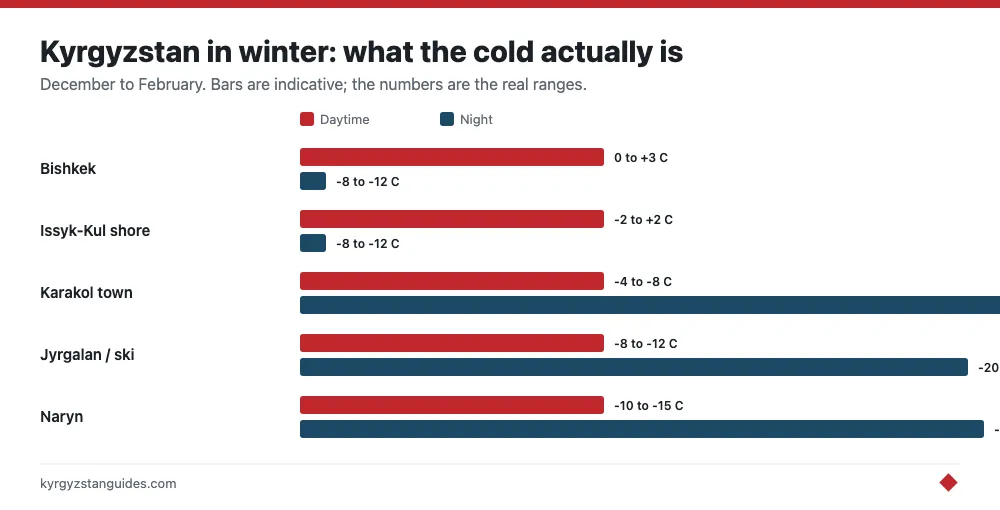
Bishkek is at its most atmospheric under snow: steaming banyas (Zhirgal Banya is the classic, 400–600 KGS), cheap and genuinely good coffee, long museum afternoons, New Year lights on Ala-Too Square through mid-January. Daytime highs hover around 0–3°C, far milder than the mountains. The honest caveat: an inversion layer traps coal smoke over the city on still January days, and the air quality can be poor. Treat Bishkek as a one- or two-night staging post in midwinter, not a destination in itself.
Issyk-Kul is slightly saline and deep enough that it never freezes — the name means “warm lake.” Winter on Issyk-Kul means mist rising off open water against snowbound 4,000 m peaks, Cholpon-Ata resorts at half their summer prices, and south-shore hot-spring complexes where you soak outdoors at 40°C while snow falls on your head. Between Karakol ski days, a rest-day drive along the shore costs a few hundred som in shared taxis and resets tired legs better than another lift queue would.
Winter is also the traditional salburun (hunting) season. Small festivals near Bokonbaevo (usually in February) bring together berkutchi (golden-eagle hunters), taigan hounds, and horseback archery. Outside festival dates, CBT Bokonbaevo arranges private demonstrations year-round for 2,500–3,500 KGS per group. This is the season eagles historically worked; the snowy setting is the authentic one.
A winter week that works
If you want a template: fly into Bishkek and spend day one thawing out in the city, with a warm-up ski at Chunkurchak on day two if your legs are itchy. Travel to Karakol on day three, ski the resort on days four and five, then shift to Jyrgalan for a guided freeride or snowshoe day on day six. On the way back west, stop at a south-shore hot spring or time your trip for a February eagle festival near Bokonbaevo, and sleep the final night in Bishkek before flying out. Eight days, two regions, no wasted transfers, and every piece of it can be booked less than a week ahead outside the New Year rush.
What you cannot do
- Song-Kul: passes close with the first heavy snow in October and the yurt camps come down — no access until late May.
- High treks: Ala-Kul, Kel-Suu, Tash-Rabat, and the Boz-Uchuk lakes are out for independent hikers; only equipped, guided winter ascents happen.
- Most yurt camps nationwide, except the purpose-built winter camps used by ski-touring operators.
- Minor mountain roads: 4×4 tracks to summer jailoos are snowed in. Main corridors (Bishkek–Karakol, Bishkek–Osh) stay open all winter.
How cold, exactly?
| Location | Dec–Feb daytime | Dec–Feb night |
|---|---|---|
| Bishkek | 0 to +3°C | -8 to -12°C |
| Karakol town | -4 to -8°C | -15 to -20°C |
| Jyrgalan / ski elevations | -8 to -12°C | -20 to -25°C |
| Issyk-Kul shore (Cholpon-Ata) | -2 to +2°C | -8 to -12°C |
| Naryn | -10 to -15°C | -25 to -30°C |
Winter roads, flights and packing
The Bishkek–Karakol road is plowed and marshrutkas run daily year-round (500–600 KGS), but black ice is routine. Pay extra for a shared taxi with an experienced driver rather than the cheapest seat, and never plan tight same-day airport connections. Manas Airport operates normally all winter, and flights into Bishkek run noticeably cheaper between November and March than in the summer peak.
Pack a genuine -20°C layering system: insulated boots, down jacket, merino base layers, liner gloves under mittens, and glacier-grade sunglasses for the snow-and-altitude glare. Hand warmers and a thermos earn their space, guesthouses are warm, but marshrutkas and festival mornings are not. The full winter checklist is in our Kyrgyzstan packing list.
So who should come?
Skiers, snowboarders, and anyone who wants Kyrgyz culture without another tourist in the frame: yes, without hesitation. The Karakol–Jyrgalan corridor delivers real powder at 10–20% of Alpine prices, and the eagle festivals and unfrozen lake are things summer can't offer. Skip winter if your goal is trekking, Song-Kul, or yurt-to-yurt horse trips: those need June to September. And for a first-ever visit with no snow-sports interest, summer remains the better introduction.
One winter consideration that rarely appears in seasonal guides: Bishkek’s air. In January 2026 the city ranked fifth most polluted in the world. Our page on Bishkek air quality covers the figures, the causes and why the mountains are the answer.
Last warning, because it matters more than any packing tip: whatever the forecast says, treat every slope beyond Karakol’s marked pistes as uncontrolled avalanche terrain and hire a local guide before you point skis at it.
Frequently Asked Questions
Can you ski in Kyrgyzstan?
Yes. Karakol Ski Base offers about 20 km of pistes up to 3,040 m with day passes at 2,000–2,500 KGS ($23–29). Jyrgalan and Arslanbob offer guided freeride and ski touring, and smaller bases like ZIL and Chunkurchak sit within 90 minutes of Bishkek.
Does Issyk-Kul freeze in winter?
No. Issyk-Kul is slightly saline and over 660 m deep, so it never freezes. The name literally means “warm lake.” Winter visitors get misty open water against snowy peaks, empty beaches, half-price resorts in Cholpon-Ata, and outdoor hot springs on the south shore.
Is Song-Kul accessible in winter?
No. The road passes to Song-Kul close with the first heavy snows in October and the yurt camps are dismantled. The lake area reopens in late May or June. Winter alternatives include Issyk-Kul, the Jyrgalan valley, and yurt-based ski-touring camps.
How much does skiing cost at Karakol?
A full-day adult pass runs 2,000-2,500 som ($23-29), a complete ski or snowboard rental set 800-1,500 som per day at the base and cheaper in town, and taxis from Karakol cost 300-400 som each way. Guesthouses in town charge $20-35 with heating, which is why staying in town beats staying at the base.
Is there avalanche control at Kyrgyz ski areas?
Only on the pistes. Beyond the ropes at Karakol there is no control at all, so the side bowls that hold powder for days must be treated as full backcountry - partner, transceiver, shovel and probe. Freeride operators in Jyrgalan provide avalanche gear as part of guided packages.
Can I ski near Bishkek without crossing the country?
Yes - ZIL, Chunkurchak and the Too-Ashuu pass bases sit 45-90 minutes from the capital, with day passes at 1,000-1,800 som and rentals 600-1,000 som. Chunkurchak is the pick: modern chairlifts, decent rentals and night skiing under floodlights.