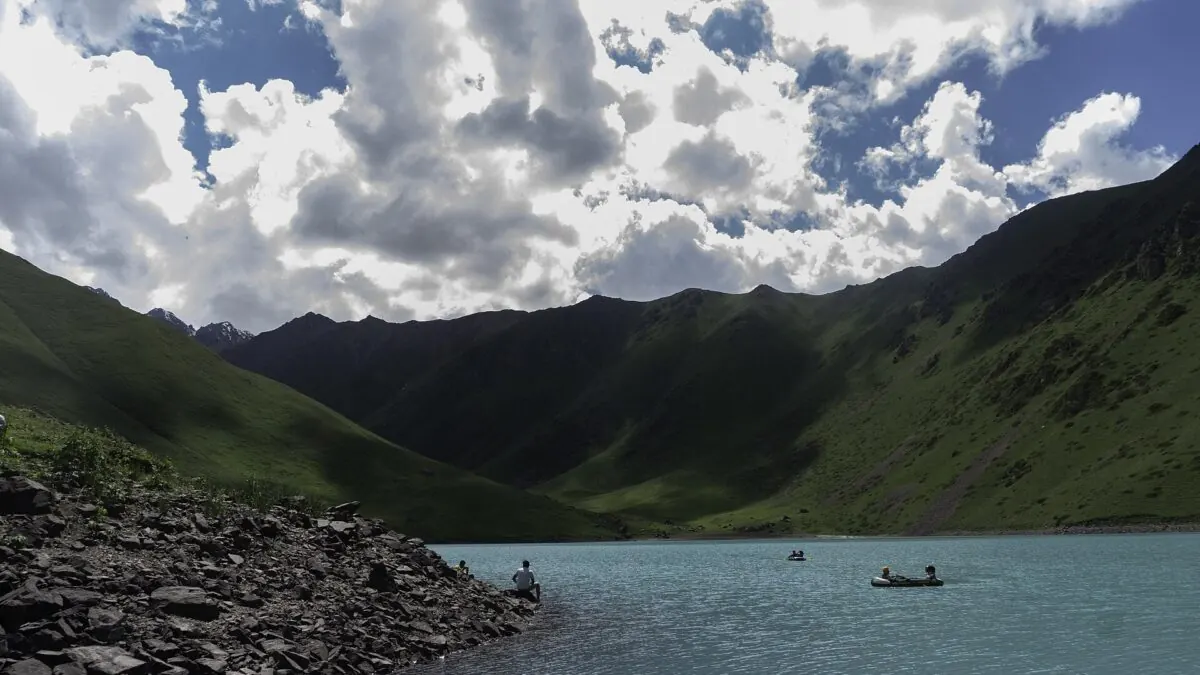
You round a final rise, and the valley floor drops away to a sheet of milky turquoise ringed by grey scree and snow. That’s Kol-Tor. It’s a glacial lake in the Chunkurchak/Kegeti area, about an hour’s drive south of Bishkek, reached on a demanding day hike of roughly 12-14 km round trip with 600-800 m of climbing: figure on 5-7 hours of walking. The color comes from glacial silt suspended in meltwater, and it shifts through the day with the light.
This is one of the best day treks you can do from the capital without an overnight, which is exactly why it’s popular with Bishkek weekenders and worth planning properly. It's not a stroll. The reward is real, but so is the climb, and the trailhead needs a decent vehicle to reach. Here’s how to do it, honestly graded.
The Lake and the Setting
Kol-Tor sits high in a side valley off the Chunkurchak gorge, in the folds of the Kyrgyz Ala-Too range that walls off Bishkek to the south. The name means roughly “narrow lake,” and that’s what it's — a slim, vivid body of water fed by glacier melt and hemmed in by steep rock. Because it’s glacial, the turquoise is at its most intense on sunny summer days; under cloud it turns a flatter grey-green. There’s a smaller upper lake for those with legs left over. This is high-country scenery of the sort most travelers assume requires a multi-day trek, delivered in a single day out of the city.
Getting to the Trailhead
The drive from Bishkek to the trailhead in the Chunkurchak/Kegeti area takes about an hour, but the last stretch is rough. You’ll want a 4WD or a high-clearance vehicle for the final unpaved section up the gorge; an ordinary city car can be stopped short by the track or a stream crossing, adding kilometers to your walk. Most independent hikers arrange a car and driver in Bishkek (a half-day charter is the simplest way), and drivers who know the road will get you as far up as conditions allow. There’s no marshrutka to the trailhead itself, so this isn't a public-transport day trip: you either hire wheels or join a tour. Confirm with your driver where exactly they’ll drop you and where they’ll wait.
Fees and Access
The valley is managed as a small recreation and pasture area, so expect a modest entry or parking fee collected at a gate or by a warden — typically a few hundred som per person or per car, payable in cash. Amounts change year to year and aren’t posted online reliably, so carry small notes and don’t count on card payment. There’s no formal booking; you pay on arrival. Facilities are minimal, a few seasonal yurts or stalls selling tea and snacks near the lower trailhead in summer, and nothing up at the lake.
The Hike: How Hard, Honestly
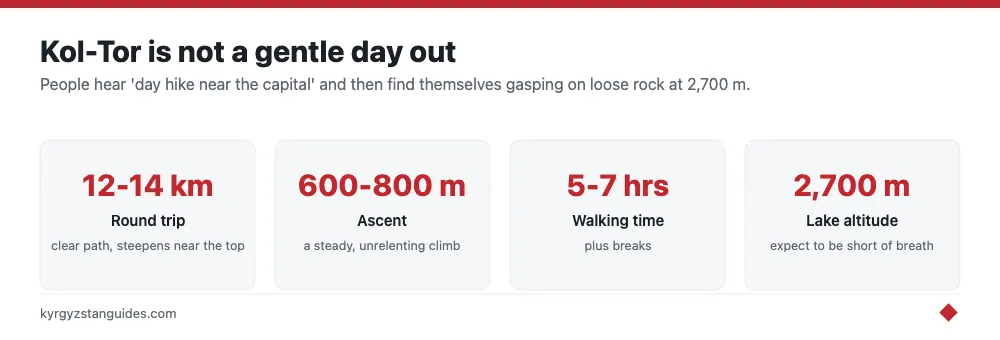
Let’s be straight about difficulty. The round trip is roughly 12-14 km with 600-800 m of ascent, and while there’s a clear path, it climbs steadily and steepens near the top, with loose rock and possibly snow patches lingering into early summer. Plan for 5-7 hours of walking plus breaks. You’ll gain real altitude. The lake sits around 2,700 m. So expect to be short of breath if you’re not acclimatized. This is a moderate-to-hard day hike suitable for reasonably fit walkers, not an easy family outing. Trekking poles help on the descent, and sturdy shoes are non-negotiable on the rocky sections. If you’re building toward bigger routes, it’s a good warm-up; see our Kyrgyzstan trekking guide for how it fits alongside the multi-day classics.
When to Go
The window is June to September. Earlier than June, snow lingers on the upper trail and the lake may still be partly frozen or the track impassable; later than September, cold and early snow shut things down. July and August are the safest, warmest bet, and also the busiest, go on a weekday if you can, since Bishkek locals pour in on summer weekends. Start early regardless: mountain weather turns in the afternoon, and you want the climb done and the descent underway before clouds build. Even in midsummer, mornings up high are cold.
What to Bring
- Sturdy hiking shoes or boots. The rock and scree punish soft soles
- Layers: it can be warm at the trailhead and near-freezing with wind at the lake
- A windproof/rain shell, afternoon weather flips fast up here
- At least 2 liters of water and trail snacks; there’s nothing to buy up top
- Sun protection — the high-altitude sun is fierce even when it feels cool
- Cash in small notes for the entry fee and any tea stop
- Trekking poles if you have them, especially for the descent
For a full checklist covering day hikes and longer treks alike, our Kyrgyzstan packing list has you covered.
Guided Day Tours from Bishkek
If you’d rather not sort out a 4WD, driver and route yourself, plenty of Bishkek operators and hostels run guided Kol-Tor day tours in summer. A typical package bundles the round-trip transport (the fiddly part), a guide, and sometimes lunch, for a set per-person price: a fair deal once you factor in the cost of chartering a car solo. It also solves the navigation and the drop-off logistics in one booking. Ask at your guesthouse or the hostel noticeboards, which function as tour-matching boards every summer morning. Independent-minded hikers with a hired car and offline maps can absolutely do it alone; a guide simply removes the friction. Either way, Kol-Tor pairs naturally with a Bishkek base: line it up alongside the city and its other nearby escape, Ala Archa National Park, and add a rest day using our list of things to do in Bishkek.
One last word of caution before you go: treat the weather and your own fitness with respect. People underestimate Kol-Tor because it’s a “day hike” near a capital city, then find themselves gasping on loose rock at 2,700 m in a cold wind. Start early, turn back if the weather closes in, and don’t push a tired group up the final steep section chasing the upper lake. The main lake is the prize, and it’s more than enough.
FAQ
How hard is the Kol-Tor hike?
Demanding for a day walk: roughly 12-14 km round trip with 600-800 m of climbing, and five to seven hours of walking. It is not a stroll, and the trailhead itself needs a vehicle with decent clearance.
Where is Kol-Tor lake?
In a side valley off the Chunkurchak gorge in the Kyrgyz Ala-Too, about an hour's drive south of Bishkek. The name means roughly "narrow lake".
Why is Kol-Tor turquoise?
Glacial silt suspended in the meltwater. The colour shifts through the day with the light — most intense in sunshine, flatter grey-green under cloud.
Can you do Kol-Tor as a day trip from Bishkek?
Yes, and that is the point of it. It delivers high-country scenery most travellers assume needs a multi-day trek, in a single day out of the capital, which is why it is busy with Bishkek weekenders.
Is there more than one lake at Kol-Tor?
Yes. There is a smaller upper lake for anyone with legs left over after the main climb.
Do you need a 4WD to reach the Kol-Tor trailhead?
Effectively yes — the last unpaved stretch up the gorge is rough, and an ordinary city car can be stopped short by the track or a stream crossing, adding kilometers to your walk. Most hikers charter a car and driver in Bishkek for a half day; there is no marshrutka to the trailhead. Expect a modest cash entry or parking fee of a few hundred som at the gate.