Is May too early for Kyrgyzstan? For the high country, yes — every pass above roughly 3,000 meters is still under snow, and Song-Kul is out of reach. For everything below that line, May might quietly be the best month of the year.
The short answer: come in May for prime foothill hiking, the peak of the wildflower bloom, warm 20–27°C afternoons in the lowlands, near-empty trails, and shoulder-season prices. Skip May if your trip depends on alpine lakes, yurt camps, or high-pass treks — those need late June onward. Everything below assumes you are working with the month, not against it.
What May weather actually does
Bishkek and the Chuy valley sit around 22–27°C by afternoon, with cool evenings that still justify a jacket. The catch is rain: May is one of the two wettest months, delivered mostly as short, theatrical thunderstorms against the foothills rather than all-day drizzle. The upside of all that weather is visibility — after a storm clears, the snow wall of the Kyrgyz Ala-Too above the capital looks close enough to touch. In the mountains proper, conditions swing fast, and anything above 2,500 meters can still see fresh snow.
The south runs a few degrees warmer and a touch drier. Osh is already in early-summer mode by May, the Fergana valley rim is thick with fruit blossom aftermath, and the walnut forests around Arslanbob are freshly leafed out with waterfalls at full meltwater volume. If your two weeks land entirely in May, weighting the trip toward the south is a legitimate strategy rather than a consolation prize.
Where May is at its best
Foothill hiking in its prime window
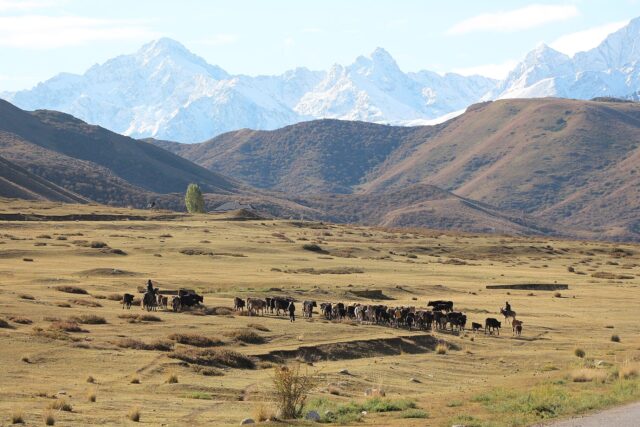
The band between about 1,500 and 2,500 meters is exactly right in May: snow-free, green, and not yet baked. The lower trails of Ala-Archa National Park are open and far quieter than in July. The Konorchek canyons are arguably a May specialty — the red rock corridors are brutal in midsummer heat and at their best in spring temperatures. On the Issyk-Kul side, the Jeti-Oguz valley pairs its red cliffs with meadows in full flower.
The wildflower peak
May is bloom season. Poppies turn whole hillsides around Bishkek and Suusamyr red from mid-month, the last wild tulips linger at higher elevations, and the valley floors are a mix of iris, eremurus, and flowering fruit trees. Photographers should aim for the second half of the month in the north, and treat any drive out of Bishkek as a shooting opportunity — the best poppy slopes are often just off the main roads, not at any named sight.
Crowds and prices
Almost nobody comes in May, which is precisely the appeal. Guesthouses discount without being asked, drivers have open calendars, and you can walk into popular valleys and hear nothing but water. Budget travelers will find dorms around $8–10 and guesthouse doubles closer to $25 than the $35–40 of peak season.
What is still closed in May
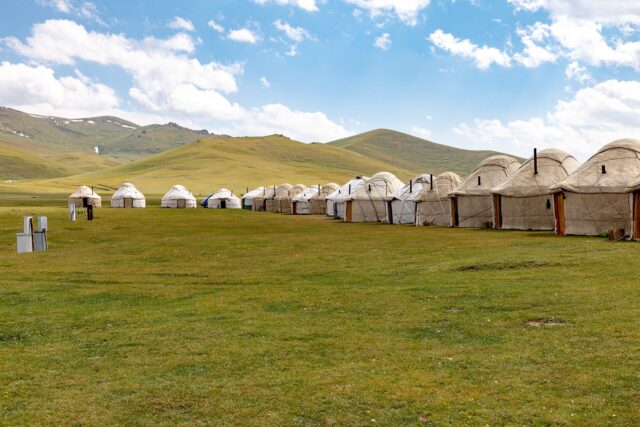
- Song-Kul: the jeep passes usually melt open in early June; yurt camps start from mid-June.
- The Ala-Kul pass above Karakol: snowbound until roughly July.
- High horse-trek routes and the remote border-zone lakes of Naryn province.
- Most jailoo (summer pasture) yurt stays — herders move up with their animals in June.
A warm year can shave a week or two off those dates, but no operator can promise it in advance, so do not build a fixed May itinerary around any of them.
Instead of Song-Kul: what to do with those days
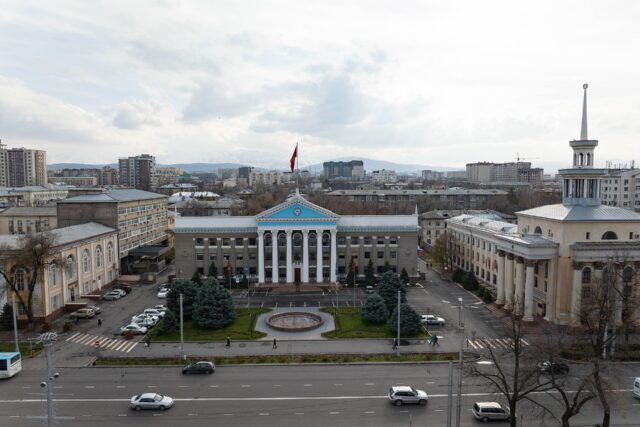
The classic May mistake is forcing a Song-Kul visit anyway and spending it in mud and sleet. Better trades: give Issyk-Kul’s south shore two days of canyon walks and hot springs, ride horses in the lower Chon-Kemin or Jeti-Oguz valleys, and spend a full day in Bishkek for Osh Bazaar, Soviet architecture, and the best coffee in Central Asia. Add Sary-Chelek in the far southwest if you have four spare days — the low-altitude lake is reliably reachable by May and stands in respectably for the alpine ones you are missing.
Two logistics notes for the month. First, marshrutkas and shared taxis run their normal schedules in May, but the tourist-season extras — trailhead transfers, scheduled group day trips — mostly have not started, so budget a little more for private drivers to the odd corners. Second, some seasonal guesthouses in trekking hubs open late in the month; the ones that answer messages in May are run by exactly the kind of hosts who will spend an evening helping you replan around the weather.
What to pack for May
The month punishes optimistic packing. You are dressing for warm valley afternoons, cold mountain evenings, and at least one proper soaking:
- A genuine waterproof shell, not a travel windbreaker — May storms arrive fast and sideways.
- Footwear you can get muddy without grief; trails are wet even on sunny days.
- Layers covering roughly 5–27°C, including a warm mid-layer for evenings.
- Sun protection anyway — between storms, the high-altitude sun is strong.
- A dry bag or ziplocks for electronics on hike days.
If you can move your dates
Here is the honest pointer: travelers locked into May should embrace the foothills-and-flowers version of Kyrgyzstan above, and they will have a genuinely great trip. Travelers who can slide even three weeks later, into mid-June, unlock Song-Kul and most of the trekking map at once — a different country, in effect. Read the linked valley and canyon guides for the May plan, and if June is possible, start with the Song-Kul crossing and work backward from there.