If we had to pick one of Kyrgyzstan’s three full-access summer months, it would be August — and specifically its second half. Every pass, yurt camp, and trekking route in the country is open, the high valleys sit in their most stable weather window of the year, and once European school holidays wind down after mid-month, the July crowds visibly thin.
The trade-off is heat at the bottom: Bishkek and Osh regularly hit 32–38°C, and the lowland landscape has gone from spring green to baked gold. The playbook for August is simple — treat the cities as quick logistics stops, spend your nights above 2,000 meters, and time the trip for the month’s final two weeks if crowds bother you.
The August weather split
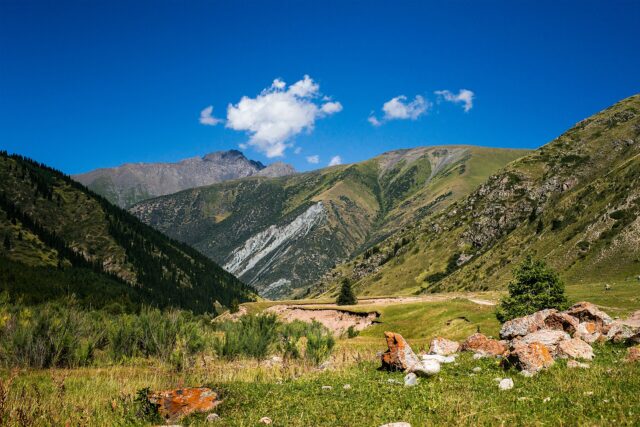
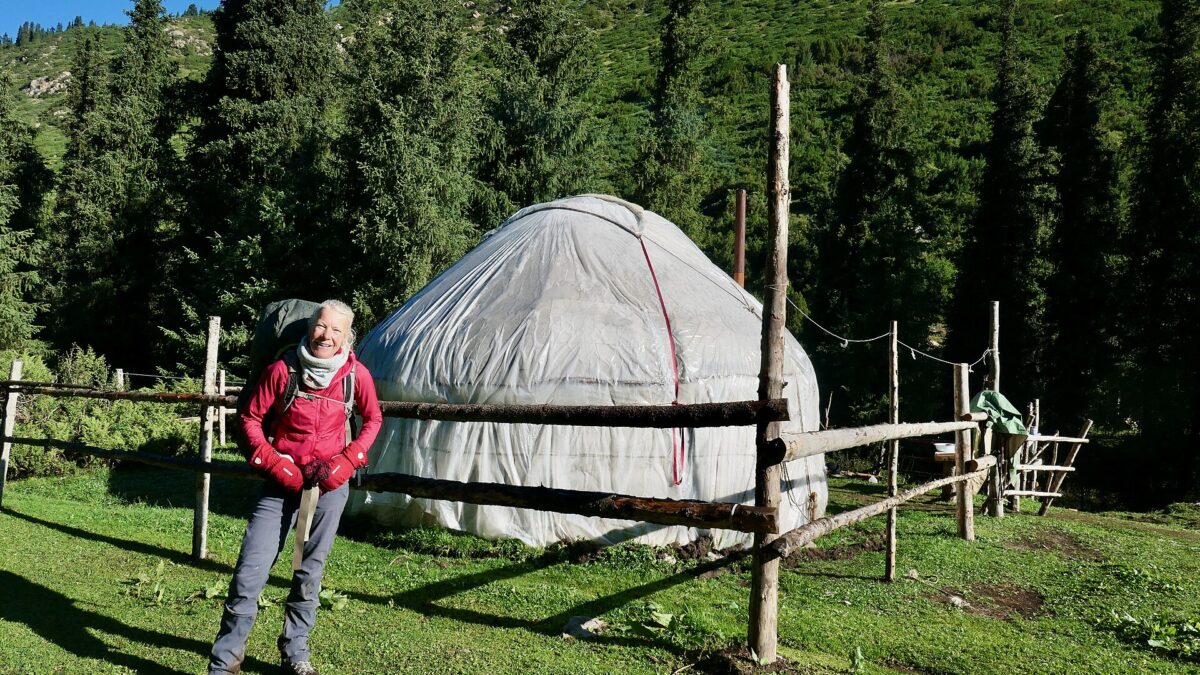
August runs two climates at once. Down in the Chuy and Fergana valleys it is properly hot, with afternoons that make a strong case for morning sightseeing and air-conditioned marshrutkas. Climb to 2,000 meters and the same day is a pleasant 20–25°C; at 3,000 meters, think 15–20°C days and nights that flirt with freezing. Rain is scarce — this is the driest stretch of the year in most of the country — though high passes can still conjure an afternoon squall or even a dusting of snow late in the month. Pack for both ends: sunscreen and a sunhat, plus a real insulating layer for yurt nights.
Everything is open — use it
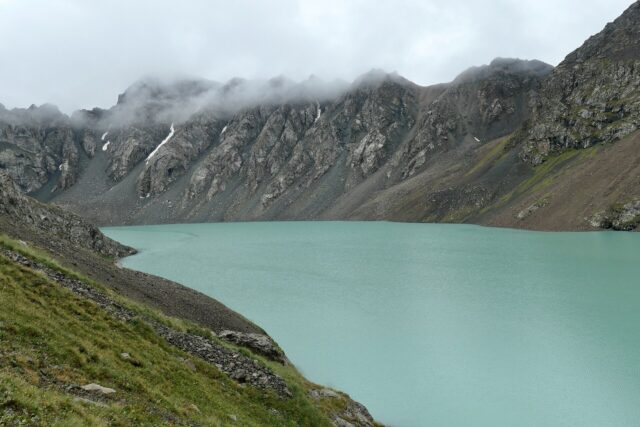
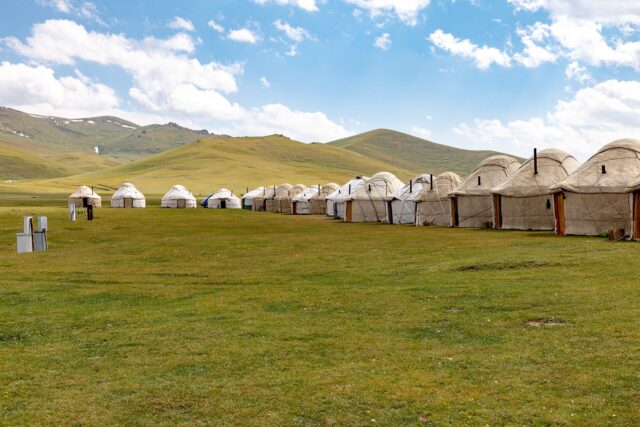
August is the month with no asterisks. Song-Kul’s jeep passes have been open for two months, the shepherd camps are in full swing, and the Ala-Kul trek is at its safest and most snow-free. This is also the classic window for the big-mountain objectives: the Pik Lenin base camp trek in the far south is essentially an August specialty, with the Edelweiss meadows at Achik-Tash in full operation. If you have been saving a yurt stay for the right moment, this is it — herds, kymyz, and long golden evenings on the jailoo.
Crowds: how August compares with July
Early August is indistinguishable from July at the marquee spots — expect company at Song-Kul, on the Ala-Kul trail, and along the Issyk-Kul beaches, which fill with Kazakh and local holidaymakers through mid-month. The inflection point comes around August 20, when European visitors head home and Issyk-Kul’s beach season tapers. Late August delivers peak-season access with distinctly post-peak trails, and guesthouse availability loosens noticeably. If your dates are flexible within the month, later is better.
Harvest season starts now
August is when Kyrgyzstan’s bazaars justify a detour on their own. Melons and watermelons arrive by the truckload from the Fergana and Chuy valleys, stone fruit is everywhere, tomatoes actually taste of something, and the first apples show up toward month’s end. Up on the pastures, kymyz — fermented mare’s milk — is still flowing, and honey sellers line the roads in the mountain valleys. Eat aggressively seasonally this month; it is the best produce window of the year.
Festivals and events
August 31 is Independence Day, celebrated with concerts, horse games, and general festivity in Bishkek and regional capitals — worth planning around if you like your travel with a crowd of locals in a good mood. Through the summer, small horse-games and eagle-hunting demonstrations pop up around Issyk-Kul and the Kyrchyn gorge; dates float, so ask locally. The big one, the World Nomad Games, moves between host countries and years — check the current schedule rather than assuming it lands in Kyrgyzstan in August.
Booking and costs in August
August is peak pricing, but Kyrgyzstan’s version of peak is gentle: guesthouse doubles around $30–40, dorms $10–12, yurt stays with meals typically $15–22 per person. The pinch points are specific — Karakol guesthouses before an Ala-Kul window, the better-known Song-Kul camps, and anything bookable online around Issyk-Kul in the first half of the month. Reserve those a week or two out; everywhere else, a day’s notice still works. Drivers for the remote jeep roads are at their busiest in early August, so lock in 4WD transfers — especially toward Kel-Suu or the south-shore passes — a few days ahead rather than the morning of.
Frequently asked questions
Is August too hot for Kyrgyzstan?
Only at low altitude. Bishkek and Osh can sit above 35°C, but most of what you came for happens between 2,000 and 4,000 meters, where August is mild by day and cold at night. Structure the trip around the mountains and heat is a non-issue.
Is August better than July?
We think so, narrowly. Access and weather are equivalent, but the second half of August has fewer travelers, easier bookings, and harvest-season bazaars. July’s only real edge is greener pastures and a slightly longer buffer before autumn snow.
Can you still trek in late August?
Yes — late August is arguably the best trekking of the year: dry trails, stable weather, minimal snow on the passes. Just respect the shifting season above 3,500 meters, where the first cold snaps and brief snowfalls can arrive from the very end of the month.
The August checklist
- Book Ala-Kul guesthouse nights in Karakol ahead if traveling before August 20.
- Pack for 35°C afternoons and 0°C yurt nights in the same bag.
- High-SPF sunscreen — UV at 3,000 meters is fierce even when the air feels cool.
- Aim for the second half of the month if you want peak access minus peak crowds.
- Carry small som notes for roadside melons, honey, and kymyz.
- In Bishkek on August 31? Head to Ala-Too Square for Independence Day.