July and August are the height of Kyrgyzstan’s travel year. Every trekking pass is open, the Song-Kul yurt camps are fully running, the jailoo festivals are in swing, and the high valleys sit in their most stable weather of the year — which is exactly why these are also the busiest and most expensive months. If your priority is guaranteed access to the high mountains and lakes with the smallest chance of a snowbound route, peak season delivers. The trade-offs are hot lowlands, fuller guesthouses, and the need to book the popular spots ahead.
The two months are more alike than different, so we cover the shared peak-season reality once, weather, access, crowds, costs, and then get into what actually distinguishes them: July is the festival and jailoo month, August is the harvest month with a quiet inflection around the 20th when the crowds visibly thin. For the full-year comparison, see our best time to visit Kyrgyzstan guide.
Peak-season weather, zone by zone
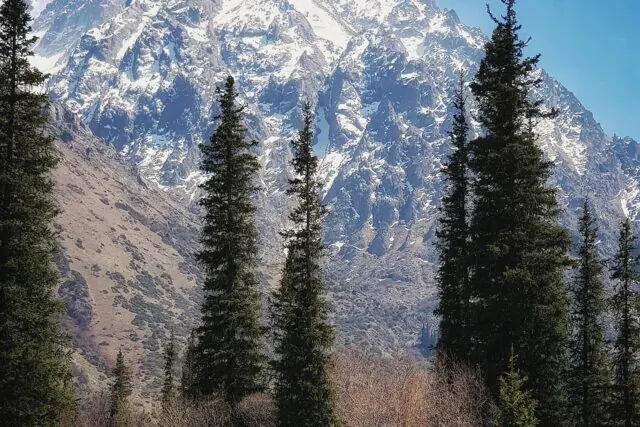
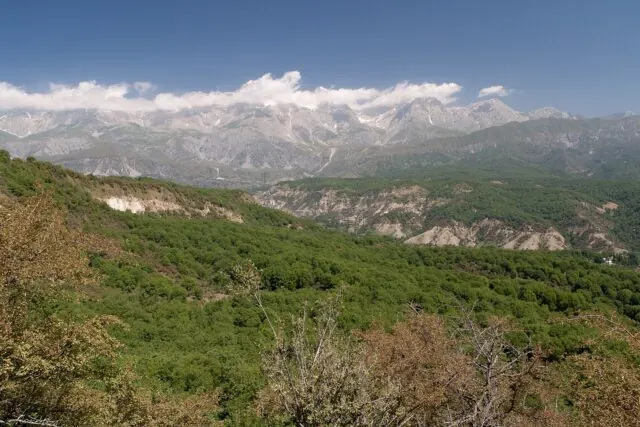
Midsummer Kyrgyzstan is a country of three climates stacked on top of each other. The lowlands are hot: Bishkek regularly hits 32–35°C, and the Fergana Valley around Osh can push toward 38°C in August, dry and dusty in the afternoons. The Issyk-Kul basin is the relief valve — mid-to-high 20s, the lake warm enough for proper beach days, and cooler evenings. Up in the mountains, trekking altitudes sit around 12–20°C by day with cold but rarely freezing nights. July keeps the classic Tian Shan rhythm of bright mornings and building afternoon clouds; by August the rain grows scarce and most of the country enters its driest stretch of the year, though high passes can still conjure an afternoon squall or even a late-month dusting of snow.
The heat shapes a good itinerary. Treat the cities as quick logistics stops — front-load Bishkek, and Osh if you're doing the south, early in your trip or early in the day: and spend your nights above 2,000 meters. Osh and the low south are worth it for the bazaar, Sulaiman-Too, and the culture, but they are hot work in midsummer; our Osh travel guide has the details if you are heading that way. Pack for both ends of the thermometer: sunscreen and a sunhat for 35°C afternoons, plus a real insulating layer for yurt nights that flirt with freezing.
What peak season unlocks
The single biggest reason to accept the crowds is access. These are the months with no asterisks: the high passes that can still hold snow in June are clear, the Ala-Kul trek and its high pass are at their most straightforward, and remote destinations like Kel-Suu and the far-eastern valleys are reliably reachable. For anyone with a fixed leave window and no room to reschedule around weather, that reliability is the whole argument, you're far less likely to arrive at a trailhead and be turned back than in any shoulder month. It is also the only stretch where you can chain several high objectives back to back with confidence, which matters if you're trying to fit a big trek and a remote lake into one trip. For exactly when each route comes into play, our pass-opening guide tracks the calendar.
Crowds and costs: the shared reality
“Busy” in Kyrgyzstan is relative; even at the peak this is not a country of tour-bus gridlock. But demand concentrates in a few predictable places: the popular Karakol guesthouses, the best Song-Kul camps, well-known CBT homestays, and the Issyk-Kul beach towns, which fill with Kazakh and local holidaymakers from July through mid-August. Marshrutkas on the main Bishkek–Karakol run get packed. Beyond those pinch points, the trails themselves stay quiet and the remote valleys feel empty, if you want peak-season access without the peak-season company, go where fewer people go, such as a lesser-known trek out of Jyrgalan instead of the busiest Karakol routes.
Prices sit at the top of the annual band in both months, though Kyrgyzstan’s version of peak is gentle — expect the upper end of the usual ranges for dorms, guesthouses, and yurt stays, with the full numbers in our Kyrgyzstan travel budget guide. Transport is stable: a Bishkek–Karakol marshrutka runs around 500–600 KGS, and a Bishkek–Osh flight at roughly $40–60 is worth it to skip a long, hot road day.
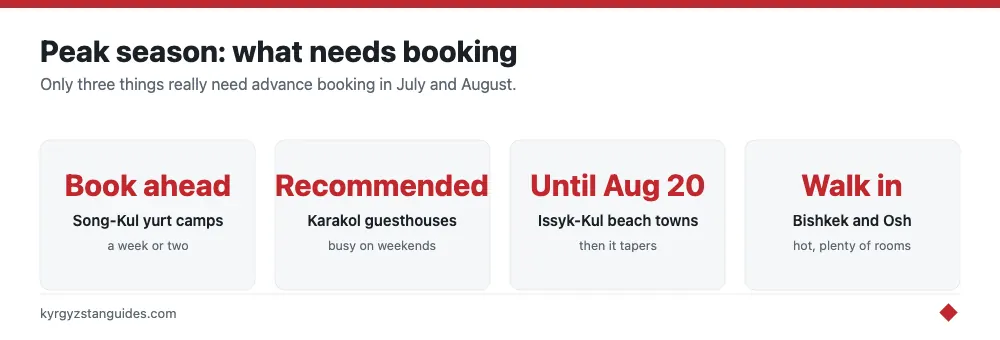
| Zone | Peak-season feel | Book ahead? |
|---|---|---|
| Song-Kul yurt camps | At their peak, popular | Yes, a week or two |
| Karakol guesthouses | Busy on weekends and before Ala-Kul windows | Recommended |
| Issyk-Kul beach towns | Full through about August 20, then taper | First half of August, yes |
| Bishkek / Osh cities | Hot, plenty of rooms | Not usually |
| Remote high treks | Fully open, quiet trails | Guide, not beds |
July: festivals and full jailoo life
July is the month the nomadic pasture life that so many people come for runs at full tilt, on its greenest grass. Shepherd families are on the jailoos with their herds, the kymyz, fermented mare’s milk, is flowing, and the pastures still carry the deep green of early summer that August slowly bakes out of them. If the postcard in your head is a felt tent beside an alpine lake, July is its most faithful month.
Song-Kul at its best
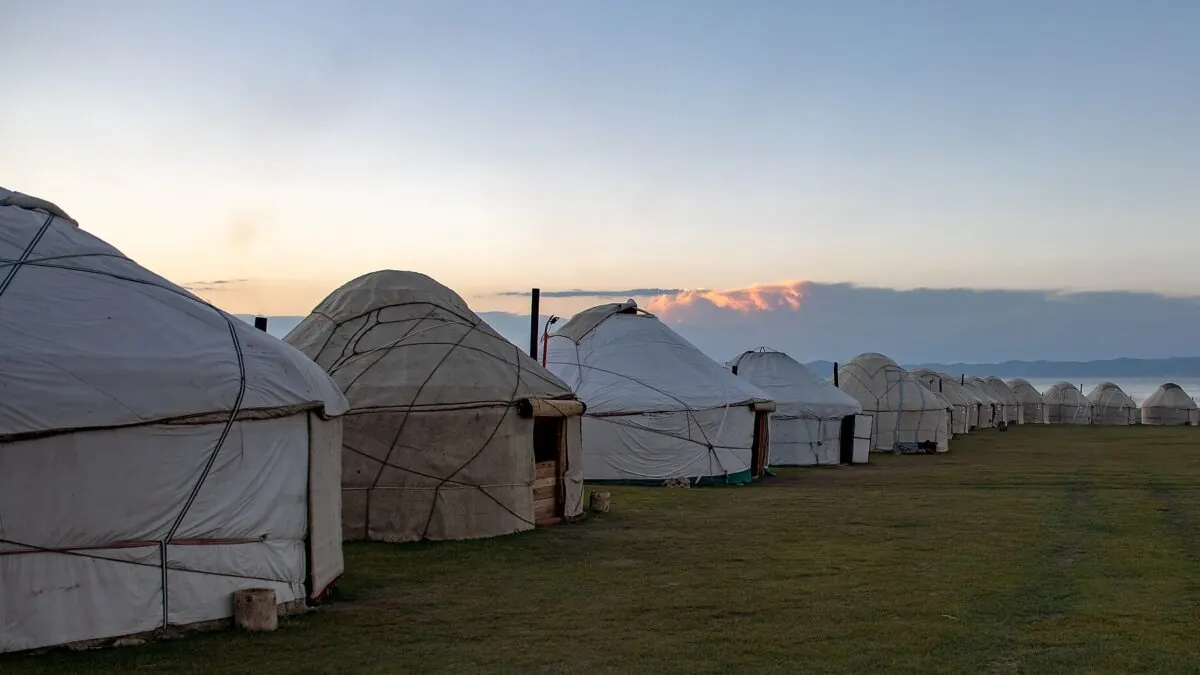
Song-Kul is the July postcard: every yurt camp operating, horse trekking around the lake at its peak, and the full rhythm of herding life on the 3,000-meter plateau. Waking to horses on the jailoo, dinner in a felt tent. Our Song-Kul guide covers routes, camps, and what to expect. Because it's so popular, this is exactly the kind of place worth arranging in advance in July.
Festivals and nomad culture
July is festival season on the pastures, with local ethno-festivals, horse games, and craft gatherings scattered across the jailoos, improvised, community-run, and a genuine window into Kyrgyz nomadic culture. Dates shift year to year and are rarely posted far ahead, so ask your guesthouse or a local guide once you arrive rather than trying to pin them down from home. Note that the big World Nomad Games is a separate, larger event that moves between host countries and years — check the current schedule rather than assuming it lands in Kyrgyzstan.
August: harvest season and the quiet turn
August keeps everything July opened and adds the best produce window of the year. Melons and watermelons arrive by the truckload from the Fergana and Chuy valleys, stone fruit is everywhere, tomatoes actually taste of something, and the first apples show up toward month’s end. Honey sellers line the roads in the mountain valleys, and the bazaars justify a detour on their own. Eat aggressively seasonally this month, and carry small som notes for roadside melons and kymyz.
The August 20 inflection
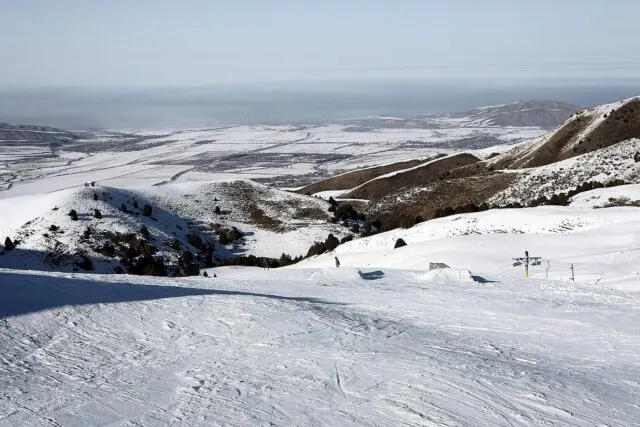
Early August is indistinguishable from July at the marquee spots. The change comes around August 20, when European school holidays wind down, visitors head home, and Issyk-Kul’s beach season tapers. Nights at altitude cool noticeably, the first brief cold snaps can brush the highest passes from the very end of the month, and guesthouse availability loosens. Late August delivers peak-season access with distinctly post-peak trails. If your dates are flexible within the month, later is better, and it's arguably the best trekking window of the year: dry trails, stable weather, minimal snow.
August specialties
The Pik Lenin base camp trek in the far south belongs almost entirely to this month, with the Edelweiss meadows at Achik-Tash in full operation. So does Independence Day on August 31, celebrated with concerts, horse games, and general festivity in Bishkek and the regional capitals: worth planning around if you like your travel with a crowd of locals in a good mood. In Bishkek that day, head to Ala-Too Square.
Booking checklist for peak season
You don't need to over-plan Kyrgyzstan, but these are the months where a little forward booking pays off. Before you go:
- Reserve Song-Kul yurt stays and any specific camp a week or two ahead: the good ones fill.
- Book Karakol guesthouses for weekend nights and before any Ala-Kul window, especially before August 20.
- Line up any guided high-altitude trek (Ala-Kul, Kel-Suu, Pik Lenin) in advance: guides, not beds, are the constraint.
- Lock in 4WD transfers for the remote jeep roads a few days ahead rather than the morning of; drivers are busiest in early August.
- If doing the south, book the Bishkek–Osh flight early to dodge the hot road.
- Ask locally about jailoo festivals once you arrive; don't build a rigid schedule around unconfirmed dates.
None of this takes more than an evening of emails and WhatsApp messages before you fly, and it covers everything that actually sells out in peak season.
Frequently Asked Questions
Is July or August better for Kyrgyzstan?
They are close. Access and weather are equivalent; July has greener pastures, more jailoo festivals, and a longer buffer before autumn snow, while the second half of August has fewer travelers, easier bookings, and harvest-season bazaars. If crowds bother you, aim for after August 20.
Is midsummer too hot to visit?
Only in the lowlands. Bishkek and Osh can sit at 32–38°C, but most of what you came for happens between 2,000 and 4,000 meters, where days are mild and nights are cold. Plan the route by altitude, cities early, lake and peaks for the heat of the trip, and the heat is a non-issue.
Do I need to book accommodation in advance?
For the popular spots, yes. Song-Kul yurt camps, Karakol guesthouses, well-known homestays, and Issyk-Kul rooms in early August fill on weekends and around festivals. Cities and remote areas rarely need it. A week or two of lead time on the busy places is usually enough.
Is this the best time for trekking?
For guaranteed access, yes. July and August have the fewest snow-blocked passes of the year, so the highest routes and remote destinations are at their most reliable, and late August adds the driest trails. The trade-off is more people on the popular routes.
How much more expensive is peak season?
Modestly. July and August sit at the top of the price band, but the difference from June or September is small in absolute terms. Even at its peak, Kyrgyzstan stays one of the cheapest mountain destinations anywhere.
How hot does Kyrgyzstan get in July and August?
Three climates stack up: Bishkek regularly hits 32–35°C and the Fergana Valley around Osh can push 38°C in August, while the Issyk-Kul basin stays in the mid-to-high 20s with warm lake water, and trekking altitudes sit around 12–20°C by day with cold nights. Pack sunscreen for the lowlands and a real insulating layer for yurt nights that flirt with freezing.