Can you just turn up in Kyrgyzstan and pitch a tent in the mountains? Basically, yes. Wild camping in Kyrgyzstan is legal and free across most open land, from summer pastures to lake shores, with the main exceptions being border zones that need a permit and a few strict nature reserves.
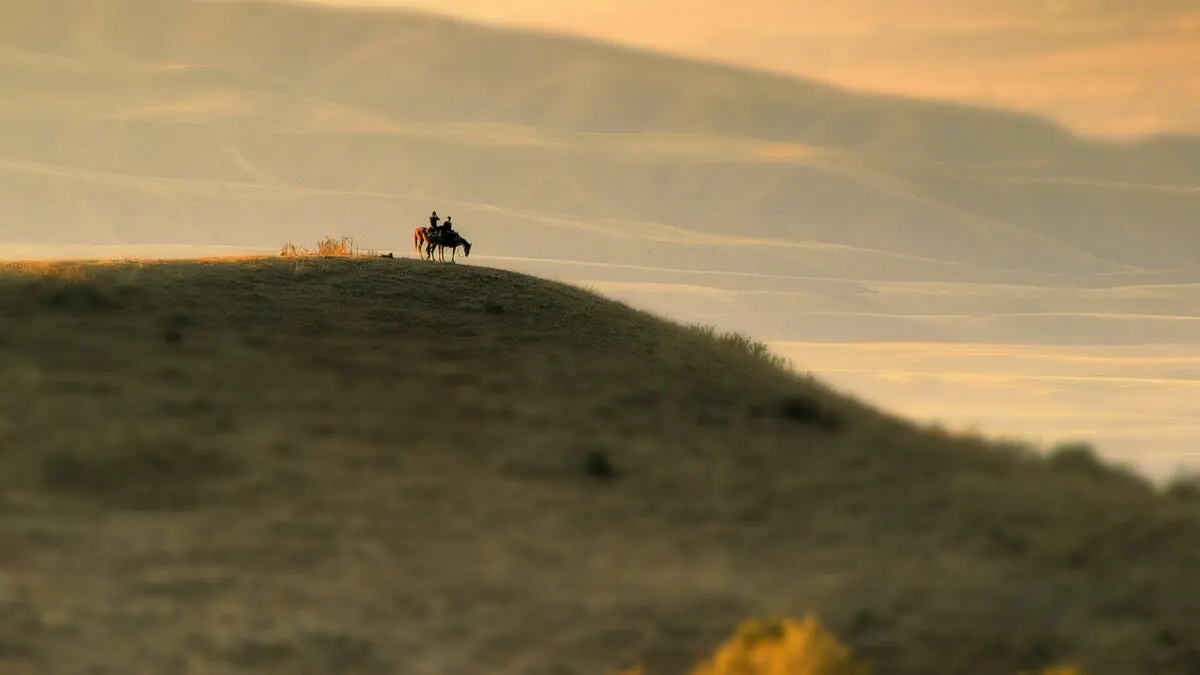
Most of the country is unfenced pasture and state land, nobody owns the view, and herders are used to travelers passing through on foot and on horseback. That freedom comes with real mountain conditions attached, from cold nights in July to water you shouldn't drink straight and passes near 4,000 metres, so here is what to know before you carry a tent up here, and when a yurt is the smarter call.
Is wild camping legal and free?
There is no general ban on pitching a tent in the Kyrgyz backcountry, and on open pasture and state land you can camp for free without asking anyone. The exceptions are worth memorising. Border zones near China and Tajikistan, including the approach to a showpiece like Kel-Suu, require a permit arranged in advance. Strict nature reserves have off-limits core areas, and national parks such as Ala-Archa charge a small entry fee and expect you to camp in sensible spots rather than anywhere at all.
Etiquette matters more than paperwork on the open jailoo. Pitching your tent right on top of a herder’s grazing, metres from their yurt, without so much as a nod is poor form. Camp a respectful distance away, and if you do end up close, a friendly hello is usually all it takes; hospitality here runs deep.
Where wild camping is genuinely great
The classic high-country camp is Song-Kul, an alpine lake ringed by summer pasture at around 3,000 metres. Most visitors sleep in the yurt camps, but you can pitch on the grass nearby for one of the best night skies in the country. The other icon is Ala-Kul, a turquoise lake near 3,500 metres on the popular trek out of Karakol; it's spectacular and cold and exposed, so it rewards good gear.
Beyond the headliners, the wider jailoo is the real prize. Valleys like Jyrgalan, Chon-Kemin and the Suusamyr grasslands give you space, streams and grazing horses with almost no crowds, and the easy option is simple car or shore camping along the south side of Lake Issyk-Kul.
A reality check on all of these: the scenery is free but the logistics aren't trivial. You still have to get yourself and your gear to the trailhead by marshrutka or hired driver, and the best pitches are a walk or a horse ride from the nearest road, which is part of why they stay quiet in the first place.
Water, altitude and weather that catches people out
Water is everywhere but not automatically safe. Livestock graze the slopes above almost every stream, so filter, purify or boil what you collect rather than drinking it straight; giardia is the usual reward for not bothering. Altitude is the next trap. Plenty of camps sit between 3,000 and 3,900 metres and passes like the one above Ala-Kul push close to 3,900, so acclimatise and avoid a big jump in sleeping height.
Then there is the weather, which is the thing most trips underestimate. Mountain conditions swing fast, afternoon thunderstorms build over the peaks, and snow is possible at altitude in any month. Even in July and August, nights above 3,000 metres routinely drop to near or below freezing. The workable high-camping window runs from about mid-June to mid-September, with July and August the safest bet.
Leave no trace in nomad country
This land is somebody’s summer livelihood, not empty wilderness, so the standard is high. Villages have no real waste system, which means you pack out every scrap of rubbish rather than leaving or burning it. Keep soap and toothpaste out of streams, bury human waste 15 to 20 centimetres down and well away from water, and don't cut the scarce shrubs for a fire; carry a stove instead. Close any gate you open, and give animals and yurts a wide, calm berth.
Gear that actually matters
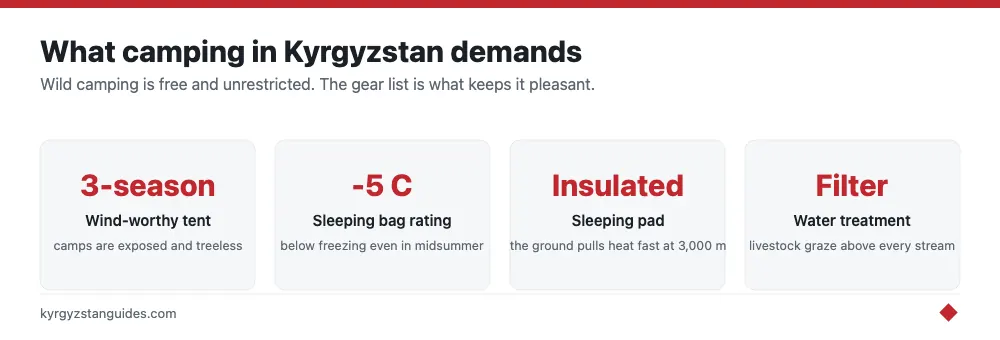
You don't need an expedition kit, but a few items are non-negotiable in exposed, treeless, high terrain. This is the short list that keeps a trip comfortable rather than grim.
| Item | Why it matters |
|---|---|
| 3-season tent, wind-worthy | Camps are exposed and treeless; a flimsy tent will not survive a squall |
| Sleeping bag rated to about -5C | Nights at altitude drop below freezing even in midsummer |
| Insulated sleeping pad | The ground pulls heat out fast at 3,000 metres and up |
| Stove and gas canister | There is no firewood; buy fuel in the city, not the villages |
| Water filter or tablets | Livestock graze above almost every stream |
| Rain shell and warm layers | Weather turns in minutes and storms build most afternoons |
Buy fuel and anything you are missing in Bishkek or Karakol, where the outdoor shops are; mountain villages won't stock gas canisters or technical kit. It's worth checking a full Kyrgyzstan packing list before you leave the city so you're not improvising at a trailhead.
When a yurt stay beats a tent
A tent is not always the better choice. At Song-Kul especially, a yurt with dinner and breakfast runs roughly 15 to 25 US dollars and buys you warmth, a genuine cultural evening and no gear to haul up, and it doubles as weather insurance when a front rolls in. A tent wins on multi-day treks like Ala-Kul, on solitude, on cost across many nights, and in remote spots with no camps at all.
The simple rule: if you want one memorable high-country night rather than a self-supported route, take the yurt; a yurt stay often gives you more of Kyrgyzstan for less effort than a tent does. Save the tent for the treks where carrying your own shelter is the only way through.
Frequently Asked Questions
Is wild camping legal in Kyrgyzstan?
Yes, on most open pasture and state land you can camp freely and without charge. The exceptions are permit-controlled border zones, strict nature-reserve core areas and national parks, which may charge a fee or limit where you pitch. Camp a respectful distance from herders and their animals.
Do I need a permit to camp anywhere?
Not for ordinary mountain and pasture camping. You do need a border-zone permit for areas near the China and Tajikistan frontiers, including the approach to Kel-Suu, arranged in advance through a tour operator. National parks may also charge a small entry fee at the gate.
Can I drink the stream water?
Not without treating it first. Livestock graze the slopes above nearly every stream, so filter, purify with tablets or boil your water to avoid giardia and other bugs. The water often looks clean and cold, but assume it's contaminated and treat it every time.
Are there venomous snakes in Kyrgyzstan?
Four species, all of them vipers; Kyrgyzstan has no cobras. That is worth knowing if you are pitching a tent in long grass. Our guide to Kyrgyz snakes and reptiles has more.
Where can you wild camp in Kyrgyzstan?
Across most open land — summer pastures, lake shores, valley floors. Most of the country is unfenced pasture and state land, nobody owns the view, and herders are used to travellers passing through. The exceptions are border zones, which need a permit, and a few strict nature reserves.
Is it cold camping in Kyrgyzstan in summer?
Yes, and this is the thing people underestimate. Nights are cold even in July at altitude, and a trip can move from a hot capital to frost at a campsite within a day. Take a three-season bag rather than a summer one.
Do I need to ask permission to camp?
Not legally on open land, but if you pitch near a herder's camp it is normal to make yourself known rather than appearing silently at dusk. That is courtesy rather than a requirement, and it usually ends with being offered tea.