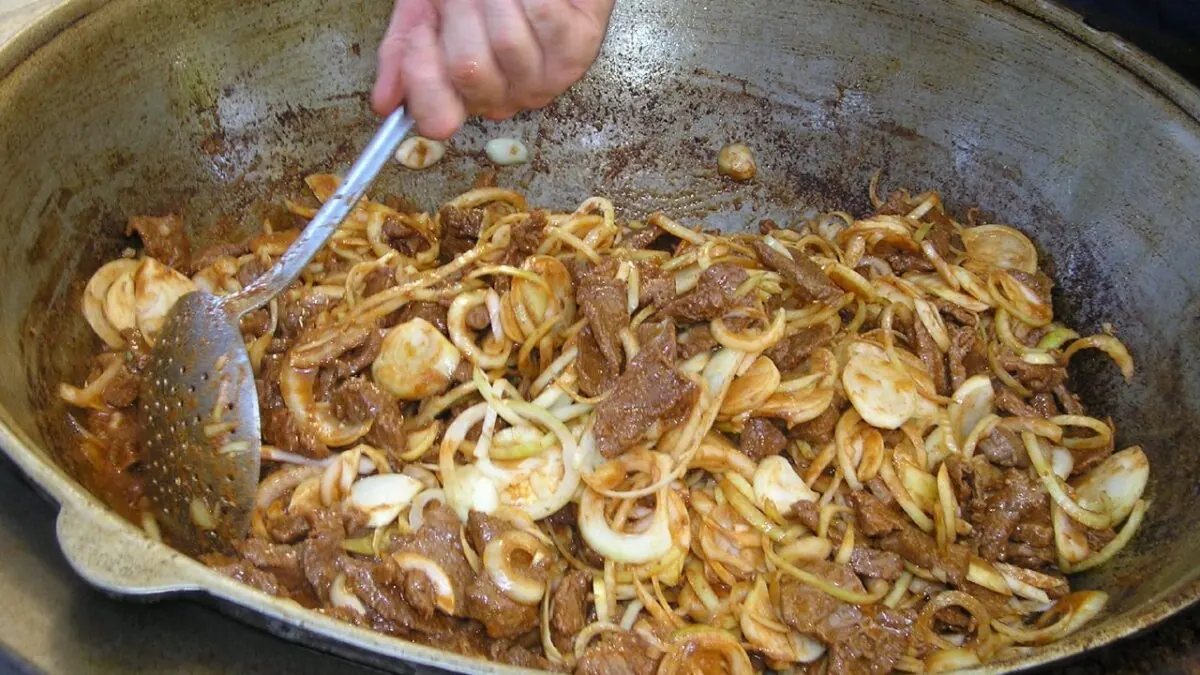
Order kuurdak in a Kyrgyz home or a roadside cafe and what arrives looks deceptively plain: chunks of meat and potato fried hard in their own fat, a scatter of onion, served straight from the pan onto a shared plate. That plainness is exactly the point.
Kuurdak is Kyrgyzstan’s everyday fried meat dish — meat (usually mutton or beef, sometimes offal) cut small, seared in fat, then cooked down with onions and, in most homes, potatoes until it's tender and glazed. It's not banquet food or tourist theatre. It's what a family cooks when an animal is slaughtered, what a canteen ladles out at lunch, and one of the first dishes worth learning to order if you want to eat well on a small budget. Our wider Kyrgyz food guide covers the full table, but kuurdak deserves a closer look on its own.
What kuurdak actually is
The name comes from the Turkic root for frying, and that verb tells you almost everything. Kuurdak is defined by method, not by a fixed recipe. Meat is cut into rough bite-sized pieces and seared in a hot kazan — the heavy cast-iron cauldron used across Central Asia — with rendered fat until the outside browns deeply. Onions go in to soften and sweeten. Then salt, pepper, sometimes cumin, and in most households potatoes to bulk it out and soak up the fat. A splash of water or stock at the end loosens everything into a texture that sits between a fry-up and a stew. With bread and tea, it's a complete meal and needs nothing else.
Historically the dish was tied to slaughter. When a sheep or goat was killed, the cuts that would not keep — liver, heart, kidneys, lungs, trimmings — were fried and eaten first, because there was no refrigeration and nothing went to waste. That offal-forward original still exists and is quietly prized by older cooks. The version most travelers meet is the muscle-meat-and-potato one that has become standard cafe food across the country.
Regional and household versions
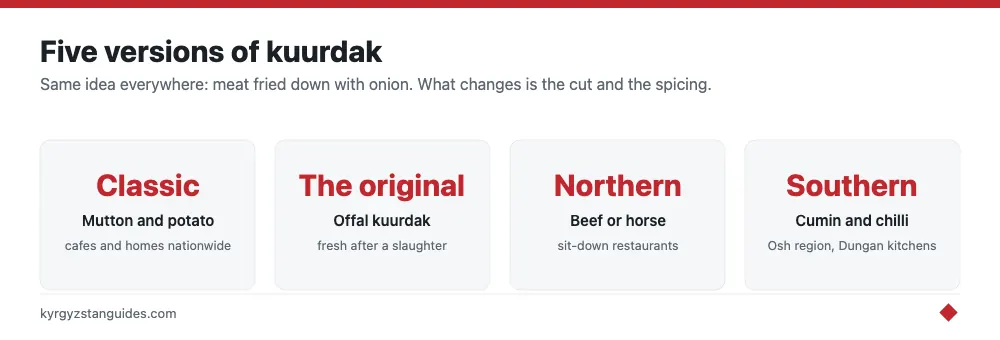
Kuurdak is less one recipe than a family of them. What lands on your plate depends on the region, the season, and who's at the stove:
| Version | What goes in it | Where you meet it |
|---|---|---|
| Classic potato kuurdak | Mutton or beef, potato, onion | Cafes and homes nationwide |
| Offal kuurdak (the original) | Liver, heart, kidney, fat, onion | Fresh after a slaughter; village homes |
| Beef or horse kuurdak | Beef in cities; horse where it is prized | Northern regions, sit-down restaurants |
| Southern, spiced style | Extra cumin, chilli, sometimes pepper | Osh region and Dungan-run kitchens |
| Winter kuurdak | Richer, more fat, from stored meat | Rural homes in the cold months |
None of these is more ‘authentic’ than the others. A cook in the northern jailoos and a cafe owner in the south would each call their own version the real one, and both would be right.
How Kyrgyz families eat it
Kuurdak belongs to the everyday end of Kyrgyz cooking, not the ceremonial end. That role is filled by beshbarmak, the boiled-meat-and-noodle dish reserved for guests and celebrations. Kuurdak is what you eat on an ordinary evening: the kazan comes off the heat, the pan or a big shared dish goes to the middle of the table, and everyone eats from it with bread and endless cups of tea. In summer, on the high pastures, it's cooked over an open fire and often uses whatever part of a freshly killed animal is to hand. To understand why a single shared dish and a fire matter so much here, it helps to read a little about Kyrgyz nomadic culture, where the herd, the season, and the meal are the same story.
There is no starter-and-main structure to a Kyrgyz meal. Bread, salads, jam, and sweets are already on the table when the hot dish arrives, and kuurdak simply joins them. Portions are generous and fat is not trimmed away — in a cold, high country where you burn energy just staying warm, the fat is the point, not a flaw.
What surprises first-timers is how little seasoning does so much. There is no marinade, no long spice list, no sauce poured over at the end. The flavour comes almost entirely from browning the meat hard in its own fat and letting the onions collapse into it, so the dish tastes deeply of meat and caramelised onion and not much else. That restraint is why a good kuurdak is genuinely hard to fake: with so few ingredients, the cooking has nowhere to hide, and you can tell within a bite whether the cook was patient at the searing stage or rushed it. Done well, the potatoes carry the fat, the onions carry the sweetness, and the meat stays tender rather than dry — a lot of reward for a short shopping list.
Where travelers find it
You don't need a special restaurant. Kuurdak turns up almost anywhere Kyrgyz people eat cheaply:
- Ashkanas (canteen cafes): the reliable everyday option, often with the day’s kuurdak already made and kept warm. Expect to pay roughly 150–350 KGS a plate.
- Bazaars: food stalls in and around the main markets, cooked in volume and turned over fast, which usually means fresh.
- Guesthouses and yurt camps: home kitchens make some of the best kuurdak you will eat, especially the offal version straight after a slaughter.
- Sit-down restaurants: in Bishkek and other cities you will find tidier, sometimes beef or horse versions on national-cuisine menus.
For a sense of how little all of this costs across a trip, our Kyrgyzstan budget guide puts cafe meals in context; a plate of kuurdak is one of the best-value hot meals in the country. If you are heading east, the mixed Kyrgyz, Uyghur, and Dungan food scene in Karakol is one of the best places to taste how one dish changes hands from cook to cook.
So skip the guidebook checklist for a moment and just order the kuurdak. It's the plate that tells you most about how this country actually eats: unfussy, generous, built around meat and fire and a shared table, and far better than its short list of ingredients has any right to be.
FAQ
What is kuurdak?
Kyrgyzstan's everyday fried meat dish: meat cut into rough bite-sized pieces, seared hard in rendered fat in a kazan, then cooked down with onions and, in most households, potatoes until tender and glazed.
What meat is kuurdak made from?
Usually mutton or beef, and sometimes offal. The dish is defined by the method rather than a fixed recipe — the name comes from the Turkic root for frying.
Is kuurdak a special-occasion dish?
Historically it was tied to slaughter, cooked when an animal was killed. Today it is ordinary food: what a canteen ladles out at lunch and one of the cheapest good meals you can order.
What is a kazan?
The heavy cast-iron cauldron used across Central Asia. Kuurdak is seared in one over high heat, which is what produces the deep browning the dish depends on.
Does kuurdak come with potatoes?
In most households, yes. They bulk it out and soak up the fat. A splash of water or stock at the end loosens everything into a texture between a fry-up and a stew.
What do you eat kuurdak with?
Bread and tea, and nothing else is needed. It arrives straight from the pan onto a shared plate.