Is Kyrgyzstan a good place to take kids? Honestly, yes — more than its rugged reputation suggests, as long as you slow the trip down and pick the right stops. It is cheap, the people are warm with children, and the headline attractions are outdoors and physical in a way that suits restless young travelers better than a museum circuit ever could.
The trick with children is pace: cut a normal Kyrgyzstan itinerary roughly in half, base yourself on Issyk-Kul’s beaches for the middle of the trip, and keep the hard mountain days short and optional. This isn't a destination for a packed two-week tour with a toddler. It's a place to move slowly between a handful of family-friendly bases, mix beach and gentle mountains, and let the novelty — horses, yurts, eagles — do the entertaining. Below is how to shape that, what to skip, and the health points that actually matter.
Set a realistic pace

The single biggest mistake families make is copying an adult trekking itinerary and expecting kids to absorb long transfer days on rough roads. Kyrgyzstan’s distances look small and drive long — mountain roads, passes and marshrutka stops turn a map-short hop into half a day. Plan for one travel day, then two or three nights in the same place before you move again. A week to ten days built around two or three bases beats a fortnight of one-night stands, and everyone arrives home still liking each other.
A sane family shape: a night in Bishkek to land, several nights on Issyk-Kul as the anchor, one gentle mountain excursion, and an optional single night in a yurt. That is a complete trip. Resist the urge to bolt on Song-Kul’s long high-altitude drive or a multi-day trek unless your children are older and used to hiking.
Build in buffer, too. Mountain weather turns, roads wash out, and a child who was cheerful at breakfast can be done by lunch. A trip with slack in it — a spare afternoon on the beach, a day with nothing booked — absorbs those hiccups without a meltdown. The families who struggle here are the ones who scheduled every hour; the ones who enjoy it left room to do nothing.
The stops that work with kids
Not everything in the guidebooks suits a six-year-old. These do:
| Stop | Why it works | Good ages |
|---|---|---|
| Issyk-Kul beaches | Warm-ish swimming, sand, resort ease | All ages |
| Ala-Archa lower trails | Short, flat valley walks near Bishkek | 4 and up |
| Yurt stay (one night) | Animals, space to run, novelty | 3 and up |
| Eagle-hunter demo | Live golden eagles, short and visual | All ages |
| Jeti-Oguz red rocks | Easy meadow strolls, picnic spot | All ages |
Issyk-Kul: the family anchor
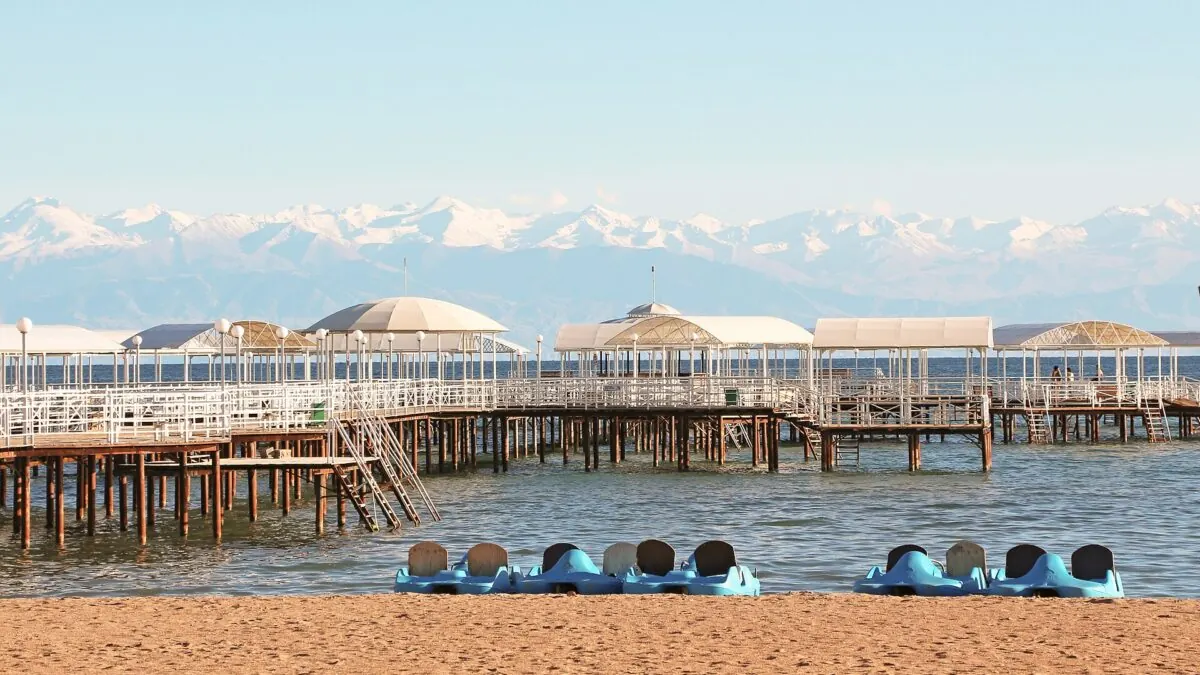
The lake’s north shore around Cholpon-Ata is the closest thing Kyrgyzstan has to a family beach holiday — sandy stretches, shallow swimming that warms up in July and August, guesthouses with gardens, and enough small attractions to fill a slow week. Base here and day-trip outward. Our Issyk-Kul guide compares the shores and towns.
Ala-Archa: mountains without the ordeal
The lower valley of Ala-Archa National Park gives you real alpine scenery under an hour from Bishkek, with flat riverside paths kids can manage and turn-back points whenever legs give out. You don't need to reach any summit or waterfall for it to be worthwhile — the first hour of valley is the payoff.
A yurt night and the eagles
One night in a yurt is plenty for most families and often the trip’s favorite memory: open space, farm animals, star-heavy skies and a floor bed that feels like camping indoors. Pair it with an eagle-hunter demonstration — short, dramatic, and safe to watch — common around the southern Issyk-Kul villages. The yurt stay guide explains what a night actually involves.
Health, altitude and food
Nothing here should alarm a sensible parent, but three things deserve planning. First, altitude: the family-friendly core — Bishkek, Issyk-Kul, lower Ala-Archa — sits low enough to ignore. It's only the high excursions like Song-Kul, above 3,000 metres, where small children can feel headachy or sleep badly, which is another reason to keep those optional and brief. Second, stomachs: stick to bottled or boiled water, be a little careful with unpasteurized dairy and roadside food, and pack a basic kit of rehydration salts and the medicines your kids normally use, since rural pharmacies are thin.
Food is genuinely easy. Kyrgyz cooking is meat, bread, rice and noodles — plov, fried rice, dumplings, kebabs, fresh naan, and endless tea — which is to say most children find something they'll eat without drama. Fussy eaters survive happily on bread, rice and grilled meat, and Bishkek and the resort towns have cafes with familiar options. Our food guide runs through the staples worth ordering.
Getting around comfortably
Public marshrutkas (shared minibuses) are cheap but cramped, unpredictable, and no fun with young children and luggage on a long day. For families the comfortable answer is a private car with a driver for the day or the route — still inexpensive by Western standards, far less stressful, and it lets you stop when someone needs the bathroom or a run-around. Bring your own car seat if your child uses one, as they aren't standard here. Our transport guide covers the options and rough costs.
A few things worth packing
Rural Kyrgyzstan isn't stocked for children, so bring what you rely on. Sun protection is non-negotiable — the high-altitude sun is fierce even when the air is cool, so hats, sunscreen and sunglasses earn their space. Layers matter more than bulk: mountain days swing from hot sun to cold wind within an hour, and evenings at any altitude get chilly. Beyond that, pack the specific medicines your kids use, rehydration salts, wet wipes for long drives, and a few familiar snacks for the moments when the local menu is a hard sell. Nappies and formula exist in Bishkek supermarkets but thin out fast in the villages, so stock up in the capital before heading to the lake.
What to skip
Be honest about what doesn't suit a family trip, and drop it without guilt: multi-day treks such as Ala-Kul, which involve altitude, camping and long days; the long rough drive to Song-Kul with under-fives; overland border marathons; and any itinerary that has you changing base every night. Kyrgyzstan rewards depth over coverage at the best of times, and doubly so with kids. Pick three good bases, go slow, and let the horses and the lake do the work — that's the whole strategy.
Frequently Asked Questions
Is Kyrgyzstan safe for kids?
Yes. It is a welcoming, low-crime country where children are treated warmly. The real hazards are practical rather than dangerous — long rough drives, altitude on the high excursions, and thin rural medical care — all manageable if you keep the pace gentle and stay on the lower family-friendly bases.
What is the best age to take children to Kyrgyzstan?
It works from toddler age upward if you keep it slow and low. Very young children are fine for Issyk-Kul, Bishkek and easy valley walks; save the high-altitude and trekking parts for kids of about eight and up who are used to hiking. There is no single right age, only a right itinerary.
How long should a family trip to Kyrgyzstan be?
About seven to ten days is the sweet spot: enough for a Bishkek arrival, several nights on Issyk-Kul, a gentle mountain day and one yurt night, without the exhausting transfers a longer tour demands. Two weeks only makes sense with older, hike-ready children.
How should I pace a family trip to Kyrgyzstan?
Cut a normal itinerary roughly in half. Base yourself on Issyk-Kul's beaches for the middle of the trip and keep the hard mountain days short and optional. This is not a destination for a packed two-week tour with a toddler.
Is Kyrgyzstan expensive for families?
No — it is cheap by any standard, which is part of why it works with children. The bigger constraint is pace rather than cost.
What do children actually enjoy in Kyrgyzstan?
The headline attractions are outdoors and physical — horses, lake swimming, yurts, open space — which suits restless young travellers better than a museum circuit. People are also notably warm with children here.