A full-day lift pass at Kyrgyzstan’s biggest ski area costs roughly what a plate of pasta and a beer costs in a mid-range Alpine resort restaurant. That single fact explains why a small but growing crowd of skiers has started routing through Bishkek every winter. Kyrgyzstan will not replace the Alps for groomed mileage or lift infrastructure — but for cheap lift-served powder, near-empty slopes, and some of the most affordable freeride and ski-touring terrain anywhere, it's quietly one of the best-value winter destinations on the planet.
Here is the picture in one paragraph: the season runs December to late March, Karakol is the main resort with proper chairlifts and around 20 km of runs, ZIL and Chunkurchak give Bishkek-based travelers easy day trips, and the villages of Jyrgalan and Arslanbob have become genuine freeride and ski-touring bases where you sleep in guesthouses and earn your turns. Budget $25-35 a day for lift-served skiing all-in — often less. The rest of this guide breaks each piece down.
When the Season Actually Runs
Lifts typically start spinning in early-to-mid December and shut in late March, with the reliable core of the season falling between late December and early March. January is the coldest month: expect -10 to -20°C at altitude, occasionally colder — but it also brings the driest, lightest snow. February is the sweet spot for most visitors: deep base, regular refills, slightly longer days, and marginally softer temperatures.
Snowfall in the Tien Shan is less consistent than in the Alps or Japan; storms come in pulses with clear, cold high-pressure spells between them. That pattern is bad news for anyone chasing a guaranteed powder week on fixed dates, and great news for anyone with flexibility, because the days between storms are often windless bluebird days over untracked slopes that nobody skied out. There simply aren't enough skiers in the country to track out terrain quickly. For everything beyond skiing — roads, daylight, what winter travel here actually feels like: see our Kyrgyzstan in winter guide.
Karakol: The Main Event
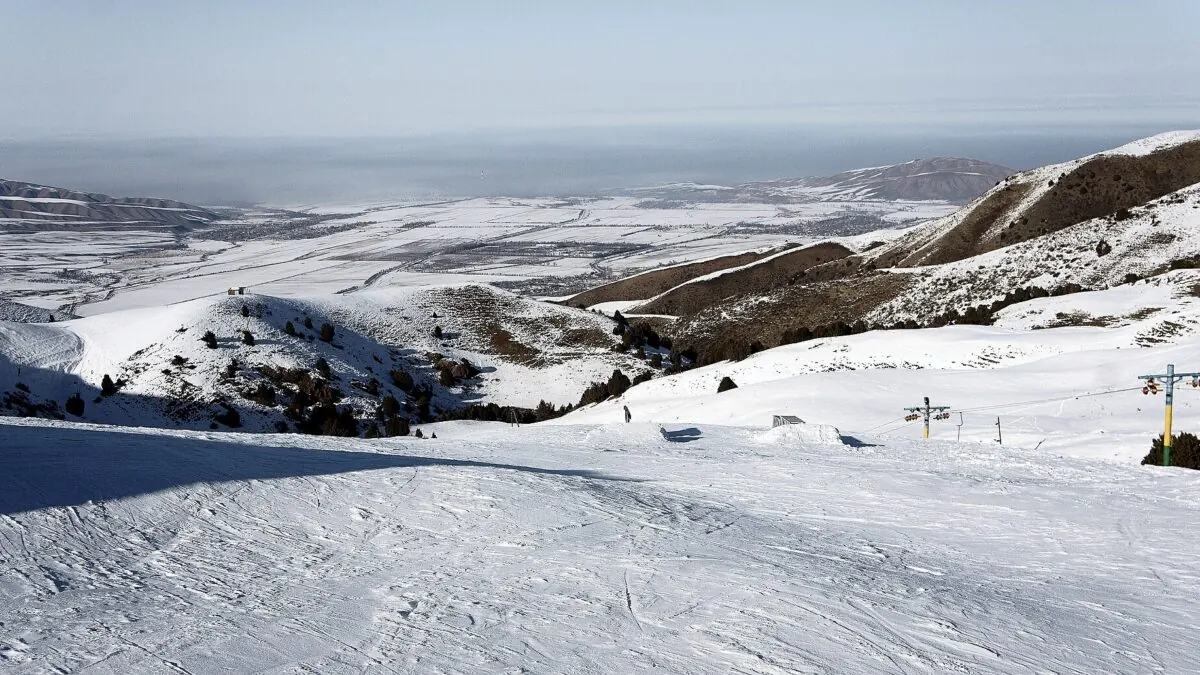
Karakol Ski Base sits about 7 km above Karakol town at the eastern end of Issyk-Kul. By Central Asian standards it's a real resort: a base around 2,300 m, a top station near 3,040 m, roughly 800 m of vertical, and about 20 km of marked runs served by a handful of chairlifts. The pistes are honest intermediate terrain: long, rolling reds and blues through spruce forest, with a few steeper pitches near the top — and the view down over Issyk-Kul from the summit ridge is worth the trip on its own.
The real draw, though, is what sits beside the pistes. The sidecountry off the top chair is extensive, easily accessed, and lightly skied; on a mid-week powder day you can lap untracked lines within sight of the lift for hours. Treat it with respect: it is unpatrolled, uncontrolled avalanche terrain, and you need a beacon, shovel, probe, and ideally a local guide.
Practicalities: a full-day adult pass costs around 2,000-2,500 KGS (roughly $23-29), with half-day and multi-day options. Full ski or snowboard rental kits run about 800-1,200 KGS per day from shops at the base or in town, and the gear is serviceable mid-range stock rather than showroom-fresh — fine for piste days, worth upgrading from home if you plan to ride hard. Karakol town, 20 minutes below, has far better and cheaper food and lodging than the base area, so almost everyone stays in town and commutes up by taxi or shared transfer for a few hundred som.
ZIL and Chunkurchak: Skiing From Bishkek
If you're based in the capital, you don't need to cross the country to ski. Two small resorts in the mountains south of the city cover day-trip duty. ZIL, in the Alamedin valley about 40 minutes out, is the traditional weekend hill: a modest lift-served area with wide, friendly slopes that suit beginners and families, plus surprisingly good sidecountry for its size. Chunkurchak, slightly further into its namesake valley, is newer and a touch more developed, with a longer main lift, snowmaking, equipment rental, and a cafe scene that fills with Bishkek families every weekend.
Neither is a destination resort and we would not pretend otherwise. Think a few hundred meters of vertical and a handful of runs at each. But as a cheap learning hill or a powder-day snack between city days, they work. Day passes generally land in the 1,000-1,800 KGS range, rentals are available on site, and taxis from central Bishkek cost a few dollars each way. Go midweek if you can; weekends get genuinely busy with locals. Pair a ski day with a proper city day using our Bishkek guide.
Jyrgalan and Arslanbob: The Freeride Frontier
This is where Kyrgyzstan stops being a budget curiosity and becomes special. Jyrgalan, a former coal-mining village an hour east of Karakol, has rebuilt itself over the past decade into a backcountry hub. In winter that means guided freeride days accessed by snowcat or by skinning, yurt-based ski-touring camps in the surrounding valleys, and a handful of guesthouses that cater specifically to skiers — drying rooms, big dinners, guides on call. The terrain is rolling alpine with everything from mellow powder bowls to committing steeps, and the snow, sheltered in a high side valley, tends to stay cold and dry.
In the far south, Arslanbob offers something stranger and lovelier: ski touring above the world’s largest natural walnut forest. A community-based tourism outfit in the village runs winter programs, rents touring gear, and connects visitors with local guides: several of whom learned to ski on homemade wooden skis and now shepherd foreigners up 3,000-meter ridgelines. Descents run through open bowls and back down toward the bare walnut canopy. It's not steep-and-deep terrain, but as a cultural-plus-skiing experience it has almost no equivalent anywhere.
Both operate on advance arrangement rather than walk-up lift tickets. A guided freeride or touring day typically costs $50-100 per person depending on group size and logistics, a fraction of what guided backcountry days cost in Europe or North America.
What It Costs vs. Europe
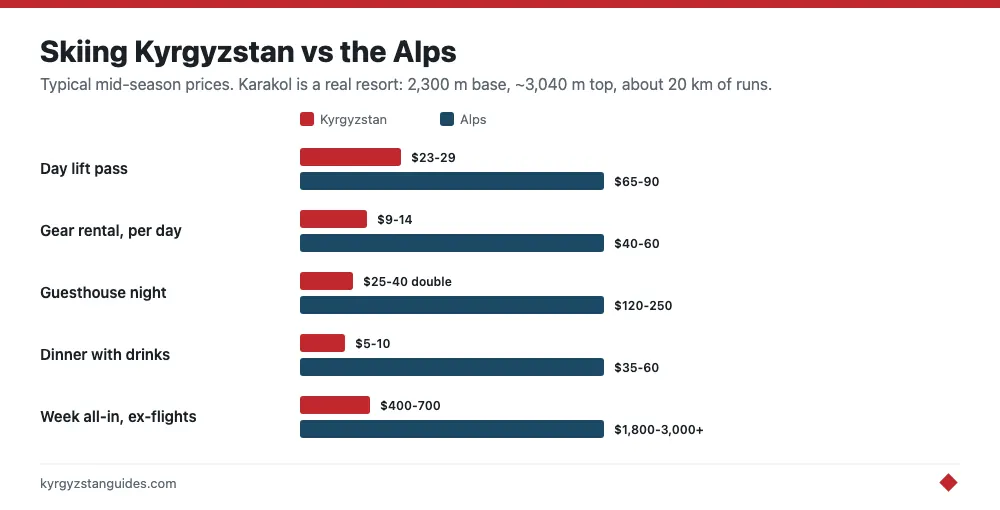
The numbers are where Kyrgyzstan makes its argument. Here is a rough like-for-like comparison, using typical mid-season prices:
| Item | Kyrgyzstan (typical) | Alps (typical) |
|---|---|---|
| Day lift pass, main resort | $23-29 (Karakol) | $65-90 |
| Full gear rental, per day | $9-14 | $40-60 |
| Guesthouse/hotel night | $25-40 double | $120-250 |
| Dinner with drinks | $5-10 | $35-60 |
| Guided backcountry day | $50-100 | $350-500 (group) |
| Week all-in (ex-flights) | $400-700 | $1,800-3,000+ |
Even after adding flights via Istanbul, Almaty, or Dubai, a two-week Kyrgyzstan ski trip frequently costs less than one standard week in the Alps. What you give up: lift capacity, grooming standards, piste variety, ski schools in multiple languages, and the apres scene. What you get: empty slopes, cheap powder, and stories nobody else at home has.
Who It Suits, and Who It Doesn’t
Kyrgyzstan in winter is a strong match for confident intermediates and above who care more about snow and price than about infrastructure, for backcountry and touring skiers who want new terrain without guide-service sticker shock, and for long-term travelers already routing through Central Asia. Beginners can absolutely learn here — lessons at Karakol or Chunkurchak cost a fraction of European prices. But instruction quality is inconsistent and English-speaking instructors need to be arranged ahead.
It's a poor match for anyone who wants ski-in/ski-out convenience, guaranteed grooming, non-ski luxury, or a big resort’s worth of piste variety for a full week. If your ideal trip is 60 km of corduroy a day and a spa at 4 p.m, book Austria and be happy. If your ideal trip is untracked snow, $10 dinners, and a valley you share with a few dozen other skiers, keep reading.
Frequently Asked Questions
Is Karakol worth it for a full week?
For piste-only skiers, honestly, no — you will have skied everything twice by day three. A week works brilliantly if you mix piste days with sidecountry, a guided Jyrgalan day or two, town rest days, and a hot-spring trip. Pure freeriders can fill two weeks without repeating themselves.
Do I need avalanche gear and a guide for off-piste?
Yes, without qualification. Nothing outside the marked pistes is controlled or patrolled, avalanche fatalities happen most seasons, and rescue capacity is thin. Bring or rent a transceiver, shovel, and probe, and hire a local guide unless your group is self-sufficient in avalanche terrain.
Can I rent everything locally, including touring gear?
Piste gear, yes — Karakol, Bishkek, and the small resorts all rent full kits cheaply. Touring setups, splitboards, and avalanche gear exist in Karakol, Jyrgalan, and Arslanbob but in limited sizes and quantities, so reserve ahead or bring your own boots at minimum.
How do I get to Karakol Ski Base in winter?
Fly into Bishkek, then take a marshrutka or shared taxi to Karakol town (6-7 hours, roughly 500-600 KGS by marshrutka), and grab a taxi up to the base each morning. Winter roads are plowed but slow; some guesthouses arrange direct transfers from Bishkek for groups.
Before You Book: A Quick Checklist
- Pick your base: Karakol for lifts plus sidecountry, Jyrgalan or Arslanbob for touring, Bishkek for a city trip with ski days bolted on.
- Aim for late January to early March for the most reliable snow.
- Book guides, touring rentals, and Jyrgalan guesthouses before you fly, winter capacity is small.
- Pack avalanche gear, your own boots, and layers rated for -20°C.
- Check that your travel insurance explicitly covers off-piste skiing and, if touring, ski mountaineering.
- Budget $400-700 for a week on the ground and expect to come in under it.
In winter the village becomes a ski-touring base with no lifts and no patrol: see Jyrgalan in winter, including the posted prices and the coal mine underneath it.