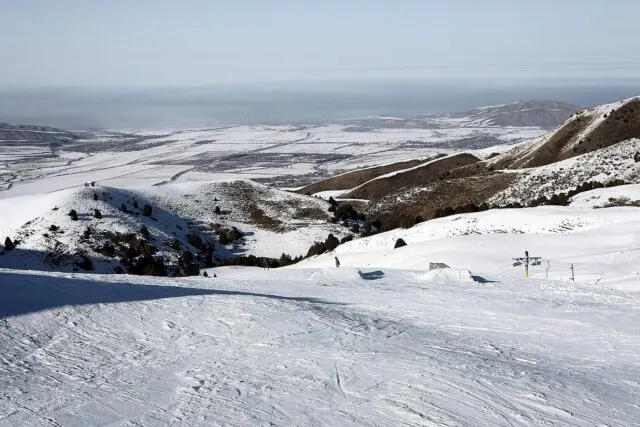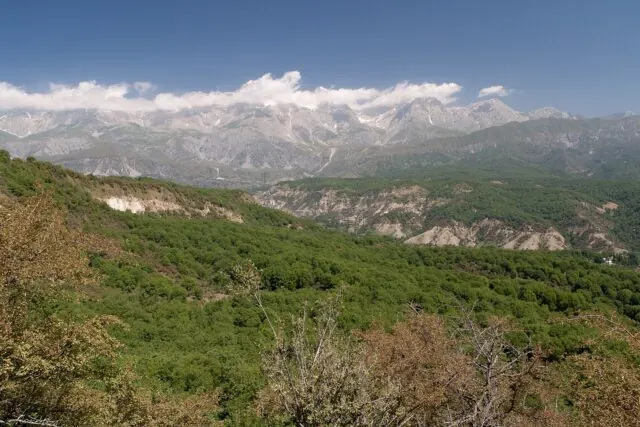
Every Kyrgyzstan guide tells you to come in July, and fair enough: that is when the whole country is open. But spring, from March through May, is when the mountains turn green, the poppies come out, and you can have entire valleys to yourself at shoulder-season prices. It's also the season when most of the famous high-altitude sights are physically unreachable.
So here's the honest summary: spring works beautifully for Bishkek and Osh, for the low valleys and canyons, for the walnut forests of the south, and, by May, for Sary-Chelek. It does not work for Song-Kul, Ala-Kul, or any plan built around passes above 3,000 meters, which stay snowbound well past the season’s end. Accept that split and spring becomes one of the most rewarding times to visit the country.
Spring in Kyrgyzstan, month by month
March: winter loosens its grip
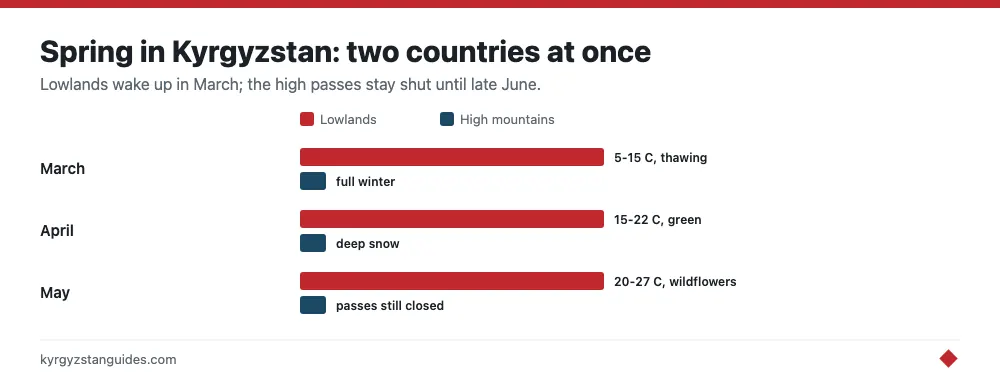
March is transition, not spring. The high mountains are still in full winter, and even Bishkek can swing from 15°C sunshine to wet snow in the same week. What March does have is Nooruz on March 21 — the Persian new year and the biggest holiday on the Kyrgyz calendar. Ala-Too Square in Bishkek fills with music, wrestling, and vats of sumolok, a wheat-sprout pudding stirred all night before the holiday. If your dates land in late March, build your trip around the cities and the celebration, not the landscape.
April: the green switch flips
Sometime in April the lowlands go from brown to intensely green, orchards blossom around the Fergana valley rim, and afternoons in Bishkek settle around 15–22°C. This is also when the rain starts in earnest — April and May are typically the wettest months of the year. Lower foothill trails become walkable, but anything alpine is still under meters of snow.
May: the best spring month
May is when spring pays off. Lowland afternoons reach 20–27°C, cool evenings still justify a jacket, and the foothill valleys are at their greenest before the summer sun starts drying them out. Guesthouses are open, hosts have time to talk, and you will rarely need a booking. Is May too early for Kyrgyzstan? For the high country, yes. For everything below roughly 3,000 meters, May might quietly be the best month of the year — which is why it gets its own extended treatment below.
| Month | Lowlands | High mountains | Our take |
|---|---|---|---|
| March | 5–15°C, unstable, thawing | Full winter | Cities and Nooruz only |
| April | 15–22°C, green, showery | Deep snow | Blossom, foothills, the south |
| May | 20–27°C, wildflower peak | Passes still closed | Best all-round spring month |
What spring gets gloriously right
First, the flowers. Kyrgyzstan sits inside the native range of the wild tulip, and in April the southern hillsides produce scattered blooms of species tulips that predate every Dutch cultivar. By May the show moves to the poppies: whole foothill slopes around Bishkek and the Suusamyr valley turn red in waves that run from mid-May into early June, joined on the valley floors by iris, eremurus, and the last of the flowering fruit trees. Photographers should aim for the second half of May in the north, and treat any drive out of Bishkek as a shooting opportunity: the best poppy slopes are often just off the main roads, not at any named sight. Nothing in the August landscape, by then yellowed and dusty, comes close.
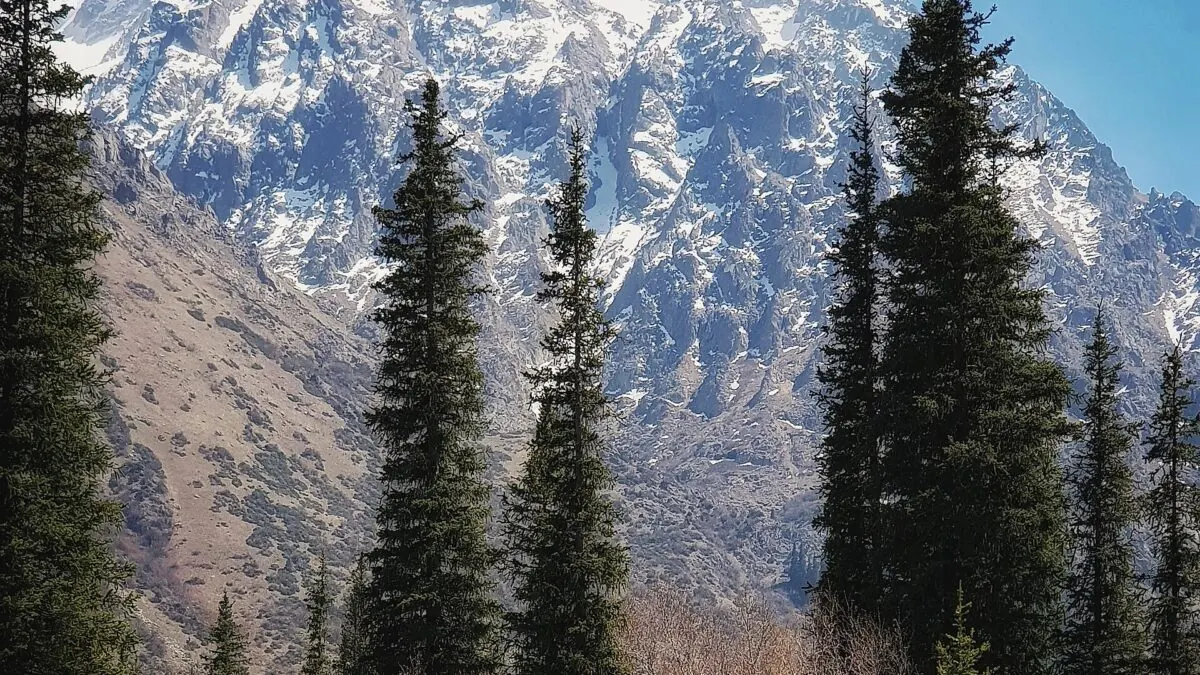
Second, the solitude and the pricing. This is genuine shoulder season: guesthouse rates run roughly 20–30 percent below their summer peak, day-trip drivers are easier to negotiate with, and sites that see busloads in July are close to empty. Third, the air: spring storms scrub the haze, so the snow ranges above Bishkek look impossibly sharp on clear mornings. After a big thunderstorm clears, the white wall of the Kyrgyz Ala-Too above the capital looks close enough to touch.
May’s specialty: foothill hiking in its prime window
The band between about 1,500 and 2,500 meters is exactly right in May: snow-free, green, and not yet baked. The lower trails of Ala-Archa National Park are open and far quieter than in July, and you hike beneath the snowline rather than over it. The Konorchek canyons are arguably a May specialty — the red rock corridors are brutal in midsummer heat and at their best in spring temperatures. On the Issyk-Kul side, the Jeti-Oguz valley pairs its red cliffs with meadows in full flower.
Two logistics notes for May specifically. Marshrutkas and shared taxis run their normal schedules, but the tourist-season extras — trailhead transfers, scheduled group day trips — mostly have not started, so budget a little more for private drivers to the odd corners. And some seasonal guesthouses in trekking hubs open late in the month; the ones that answer messages in May are run by exactly the kind of hosts who will spend an evening helping you replan around the weather.
What is closed. And won't open for you
Nobody plows Kyrgyzstan’s high roads. They open when the snow melts, which means the calendar, not your itinerary, decides. Through all of spring you should assume the following are off the table:
- The Song-Kul jeep roads and yurt camps — see our pass-opening calendar for the usual dates.
- The Ala-Kul pass above Karakol, still a snowbound trekking route all spring.
- Kel-Suu and the other far-Naryn border-zone destinations.
- Multi-day horse treks that cross anything above about 3,000 meters, and most jailoo (summer pasture) yurt stays — herders move up with their animals in June.
- High jeep roads on the south shore of Issyk-Kul, such as the Barskoon and Juuku passes.
Tour agencies will occasionally sell late-May Song-Kul trips in a warm year. Treat those as a gamble; a cold spring pushes everything back by two to four weeks, and no operator can promise a thaw in advance. The classic May mistake is forcing the visit anyway and spending it in mud and sleet.
Instead of Song-Kul: what to do with those days
Better trades exist. Give Issyk-Kul’s south shore two days of canyon walks and hot springs, ride horses in the lower Chon-Kemin or Jeti-Oguz valleys, and spend a full day in Bishkek for Osh Bazaar, Soviet architecture, and the best coffee in Central Asia. Add Sary-Chelek in the far southwest if you have four spare days, the low-altitude lake stands in respectably for the alpine ones you're missing.
The rain reality
Spring is the wet season, and it deserves a paragraph of honesty. April and May bring frequent showers and afternoon thunderstorms, especially against the northern foothills, usually a dramatic, theatrical hour of sideways rain rather than a lost day of drizzle. Trails turn to serious mud even on days that start sunny. The south around Osh tends to dry out a little earlier than the Bishkek side.
Pack accordingly, because the season punishes optimism: a genuine waterproof shell rather than a travel windbreaker, footwear you can get muddy without grief, layers covering roughly 5–27°C with a warm mid-layer for evenings, sun protection for the strong high-altitude sun between storms, and a dry bag or ziplocks for electronics on hike days.
Where spring actually works
Bishkek and the northern foothills
The capital is at its best in spring: cool enough to walk everywhere, parks in blossom, Osh Bazaar piled with early produce. The lower trails of the nearby national parks open progressively through April and May, so the hiking radius around the city widens by the week.
Osh and the south
The south warms up weeks ahead of the north and runs a touch drier, which makes Osh the smartest March–April base in the country, and weighting an all-May trip toward the south is a legitimate strategy rather than a consolation prize. Climb Sulaiman-Too, eat your way through the bazaar, and use the city as a springboard to Arslanbob, where the world’s largest walnut forest leafs out in spring and the waterfalls run at full meltwater strength.
Sary-Chelek in May
Sary-Chelek sits low enough, around 1,900 meters, that the road in is usually fine by May, and you get the lake ringed by fresh green forest with almost nobody around. It's the one genuinely spectacular lake you can reliably reach in spring.
Issyk-Kul’s south shore
The huge lake moderates the local climate, so the south shore is walkable all spring. Skazka Canyon is snow-free, photogenic in the low spring light, and far quieter than in summer. Jeti-Oguz’s red cliffs and lower valley meadows work well too.
Frequently asked questions
Is spring a good time to visit Kyrgyzstan?
Yes, if your plan matches the season: cities, low valleys, the south, and Sary-Chelek are all excellent in April and May. It's the wrong season for Song-Kul, Ala-Kul, or high-pass trekking, which need late June through September.
When do the wildflowers bloom?
Wild tulips appear on southern hillsides in April, and the poppy fields around Bishkek and the Suusamyr valley peak from mid-May into early June. Exact timing shifts a week or two with the weather in any given year.
Can you visit Song-Kul in spring?
Realistically, no. The jeep passes to the lake stay snowed shut until roughly early June, and the yurt camps set up later still. In spring, Sary-Chelek and the Issyk-Kul south shore are the better lake options.
Is spring cheaper than summer?
Noticeably. Expect roughly 20–30 percent off guesthouse rates, easy negotiation with drivers, and no need to book anything more than a day or two ahead. Flights into Bishkek are also generally cheaper than in July and August.
Our verdict on spring
Spring is Kyrgyzstan’s most underrated season, for the right trip. If you want green valleys, flowers, real conversations with hosts, and prices at their friendliest, May in particular is a quiet triumph. But if this is your one shot at the country and the postcard in your head shows yurts beside an alpine lake, be honest with yourself and wait for summer — travelers who can slide even three weeks past May, into mid-June, unlock Song-Kul and most of the trekking map at once, a different country in effect. Our month-by-month breakdown in the best time to visit Kyrgyzstan guide lays out exactly what each season trades away.