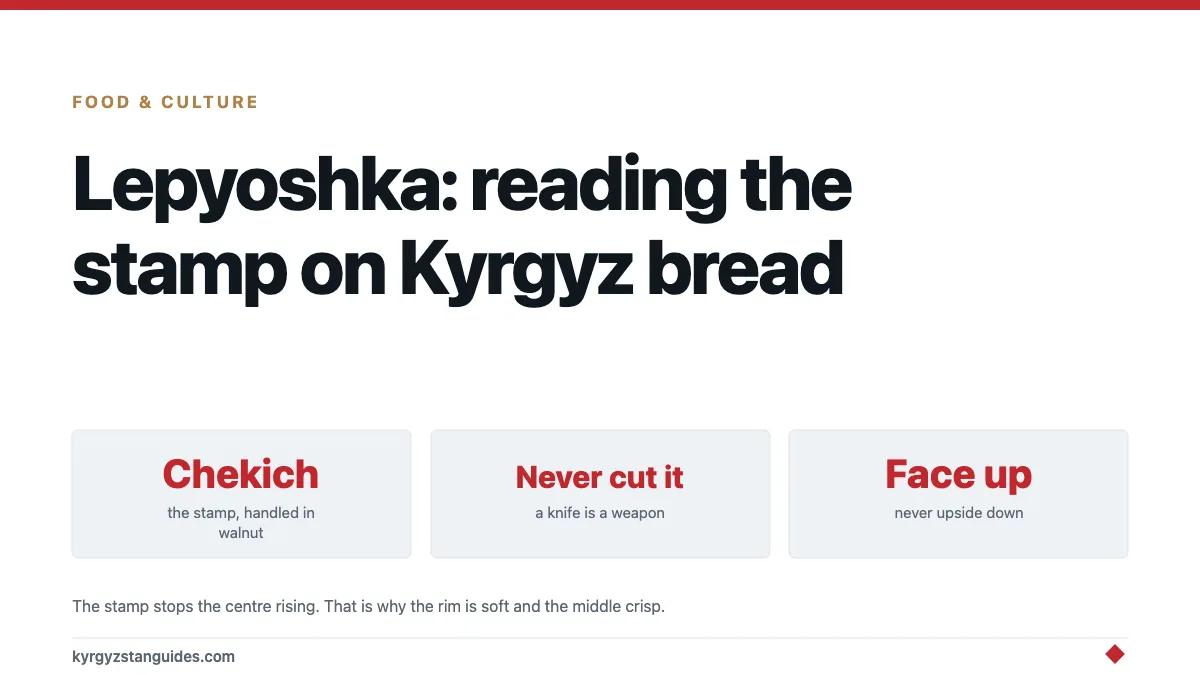
The round flatbread that arrives with every meal in Kyrgyzstan has a pattern pressed into its middle, and that pattern is doing three jobs at once. It stops the centre rising, so you get a crisp flat disc surrounded by a soft puffed rim. It identifies whose bread it's. And it's made with a tool called a chekich whose handle is traditionally turned from walnut — wood from the forests at Arslanbob.
Bread here isn't a side dish. It's the object everything else on the table is arranged around, and there are rules about it.
What it is
Lepyoshka in Russian, japma nan in Kyrgyzz — a round leavened bread with a soft, fluffy body and a crisp crust, baked by slapping it onto the wall of a clay tandyr oven.
The same oven produces samsy, which is why bakeries generally sell both, and why you can smell a tandyr bakery from the end of the street at six in the morning.
Fresh, it's genuinely excellent. A few hours old it is fine. A day old it is a building material, which is why households buy it daily and why every bazaar has bread rows with a constant turnover.
The chekich
The stamp is the interesting part.
A chekich is a small tool: a rounded wooden handle with nails or pins set into one face in a pattern. The baker presses it into the centre of each disc of dough before the bread goes into the oven.
Three things follow from that press:
Texture. The stamped area is compressed and does not rise, so the middle bakes flat and crunchy while the unstamped rim puffs and stays soft. One bread, two different things to eat, deliberately.
Identity. The pattern identifies the baker. In a bazaar with a dozen bread sellers, a regular customer knows their bread by its stamp before they read a sign.
Decoration, which is the part everyone notices and the least important of the three.
The handles are traditionally walnut, chosen for weight and durability, and walnut in this country means the forests at Arslanbob: the largest natural walnut stand on earth, which our walnut harvest guide covers. A bread stamp in a Bishkek kitchen is very likely made of wood from a forest six hundred kilometres away.
The bakery at six in the morning
If you want to see this properly, find a tandyr bakery and turn up early.
The work starts before dawn because the oven takes a long time to reach temperature and because bread has to be on the bazaar tables when people arrive. By six the tandyr is roaring, the dough has been through its rise, and the rhythm is set: shape, stamp, slap it onto the wall, and repeat, with someone reaching bare-armed into a clay oven at several hundred degrees.
RFE/RL filmed a morning at a Bishkek bakery, and the thing that comes across is how physical it's, hot, fast, and done standing up for hours.
Buy a loaf while you're there. It will be the best bread you eat in this country and it will cost you almost nothing.
The rules, which are real
Bread carries more weight here than visitors expect, and getting this wrong is noticed.
Never cut it with a knife. Bread is torn by hand. The reasoning given is that a knife is an instrument of war and has no business being used on bread. You will see this observed in households, at restaurants and at ceremonial meals, and it isn't a fussy formality.
Never place it upside down. The stamped face goes up. A bread laid face-down is associated with mourning.
Never throw it away, and don't leave it on the ground. Stale bread is fed to animals or left somewhere it'll be used, not binned in front of people.
Take some when it's offered. The same logic as boorsok — refusing what's on the table reads as refusing the household.
Our tea and bread customs guide covers the wider table etiquette, including why your teacup is only filled part way.
Buying it
Any bazaar, from the bread rows, sold by the piece. It's among the cheapest things you can buy in Kyrgyzstan.
Tandyr bakeries in residential streets, where it comes out hot through the morning. This is the better option if you happen to walk past one.
Ask for it hot. The difference between a loaf that came out ten minutes ago and one that came out at dawn is substantial.
Press the rim. It should give and spring back. If it's hard all the way round, it's yesterday's.
The regional differences
Bread is a decent map of who settled where in this country.
The south (Osh, Jalal-Abad, the Fergana valley towns) does the best bread, and it isn't close. This is settled oasis country with an old tandyr tradition, and the Uyghur and Uzbek influence runs deep. Our Osh guide covers a city where you should simply eat more bread than you planned to.
The north does perfectly good bread but it isn't the same thing, because the north is historically herding country and herding cultures don't build clay ovens.
On a jailoo there's no tandyr at all, and the bread is fried instead. Which is exactly why boorsok exists. Two cultures, two solutions, and you can taste the difference between a settled valley and a summer pasture.
Making it at home
The dough isn't complicated (flour, water, yeast, salt, sometimes milk) and the shaping is a matter of practice.
What you can't reproduce is the tandyr. A domestic oven gives you a decent flatbread; it does not give you the blistered crust and the particular texture that comes from dough stuck to hot clay. A pizza stone at maximum heat gets you closer than a baking tray.
Chekich stamps are sold in bazaars for very little and make a far better souvenir than most things on a tourist table, small, light, genuinely used, and with the walnut connection behind them. Our souvenirs guide covers the rest.
FAQ
What is lepyoshka?
A round leavened flatbread, also called japma nan, baked on the wall of a clay tandyr oven. Soft and fluffy with a crisp crust, it accompanies essentially every meal in Kyrgyzstan and is torn rather than cut.
What is the stamp on Kyrgyz bread?
It's made with a chekich: a wooden handle set with nails in a pattern. It stops the centre of the dough rising, so the middle stays flat and crisp while the rim puffs soft, and it identifies which baker made the loaf.
Why is Kyrgyz bread never cut with a knife?
The traditional explanation is that a knife is an instrument of war and has no place being used on bread. Bread is torn by hand, and the custom is genuinely observed rather than ceremonial.
What are the rules about bread in Kyrgyzstan?
Tear it rather than cutting it, keep the stamped side facing up, don't put it on the ground or throw it away, and take some when it's offered. Placing bread face-down is associated with mourning.
Where is the best bread in Kyrgyzstan?
The south — Osh, Jalal-Abad and the Fergana valley towns. That's settled oasis country with a deep tandyr tradition and strong Uzbek and Uyghur influence. The north is good but not the same.
Can I buy a chekich bread stamp?
Yes, in most bazaars, and cheaply. The handles are traditionally walnut from the Arslanbob forests. It's small, light, actually used in kitchens here, and a better souvenir than most of what's on a tourist stall.