Most people planning a Central Asia trip are choosing between countries rather than committing to one, and the marketing does not help because every country's tourism board describes itself as the Silk Road.
They are genuinely different products. Here is the honest comparison.
The one-line version
Uzbekistan is architecture. Kyrgyzstan is mountains. Kazakhstan is space and cities. Tajikistan is the Pamir. Turkmenistan is difficult.
Everything else follows from that.
Uzbekistan
Go for Samarkand, Bukhara and Khiva — the great Timurid and pre-Timurid architecture, at a concentration you won't find anywhere else. Plus the best food in the region and a high-speed train connecting the main sites.
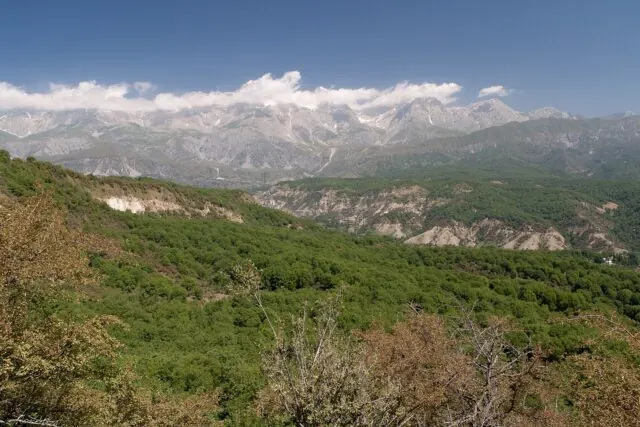
Not for mountains, though the Fergana valley and the Nurata range exist. This is a country of cities and desert.
Infrastructure is the best in the region for a visitor: trains that run on time, hotels at every level, and a tourism sector that has professionalised fast.
With Kyrgyzstan, it's the natural pairing. The architecture and the mountains, connected by the Osh–Andijan crossing or by air. Our Silk Road itinerary covers the route.
Kazakhstan
Go for Almaty, which is the most liveable city in Central Asia, the Charyn canyon and Kolsai lakes, the steppe, and the space. Also the money: it is substantially richer and it shows.
Not for cheapness or for the sense of a place that has been left alone.
Infrastructure is good, distances are enormous, and domestic flights are often the only sensible option.
With Kyrgyzstan, easy — Bishkek to Almaty is four hours by road, and the mountains on either side of the border are the same range.
Tajikistan
Go for the Pamir Highway, which is one of the great road journeys anywhere, and the Wakhan corridor.
Not for ease. It's harder, poorer and more bureaucratic, with permits required for the Pamir.
With Kyrgyzstan, the classic overland pairing via Sary-Tash and the Kyzyl-Art pass, or now via Karamyk since the 2025 border settlement. Our direct comparison goes into more detail.
Turkmenistan
Go for Darvaza, the burning gas crater. And Merv.
Not for independent travel. It requires a guide and an itinerary approved in advance, or a transit visa with tight conditions. Check current advice — the UK FCDO and equivalent services publish country pages for all five states. It's the most closed country in the region and travel there's a project rather than a decision.
The things that are shared
Worth saying, because the differences above can make five countries sound less related than they're.
The Soviet century. All five were Soviet republics, and the inheritance is visible everywhere: the grid-planned towns, the culture houses, the marshrutkas, the Russian language as a working lingua franca, and the 1944 deportations that scattered the same communities across all of them.
Islam, layered the same way. Sunni majority, with pre-Islamic practice absorbed rather than removed, the same syncretism visible at Sulaiman-Too turns up at shrines across the region.
Borders drawn in the 1920s and 1930s by the same planners, cutting through the same valleys, which is why the Fergana valley is complicated in all three countries that share it.
Hospitality as an obligation, not a courtesy, everywhere.
Bread treated with respect, everywhere, and the same set of rules about it.
So the differences are real and the substrate is shared. A traveller who learns the conventions in one country won't have to relearn them in the next, which is a genuine argument for treating the region as one trip.
So why Kyrgyzstan
Four things it has that its neighbours don't.
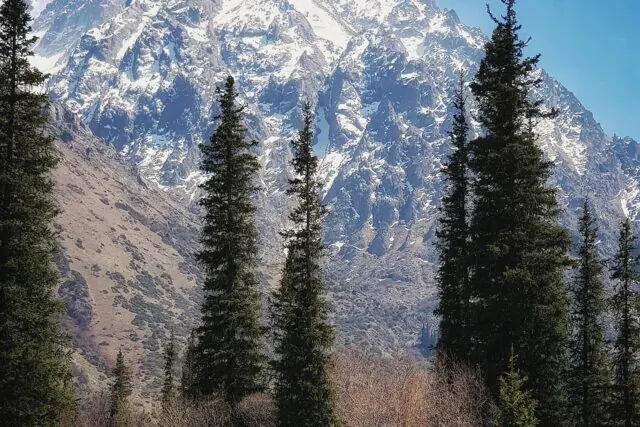
The mountains are the destination, not the backdrop. 90% of the country is above 1,500 m. Multi-day trekking, high alpine lakes, glaciers, and 7,000-metre peaks, our trekking guide is the starting point.
Yurt stays are real. Herding families genuinely move to summer pasture and you can stay with them. This is not reconstructed.
It's the easiest to enter. Visa-free for a long list of nationalities. Check the Kyrgyz foreign ministry and your own government's advice, and see our visa guide. Plus a community tourism network that means you can arrive in a small town without a booking and find a bed.
It is the most politically open. Three governments removed by protest, a functioning if pressured press, and people who will discuss politics with you freely. Our pieces on the political system and the media cover both halves of that.
What Kyrgyzstan isn't good at
Said plainly, because a comparison that only lists strengths is useless.
Architecture. There is Burana, Uzgen, Tash-Rabat and Sulaiman-Too, and none of it is Samarkand. If you came for monuments you came to the wrong country.
Roads. One highway connects north and south, journeys are long, and the fleet is old.
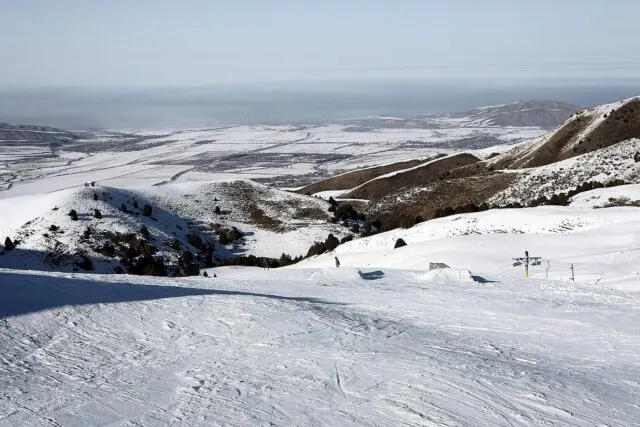
Winter. Four to five months when the high country closes.
Food variety. Excellent within a narrow range. Uzbekistan is better and it isn't close.
Cities. Bishkek is pleasant and low-key. Almaty and Tashkent are cities in a way it isn't.
Cost and season
Two axes that decide more itineraries than any of the above.
Cost. Kyrgyzstan and Tajikistan are the cheapest, Uzbekistan is moderate, Kazakhstan is noticeably more expensive, particularly Almaty. World Bank country data gives a sense of the underlying income differences that drive this. Our budget guide has Kyrgyz figures.
Season is where they genuinely diverge.
| Best months | |
|---|---|
| Kyrgyzstan | June–September for mountains |
| Tajikistan (Pamir) | June–September |
| Uzbekistan | April–May and September–October; brutal in summer |
| Kazakhstan | May–September |
That produces a real planning tension. Uzbekistan's cities in July are 40°C and unpleasant; Kyrgyzstan's mountains in April are still closed. The overlap that works for both is late May–June or September, and September is the better of the two.
Our best time to visit guide covers the Kyrgyz side in detail, and the jailoo calendar explains why the mountain season is as short as it's.
The practical answer
Two weeks, first visit to the region: Uzbekistan and Kyrgyzstan. Architecture and mountains, one border crossing, no repetition.
You like mountains more than museums: Kyrgyzstan alone, three weeks, and you won't run out.
You want one country done properly: Kyrgyzstan, because the distances are manageable and the variety within it is real.
Overland across the region: Kazakhstan → Kyrgyzstan → Uzbekistan → Tajikistan, or the reverse, with Kyrgyzstan in the middle as the hub it geographically is.
Our itinerary guides cover the shapes that work within the country.
FAQ
Which Central Asian country should I visit first?
Uzbekistan for architecture and ease, Kyrgyzstan for mountains and independent travel. Most first-time visitors to the region combine the two.
Is Kyrgyzstan better than Uzbekistan?
They are different. Uzbekistan has the great Silk Road architecture and better infrastructure and food; Kyrgyzstan has the mountains, the yurt stays and easier entry.
Can I combine Kyrgyzstan and Uzbekistan?
Yes, easily, via the Osh–Andijan border crossing or by air. It's the most common regional pairing.
Which Central Asian country is easiest to travel in?
Uzbekistan has the best infrastructure; Kyrgyzstan is the easiest to enter and the easiest for unplanned independent travel.
Is Kyrgyzstan good for trekking compared with its neighbours?
It's the best trekking country in Central Asia alongside Tajikistan's Pamir, with more accessible infrastructure and easier permits than Tajikistan.
Which Central Asian country is hardest to visit?
Turkmenistan, which generally requires an approved itinerary and a guide, or a restrictive transit visa.